Summary
- U.S. administration and Iranian leadership defer substantive nuclear and maritime disputes through a procedural memorandum of understanding while domestic political constraints limit concession capacity on both sides.
- Compressed decision cycles and relayed diplomatic assurances mask unresolved red lines regarding frozen asset unfreezing, uranium enrichment disposal, and Strait of Hormuz control.
- The structural credibility deficit from prior U.S. withdrawal from the Joint Comprehensive Plan of Action incentivizes Iranian time-buying behavior and preserves the military capacity needed to trigger future hostilities.
- Procedural deferment instruments establish ceremonial de-escalation pathways that bypass intractable substantive gaps and embed recurrence conditions directly into agreement architecture.
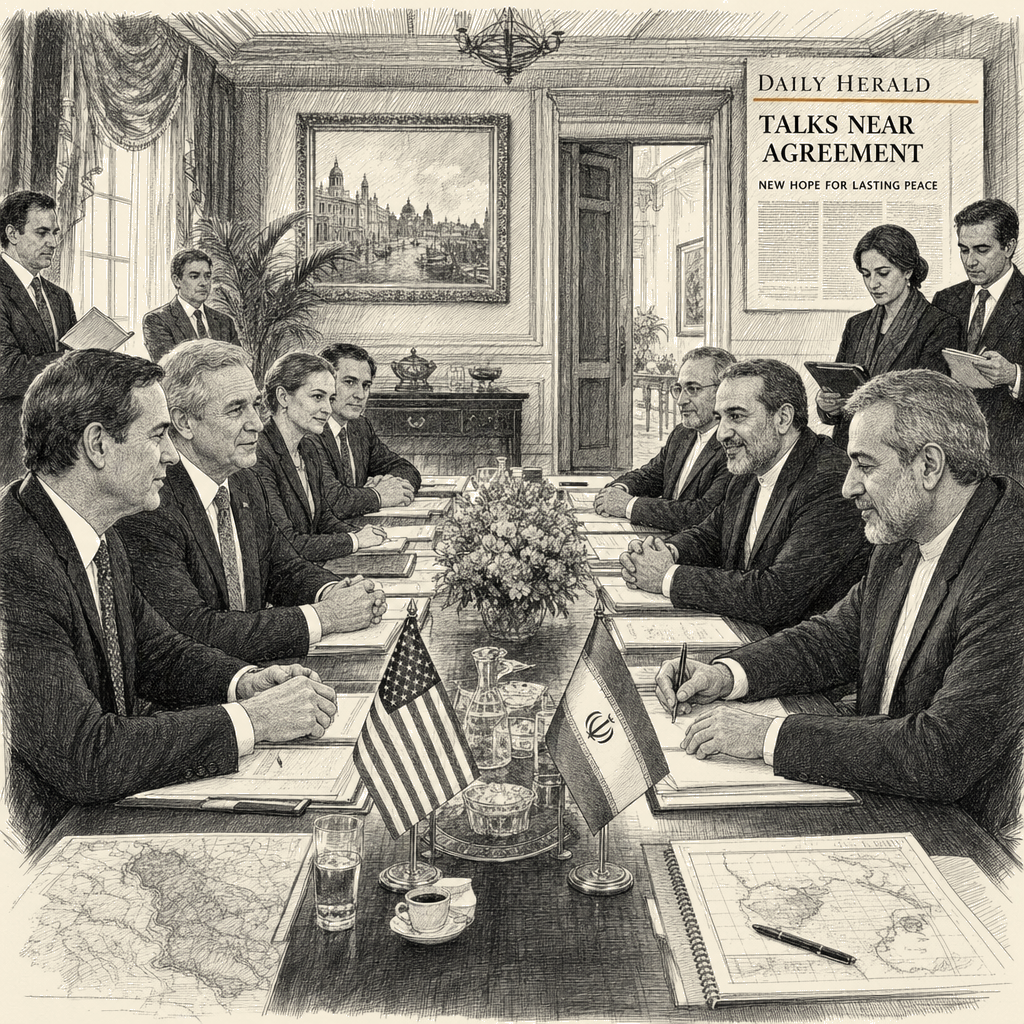
U.S. and Iranian officials prepare to sign a memorandum of understanding mediated by Qatar and Pakistan following a recent Apache helicopter incident, but structural credibility deficits and symmetric domestic political constraints defer the most contentious disputes into secondary technical negotiations. The deferred architecture preserves leverage-generation tools that institutionalize a cyclical escalation pattern rather than establishing a binding resolution mechanism.
Framing Architecture and Lexical Construction
The narrative shifts from episodic reporting of the kinetic incident—an Apache downed when an Iranian drone detonated directly in front of it—to thematic coverage of a “familiar pattern that has defined more than 100 days of hostilities.” Spatial and kinetic metaphors (“pull back from the brink,” “zigzagging between threats and claims of an agreement,” “has never been closer”) construct diplomatic progress as volatile motion rather than structural resolution. This lexical architecture supports a resolvable-brinkmanship frame, treating sudden escalation and diplomatic stand-down as a manageable cycle requiring only final agreement ratification.
An institutionalized-brinkmanship counterframe interprets the “familiar pattern” as deliberate tactical escalation: U.S. threats to strike civilian infrastructure and Iran’s preservation of maritime interdiction capability function as coordinated leverage-generation tools. The routinized threat-response-mediation arc and strategic ambiguity—official claims that a memorandum of understanding “has never been closer” contrasted with mediator observations that “neither side was compromising on their red lines”—mask substantive negotiating gaps.
Process Mapping and Handoff Dynamics
The operational sequence forms an interrupted retaliation chain characterized by compressed decision windows and informational bottlenecks. Initial escalation following the incident proceeds without a described cooling-off mechanism, gating rapid deployment solely on executive judgment. The subsequent halt of promised strikes depends on relayed assurances from Qatari and Pakistani diplomats that a deal is “close at hand,” a threshold disconnected from the actual negotiating reality of unresolved red lines.
This compressed handoff from military threat to diplomatic intervention introduces operational risk, pushing technically complex negotiations on asset unfreezing, uranium enrichment disposal, and strait control into a secondary phase in Islamabad without completion guarantees. The pending memorandum of understanding functions as a procedural-deferment instrument, establishing a ceremonial de-escalation pathway that bypasses intractable substantive gaps.
Structural Drivers and Domestic-Environmental Constraints
Procedural deferment and leverage-generation operate synergistically: deferring the most contentious dispute points preserves unresolved grievances that enable future kinetic escalation to strengthen negotiating posture. Domestic political constraints constrain concession capacity symmetrically: the U.S. administration faces political difficulty selling terms as a domestic victory, while Iranian hard-liners in the Islamic Revolutionary Guard Corps oppose limits on the nuclear program without upfront U.S. concessions. Environmental and economic pressures—specifically damage absorbed during hostilities and the U.S. blockade of the Persian Gulf—act as the proximate driver pushing Tehran toward the negotiating table despite IRGC resistance.
Root Causes and the Recurrence Mechanism
The structural credibility deficit established by the prior U.S. withdrawal from the Joint Comprehensive Plan of Action undermines enforcement credibility in any successor framework, making Iranian time-buying behavior a rational incentive structure. Former Defense Department official William Wechsler notes that “There’s lots of ways Iran can just buy time. It’s in their interest, and it will continue to be the pattern,” reflecting the provisional nature of enforcement when agreements can be discarded unilaterally.
The agreement’s architecture leaves Iran’s military capacity to close the Strait of Hormuz intact, embedding the conflict’s recurrence condition directly into the deal’s design. Massachusetts Institute of Technology professor Caitlin Talmadge identifies this gap, asking, “What is the mechanism in this deal that will prevent it from using that weapon again in the future when the next obstacle in the relationship emerges,” while noting Iran “will also emerge from the conflict with the military capacity to close the Strait of Hormuz.” The root cause of the cyclical hostilities is a structural mismatch between the pace of military escalation and the pace of technical resolution, sustained by the absence of a credible commitment mechanism capable of surviving administrative turnover and asymmetric strategic leverage.
Analytical techniques used in this piece
This analysis applies the methods below. Each links to a short, plain-English explainer you can read and reuse.
- Frame Audit
- Surfaces the frame an argument adopts and what that framing quietly includes or excludes.
- Process Mapping
- Lays out a process end to end — steps, hand-offs, and bottlenecks.
- Root-Cause Analysis
- Traces a symptom back along its causal chain to the conditions that actually generated it.
- Tit-for-Tat
- Reciprocity as strategy: match the other side’s last move — reward cooperation, punish defection.