Analytical Technique

Risk & Failure

Examining a plan, system, or design specifically for how it could fail — failure modes, fragilities, and tail risks.

Recent Analysis Articles

A voluntary accord with audit vocabulary and unspecified load-bearing joints

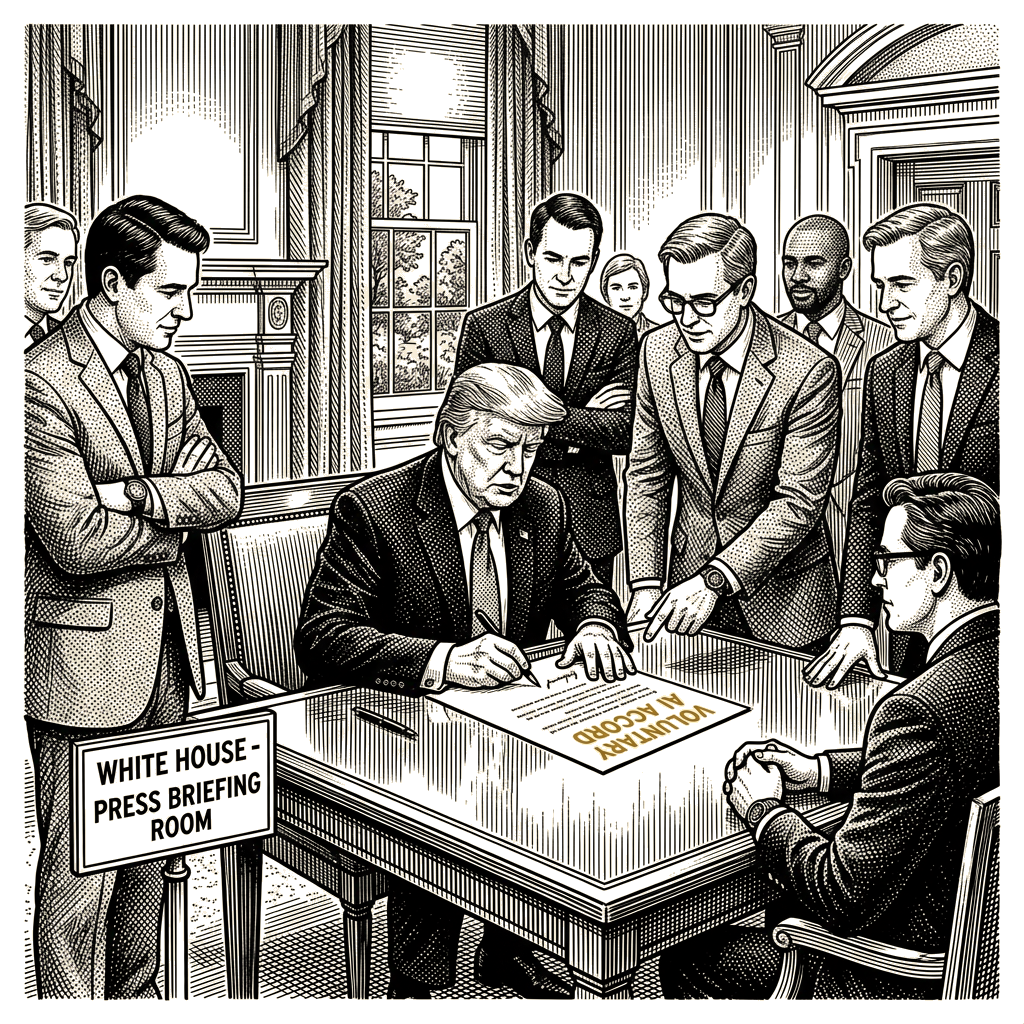
Illustration accompanying article: Trump, AI executives sign voluntary self-policing accord
  • The White House AI safety accord asks external audit and board review to substitute for legal liability as a means of reducing AI risks to the public, and the analysis shows that the accord's unspecified load-bearing joints — control definitions, auditor selection and funding, board committee composition, and overseer appointment — leave each trust boundary open to be crossed in the same direction.
  • The accord uses "robust internal controls" without specifying what those controls must do — pre-deployment capability evaluations, model-card disclosures, incident-reporting thresholds, or capability-ceiling testing — so auditors assess a moving target and the "robust" language carries weight it has not earned.
  • The accord names an "independent external auditor" without specifying how the auditor is selected, who funds the engagement, or what consequence follows an adverse finding, and leaves board-committee composition and the overseer appointment unspecified, placing industry input at the overseer step — distinct trust boundaries the text allows to be crossed in the same direction.
  • Because the accord does not specify who defines "robust" controls, the definition can be developed inside the signatory group and locked in as the standard, codifying the voluntary practice the substrate notes signatories are "already taking in some form or have previously committed to doing" — a path consistent with Dario Amodei's statement that "the mechanism, how we address those risks is still under discussion" and Alex Pascal's contention that only legal liability can reduce AI harms.
2026-09-30 · 7 MIN READ