Analytical Technique

Causal Investigation

Working backward from an outcome to its causes — single chains, feedback structures, and the mechanisms that generated what happened.

Recent Analysis Articles

California preemptive power shutoffs rest on an equipment-ignition chain observational data cannot verify

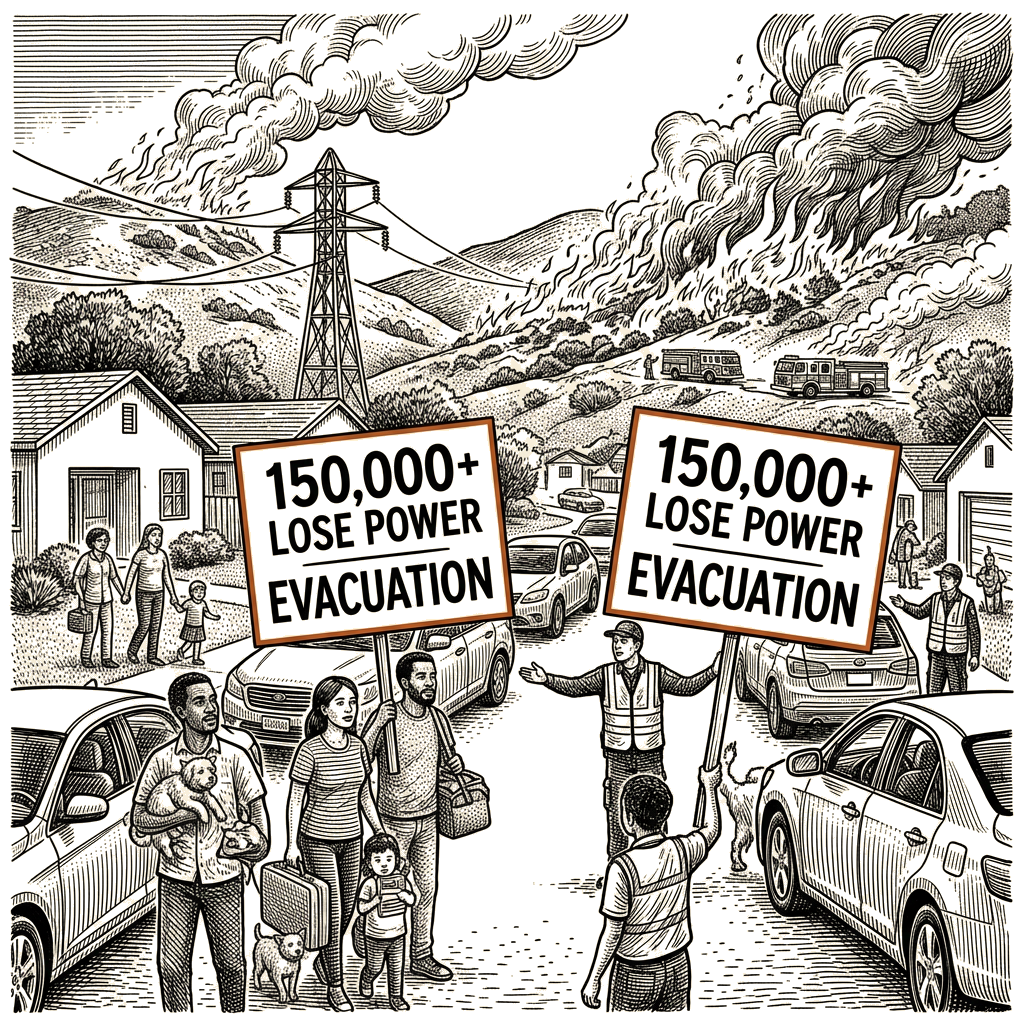
Illustration accompanying article: Southern California brush fires force evacuations as more than 150,000 lose power
  • California utilities preemptively cut electricity to more than 150,000 customers on Thursday and Friday under a fire-weather policy whose causal logic The Guardian treats as settled — that power equipment has sparked past catastrophic fires — but whose chain from past equipment-attributed ignitions to present preventive action observational data, read as a causal graph, cannot independently verify.
  • Judea Pearl and Dana Mackenzie, in The Book of Why (Basic Books, 2018), classify such an inference at the intervention rung of the ladder of causation rather than at the observational rung fire-cause attributions actually populate, and apply a back-door criterion whose minimal adjustment set requires an exclusion-style restriction the dispatch is consistent with but does not confirm.
  • Three confounders the dispatch does not name — fire-cause attribution asymmetry, climate as a time-varying confounder, and documented regulatory and litigation pressure that concentrates investigative attention on utility liability — operate as alternative paths through which the dispatch's surface pattern can hold without the underlying equipment-cause claim being independently verified.
  • The dispatch's preemptive cut, paired with Mayor Karen Bass's directive to pre-deploy fire personnel and a request to the state Office of Emergency Services, frames a response Rose Schoenfeld of the National Weather Service describes as sized to a Santa Ana event "not expected to match" the 2025 Palisades and Altadena fires, an asymmetry that puts the shutoff at the catastrophic tail of an ignition distribution observational data cannot directly measure.
2026-10-16 · 6 MIN READ