Mental-Model Lens

Political Economy

Power, markets, and institutions interacting.

Recent Analysis Articles

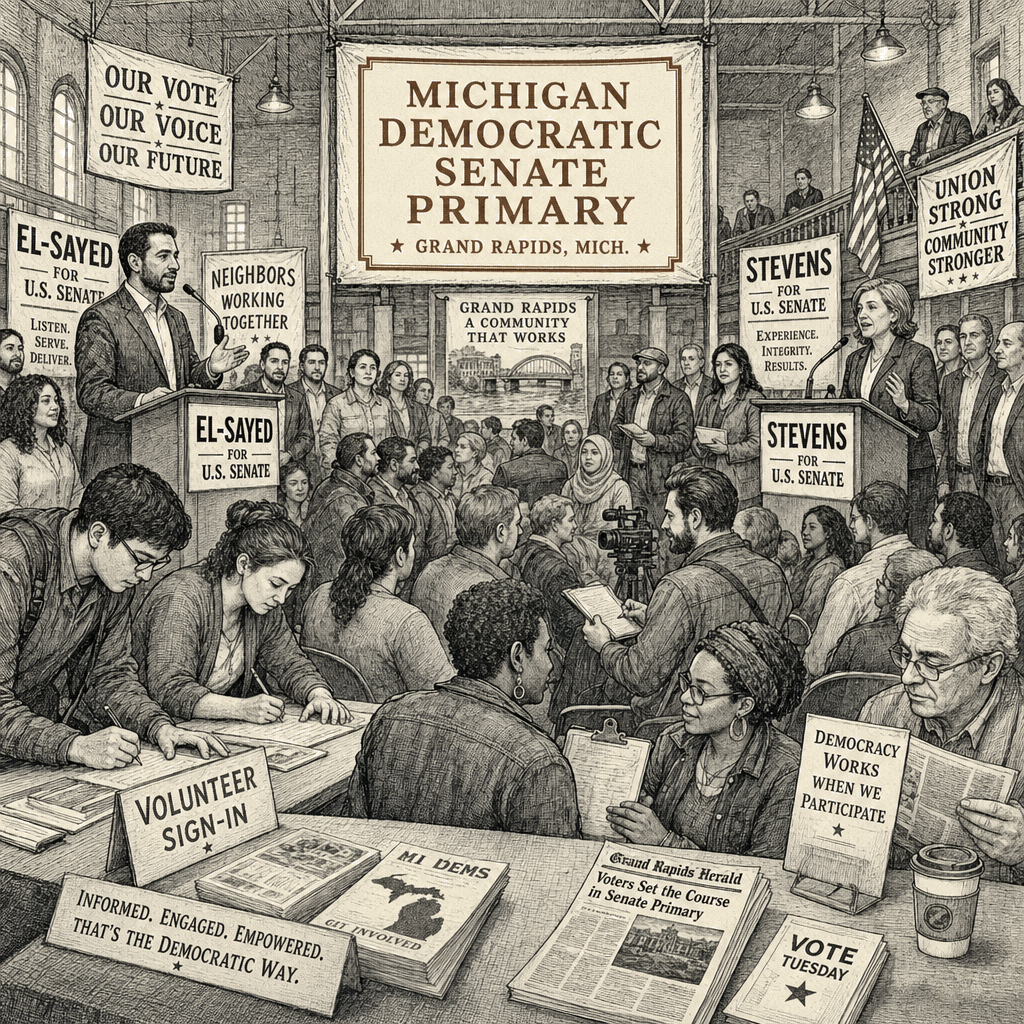
Campaign spending asymmetries and grassroots mobilization reshape Michigan Senate primary contest

Illustration accompanying article: El-Sayed and Stevens compete in Michigan
  • The Michigan Senate primary contest between Rep. Haley Stevens and Abdul El-Sayed is being reshaped by campaign spending asymmetries that advantage Stevens' institutional coalition and grassroots mobilization that sustains El-Sayed's progressive coalition, with the available evidence consistent with three competing explanations for the race's reported tightening.
  • Stevens' coalition assembles institutional credibility transfers from Senate Minority Leader Chuck Schumer, former Gov. Jennifer Granholm, former Sen. Debbie Stabenow, EMILY's List, and the United Democracy Project super PAC, which AdImpact data identifies as the largest outside ad spender in the primary.
  • El-Sayed's coalition assembles grassroots and digital energy transfers from Sen. Bernie Sanders, Rep. Alexandria Ocasio-Cortez, digital influencer Hasan Piker, United Auto Workers networks, and Democratic Socialists of America-aligned activists, organized around Medicare for All, abolishing ICE, and characterizing Israel's actions in Gaza as a genocide.
  • The reported tightening is consistent with a UDP-driven ad shift toward Stevens in heavy-spending media markets, a consolidation of establishment support following state Sen. Mallory McMorrow's July 5 withdrawal, and a measurement artifact reflecting El-Sayed's residual name recognition from his 2018 gubernatorial primary, though the reporting lacks the vote-flow and geographic disaggregation needed to discriminate among the three.
2026-07-12 · 3 MIN READ