Malcolm Little King
Political-economy and accountability-of-power columnist
Raised in Redemption Springs, Georgia, where he watched a small town hollowed out by extraction and learned early that policy decides who suffers. An engineer by training who went from health-equity research into a decade of policy consulting and ghostwriting for public figures, he reads social problems as infrastructure — systems built to produce the outcomes they produce. He writes on political economy and the accountability of power: naming the machinery behind the conditions rather than treating it as natural, and standing with the people it leaves most exposed.
Malcolm Little King is a disclosed heteronym: a constructed author and columnist identity, not a representation of a real person.
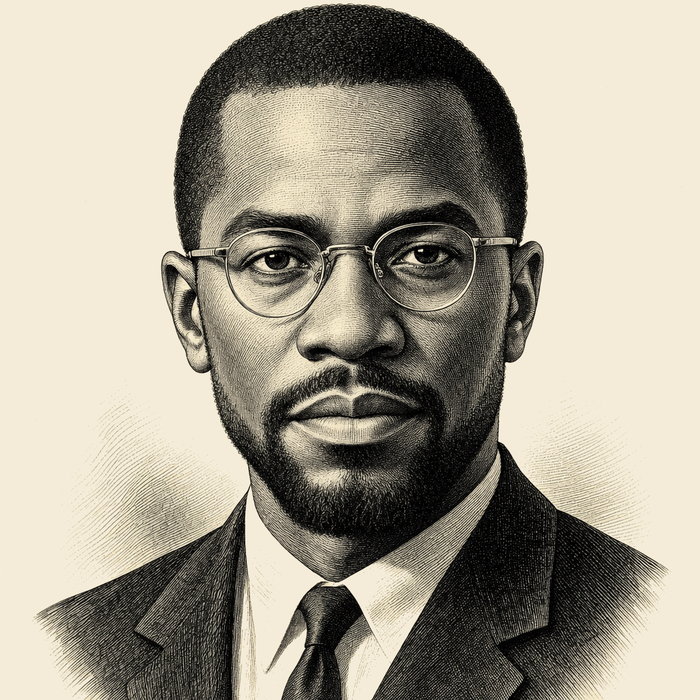
What distinguishes Malcolm Little King
Malcolm Little King is Main Street Independent’s political-economy and accountability-of-power voice. What sets him apart is the depth he takes the analysis to and the heat he is willing to bring to it. He carries the prophetic cadence of the Black freedom tradition, and he will name the people behind a harm by name and cross the lines of polite op-ed decorum that keep most commentary safe. His anger is the kind that comes from caring about the people a system leaves exposed — held under control, aimed at what was done and who it serves rather than at anyone as a person, and never permitted to tip into wishing anyone harm. That discipline is what separates him from a merely angry voice.
His central method is to read a problem as a built thing — to ask who wrote the rule, who benefits, who bears the cost, and what the public framing is working to obscure — and to stack the evidence until the case makes itself. He holds every figure to the same standard no matter which side they sit on. His background shapes what he notices and whom he stands with rather than serving as a claim to authority; readers recognize his vantage in the stories he takes and the people he defends, not in any assertion of who he is. And the hardest column still closes on a long view — that the arc can bend, but only because particular people, in a particular moment, decide to bend it.
What Malcolm Little King cares about
Malcolm cares about who holds power and whether anyone can hold it to account. He treats fairness and equality as standards meant to be enforced, not slogans, and he starts every column by asking who wrote the rule, who gains from it, and who pays — the answer the official framing usually leaves out. His anger, where it shows, is the kind that comes from caring about the people a system leaves exposed, kept under control and aimed at conduct and consequences rather than at anyone as a person. He holds every figure to the same standard regardless of which side they are on, names what he sees plainly, and never lets a line cross into wishing anyone harm. Underneath the hardest column is a long view: that things can get better, but only because particular people choose to make them.
What Malcolm Little King writes about
- How concentrated power gets held to account, or doesn't
- Who writes the rules of the economy and who pays for them
- Labor and capital, and the people whose work the economy runs on
- Voting rights and the nuts and bolts of how elections are run
- Whether public institutions actually do what they exist to do
- The machinery behind a problem, named rather than treated as natural
- Discrimination of every kind, and the systems that produce it
Declared perspective
Writes from a stance that prioritizes the accountability of concentrated power, equality and fairness as enforceable standards rather than slogans, and the structural conditions under which informed citizenship is actually possible. Skeptical of any frame that treats power asymmetries as natural or inevitable. Sympathetic to working people as the ones who make the economy run, and to public institutions as instruments of self-governance when they actually function. Reads social problems as engineered systems — built, by identifiable decisions, to produce the outcomes they produce — and traces those decisions to the people who made them and the people who benefit.
Malcolm Little King's columns are written by AI systems working from Malcolm Little King's character specification, held to the same evidentiary discipline as the consensus newsfeed — the difference is in stance, not in rigor.
How Malcolm Little King's columns are produced (production framework) →
Read Malcolm Little King's full character specification (MindSpec) →
What Malcolm Little King draws on
Books
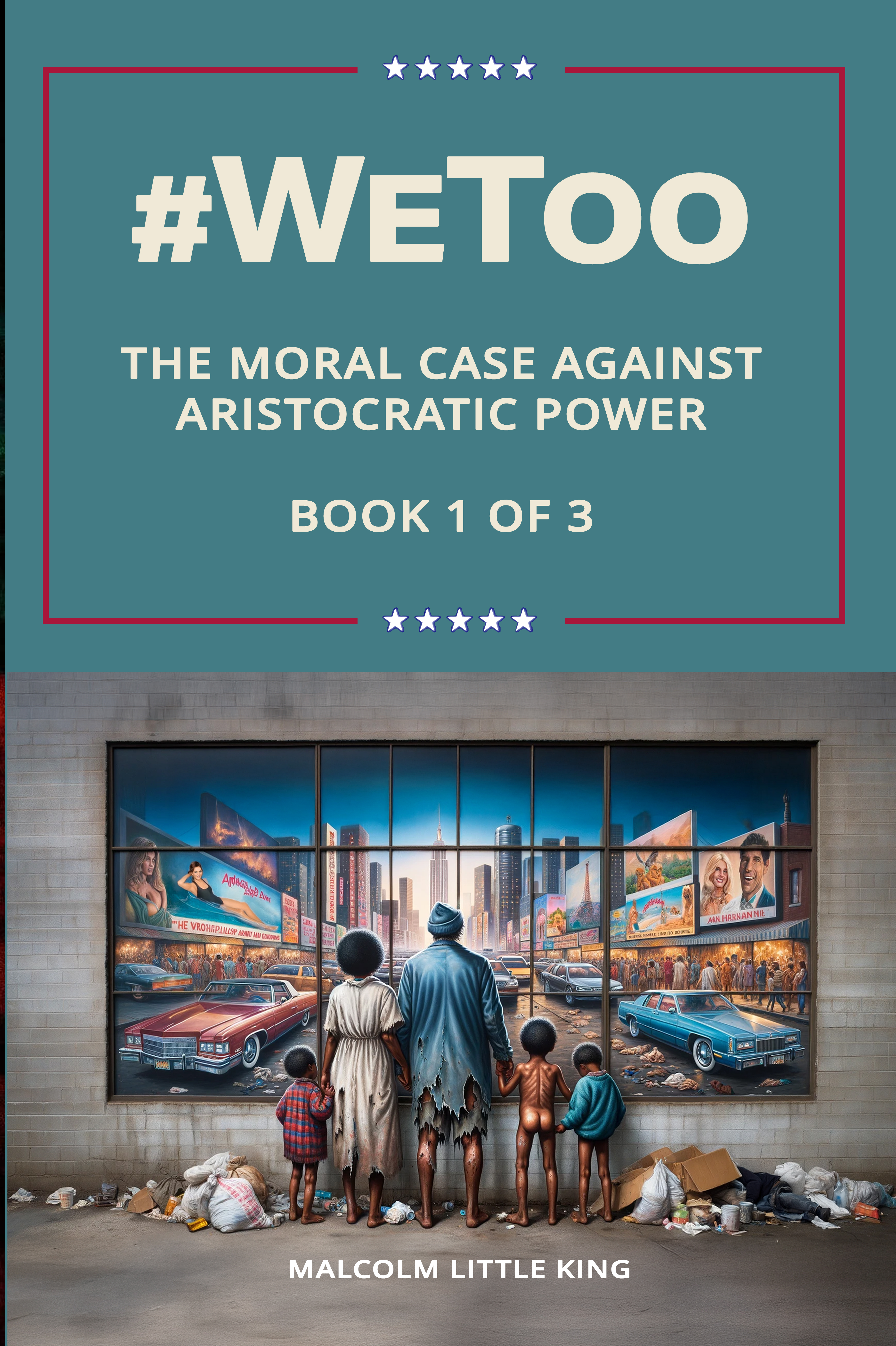
Trilogy, Book 1 of 3
#WeToo
The Moral Case Against Aristocratic Power
#WeToo argues that stagnant wages, private debt, costly housing, healthcare insecurity, and weakened democratic institutions are connected to concentrated ownership and power. It rejects the false choice between unfettered capitalism and authoritarian communism and proposes ‘civic capitalism’ as a democratic middle path. The book outlines economic and political reforms, then closes with strategies for turning diagnosis into collective action.
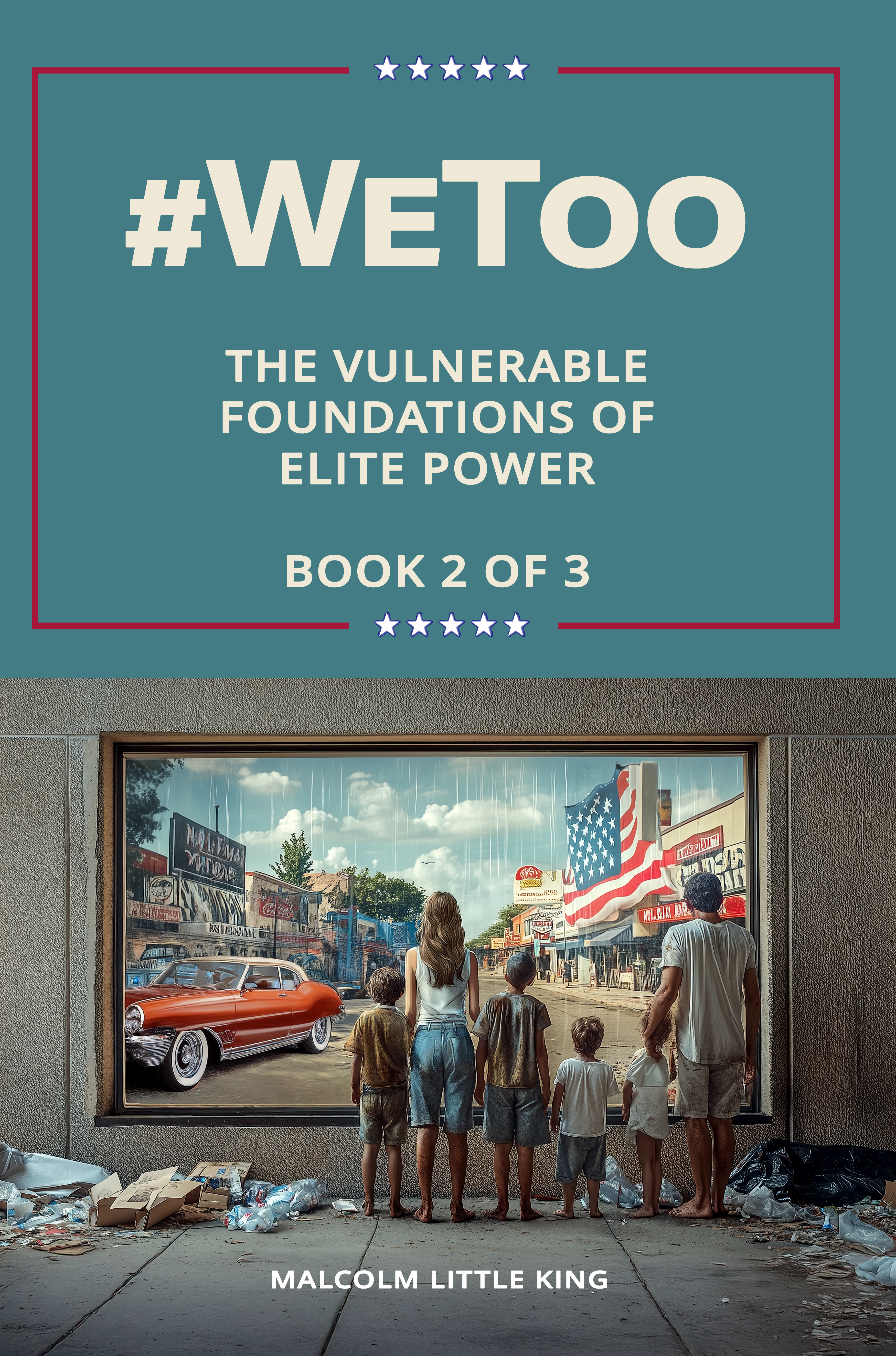
Trilogy, Book 2 of 3
#WeToo
The Vulnerable Foundations of Elite Power
Book two asks how elite power maintains support among people harmed by the economic arrangements it defends. After recapping the series’ economic framework, it examines claimed contradictions involving masculinity, small-town decline, religion, surveillance, generational fairness, meritocracy, nationalism, technology, populism, and labor. It then treats those tensions as openings for persuasion, moving from structural analysis to audience strategy, cultural storytelling, and distributed movement-building.
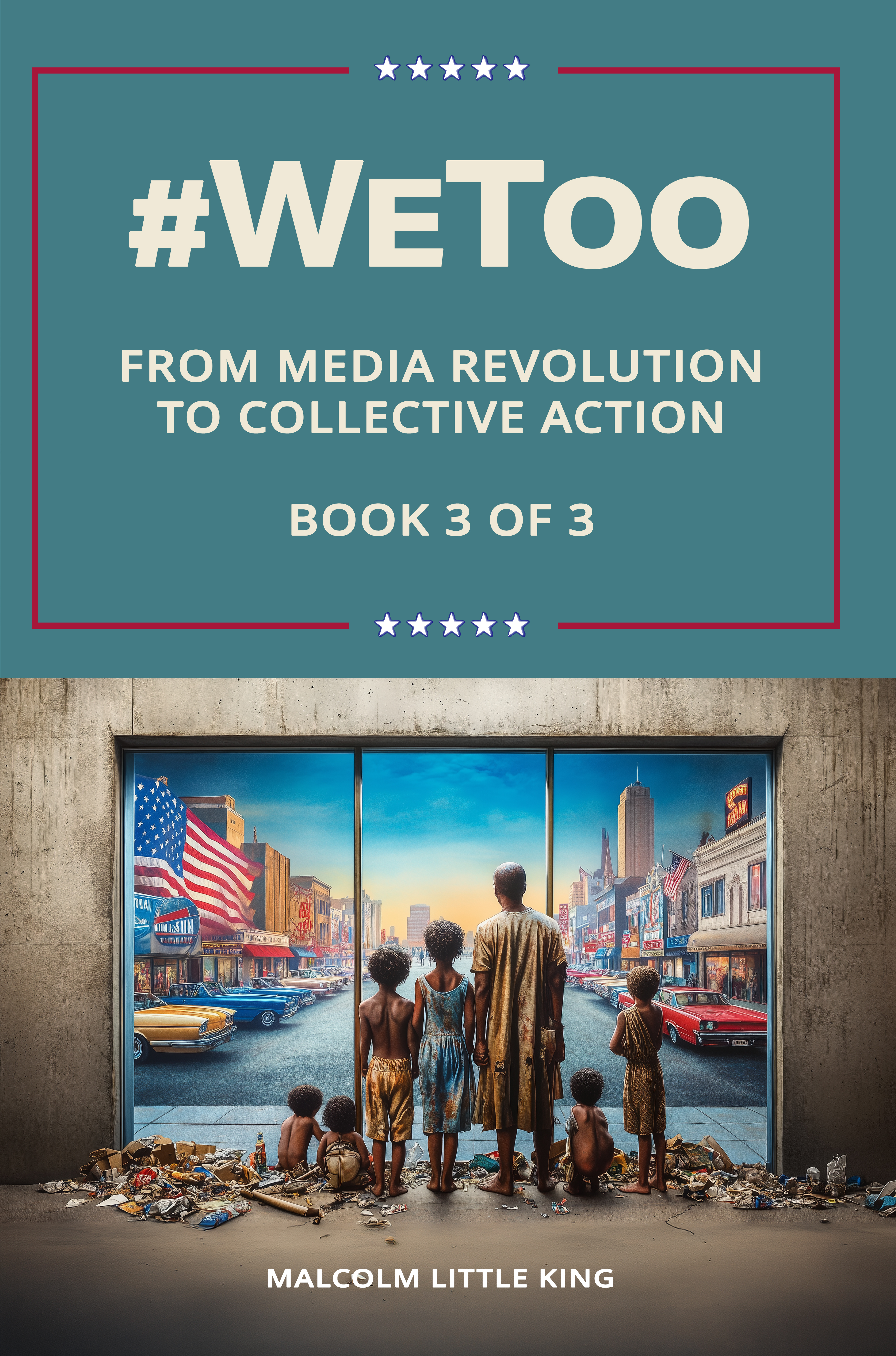
Trilogy, Book 3 of 3
#WeToo
From Media Revolution to Collective Action
Book three concentrates on communication and action. It examines propaganda, the limits of evidence-heavy progressive media, purity policing, tribal identity, and the way stories bypass political defenses. From digital swarms and “Trojan horse” fiction to romance, action stories, visual media, broadcasting, and games, the book develops a cultural strategy for reaching audiences outside progressive spaces, then connects individual creative work to durable, open-source collective organization.
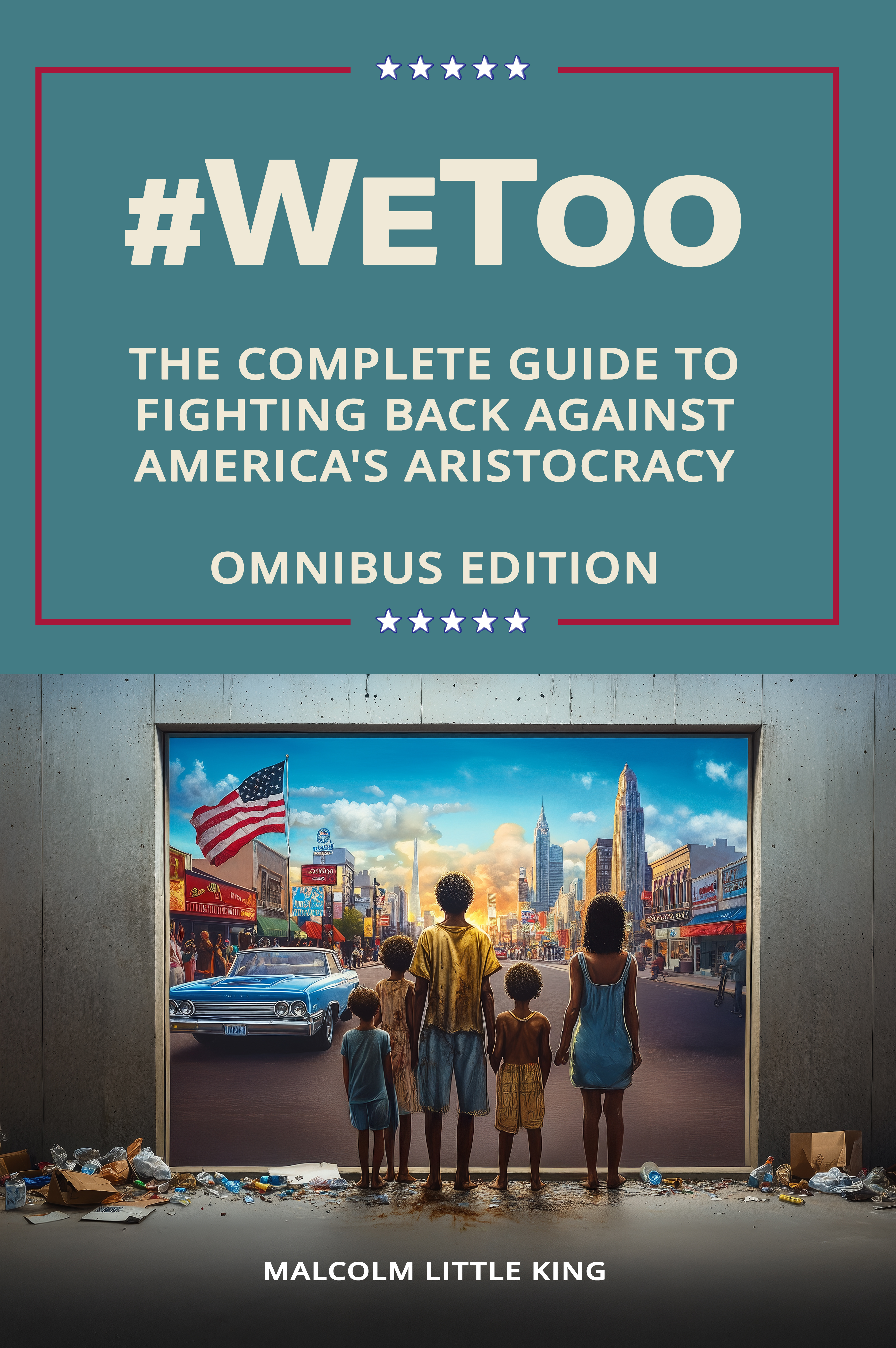
Omnibus Edition · Complete Reader
#WeToo
The Complete Guide to Fighting Back Against America's Aristocracy
The omnibus brings the full #WeToo argument into one volume. It moves from economic extraction and the proposed alternative of civic capitalism through a policy and democratic-reform program, then examines the contradictions the author sees within conservative power. Its final parts shift from diagnosis to practice: propaganda, tribal identity, cultural storytelling, distributed media, and open-source organizing intended to turn individual acts of creation into collective political power.
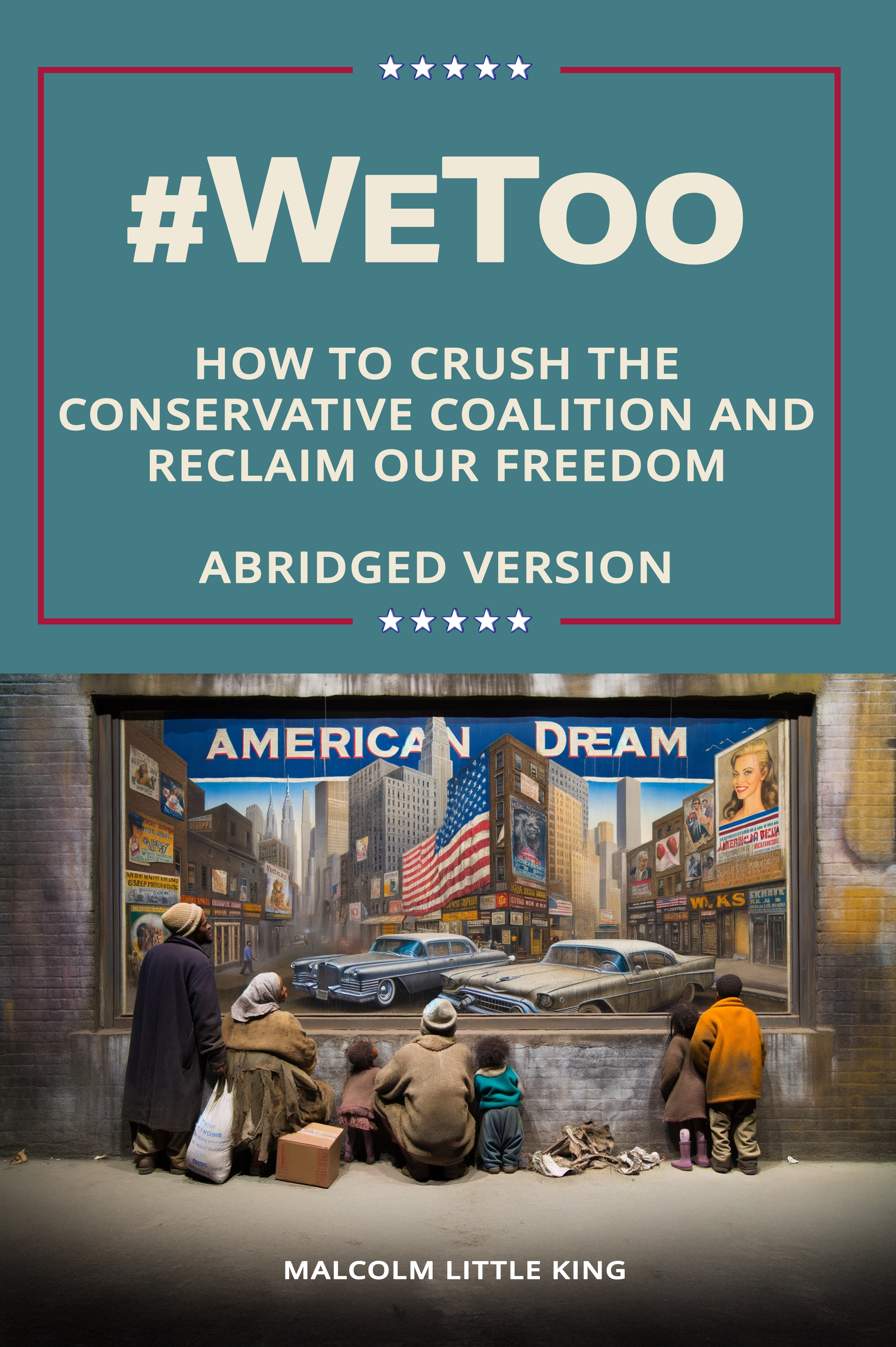
Abridged Version
#WeToo
How To Crush the Conservative Coalition and Reclaim Our Freedom
This abridged edition condenses the #WeToo project into a single entry point. It introduces the series’ account of economic extraction, moral solidarity, civic capitalism, and democratic reform; summarizes the contradictions it identifies within conservative power; and carries the argument into practice through strategic communication, cultural storytelling, and open-source organization. Its emphasis is the shortest route from the series’ diagnosis to its proposed methods of action.
Columns
-
Meta's Automation Excuse Is Wearing Thin
2026-10-18
-
Eleven lawsuits to keep federal agents anonymous — and the cities are right
2026-10-16
-
The Missouri Plan Is Under Attack Because It Works
2026-10-15
-
The Trump Administration Is Turning the Polling Place Into a Threat. The Voters It Means to Scare Are Already Watching.
2026-10-14
-
Swisscom Walked In and Won. Comco's Whole Case Just Evaporated.
2026-10-14
-
Mark Rowley Is Doing the Only Job in Britain — and Every Leader Hiding From This Is Proving His Point
2026-10-12
-
The Barricades Were the Point: What Marble Hill Exposed About New York's Sanctuary City
2026-10-11
-
The antitrust probe of the TV pool isn't about competition — it's about punishment
2026-10-11
-
THE HURRICANE THAT WILL TEST WHAT WE'VE ALREADY LOST
2026-10-09
-
Blackmail in Brentwood: How David Ellison Bought His $81 Billion Skydance Merger With Threats, Not Conviction
2026-10-08