Analytical Technique

Interest & Power

Who benefits, who pays, who holds the power to shape an outcome, and whose voices are left out — reading a situation through its structure of interests.

Recent Analysis Articles

Senate discharge exposes two unstated assumptions in Labor's $3 billion over-65 rebate bill

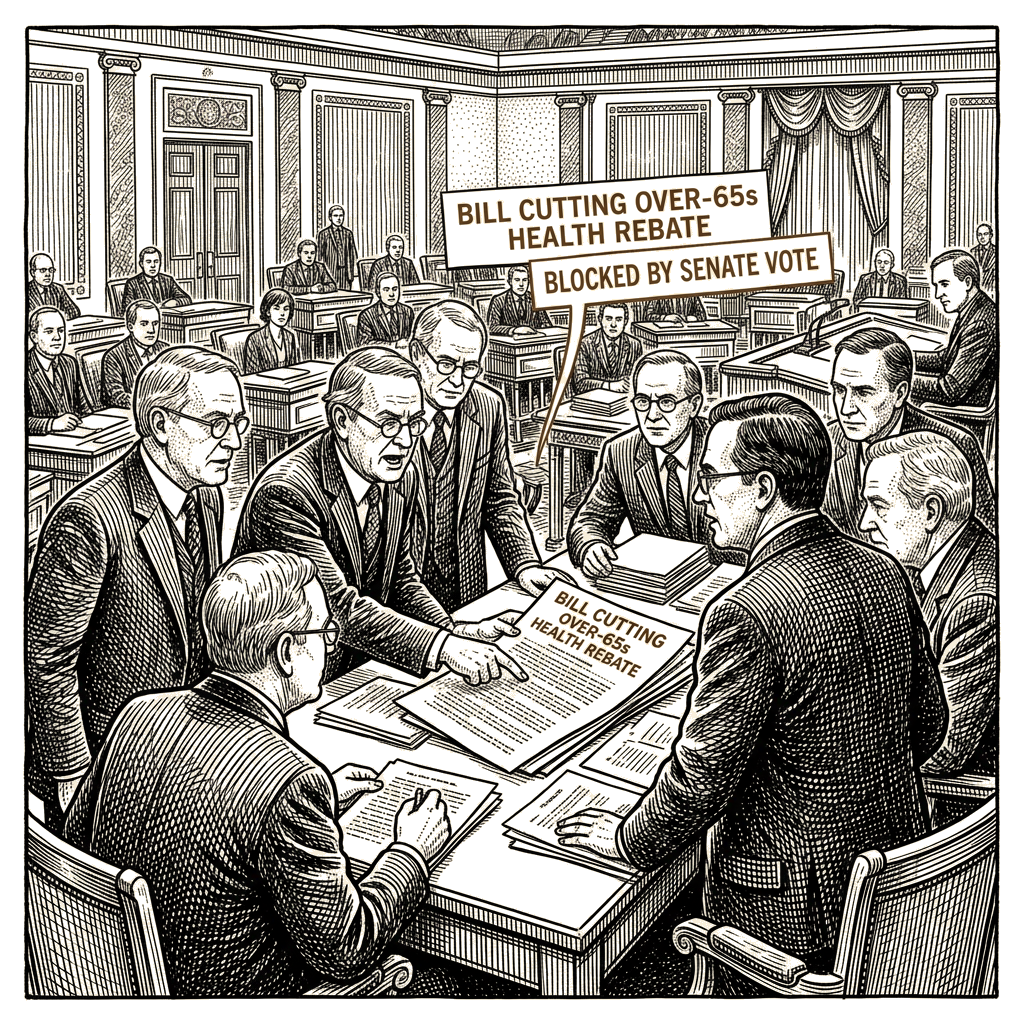
Illustration accompanying article: Greens, Coalition block Australian bill cutting over-65s health rebate
  • The Senate's Wednesday discharge of Labor's bill reducing the over-65 private health insurance rebate leaves the bill's $3 billion distributional case resting on two assumptions that Health Department modelling and state health ministers' recorded statements each reject: that over-65 policyholders will absorb the higher premium costs without exiting private cover, and that retained over-65 policyholders' continued private utilisation does not generate additional demand on state public hospital systems.
  • Cui bono analysis identifies three structural roles: private health insurers as the structural beneficiary of the rebate's persistence, the federal budget as the structural beneficiary of the cut, and state public hospital systems as the cost-shift target under the cut.
  • The Greens' stated carve-out alternative would concentrate both the modelled drop-out cohort and the residual fiscal yield on non-pensioner over-65s, since the source documents no per-policyholder adjustment to maintain the $3 billion target.
  • Frame audit finds Butler's "political stunt" framing and Shoebridge's "attack on pensioners" framing operating as competing political vocabularies over a cross-party distributional alignment the source documents across the Greens, the Coalition, state health ministers of both major parties, and the Council on the Ageing Australia — indicating convergent distributional objections rather than a single coalition's tactical manoeuvre.
2026-10-14 · 5 MIN READ