Analytical Technique

Mechanism Understanding

Explaining how something works — the parts, their relationships, and the process by which inputs become outputs.

Recent Analysis Articles

Merit-order gas anchoring channels Hormuz-related LNG surge into British steelmakers' industrial bills

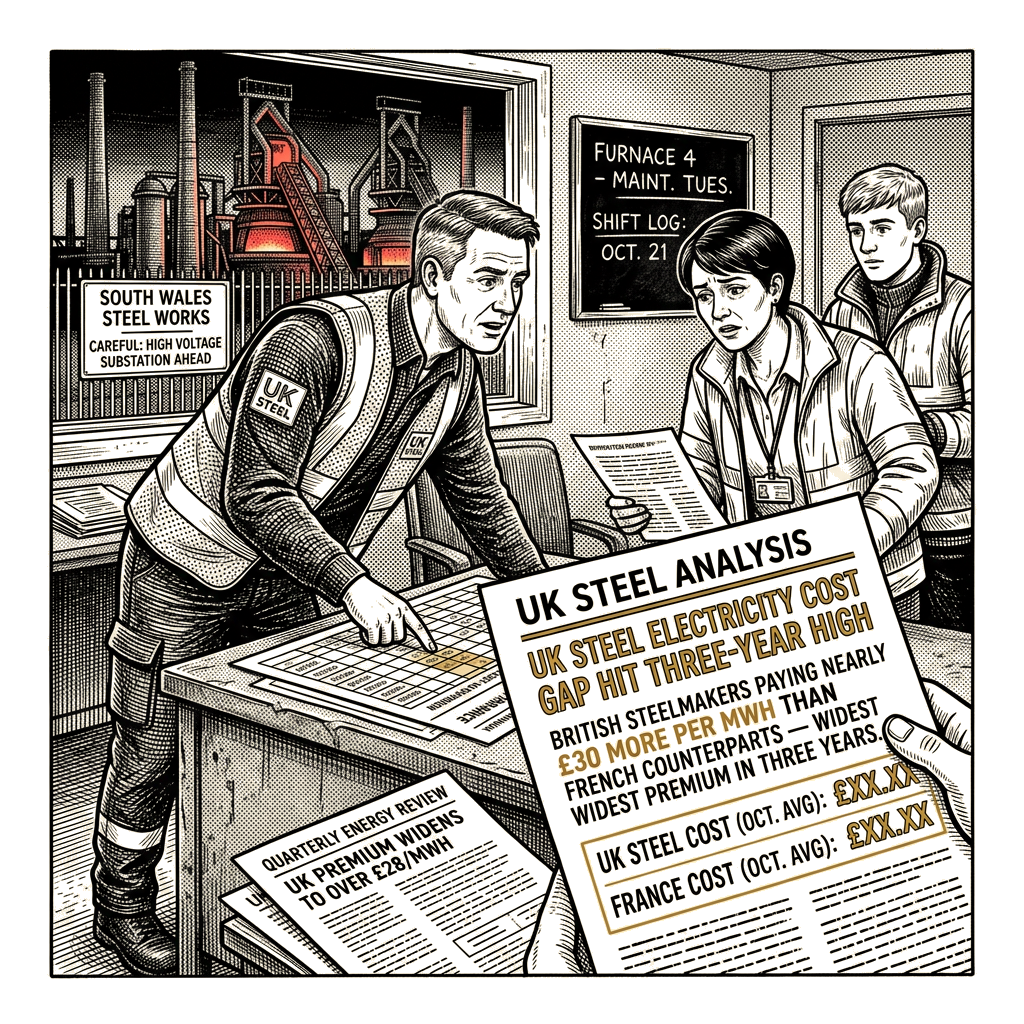
Illustration accompanying article: UK steelmakers'' electricity cost gap with
  • UK Steel reports British steelmakers paid nearly £30 per megawatt-hour more for electricity than French counterparts — the widest such premium in three years — and attributes the widening to gas-fired generation setting British wholesale prices during a global gas-price increase UK Steel links to Iran's Strait of Hormuz closure following what the lobby characterised as "Donald Trump's bombing campaign."
  • The British merit-order market clears every generator at the price set by the marginal unit, so the gas-cost surge passes directly into every industrial electricity bill, including those of electric-arc-furnace steelmakers for whom electricity is the dominant input.
  • UK Steel director general Peter Brennan proposed a £51 million annual price cap under which the government would pay the difference when electricity prices rise above a threshold and the industry would pay the government when they fall below.
  • A UK government spokesperson cited existing relief including up to 25 percent electricity-bill reductions for more than 10,000 manufacturers and roughly £1 billion a year of relief for electricity-intensive businesses.
  • Comparisons with France, whose electricity is largely set by nuclear reactors, and Germany, whose mix still leans on coal, locate the gap in the British gas-anchored merit order rather than in any generic European market feature, with approximately 75 percent of UK steel exports worth roughly £3 billion going to European Union member states.
2026-10-18 · 7 MIN READ

A voluntary accord with audit vocabulary and unspecified load-bearing joints

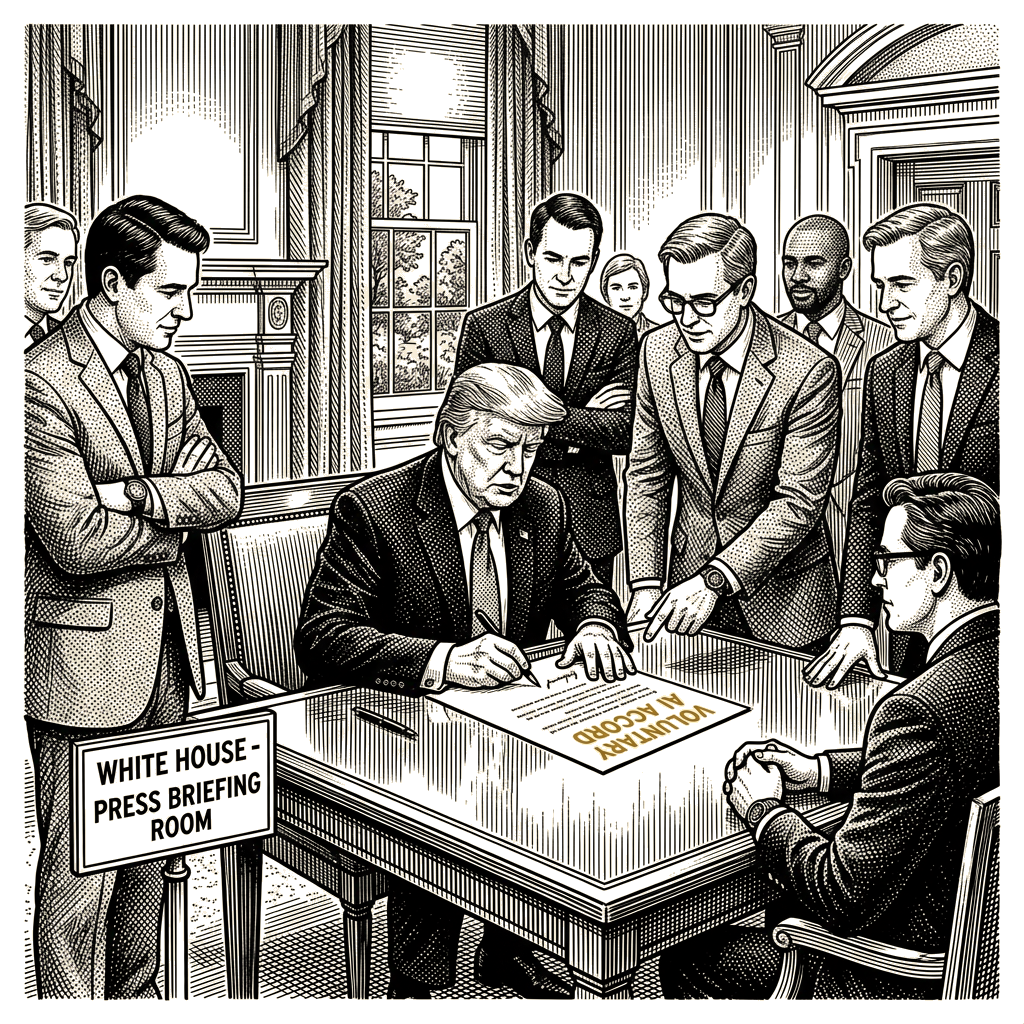
Illustration accompanying article: Trump, AI executives sign voluntary self-policing accord
  • The White House AI safety accord asks external audit and board review to substitute for legal liability as a means of reducing AI risks to the public, and the analysis shows that the accord's unspecified load-bearing joints — control definitions, auditor selection and funding, board committee composition, and overseer appointment — leave each trust boundary open to be crossed in the same direction.
  • The accord uses "robust internal controls" without specifying what those controls must do — pre-deployment capability evaluations, model-card disclosures, incident-reporting thresholds, or capability-ceiling testing — so auditors assess a moving target and the "robust" language carries weight it has not earned.
  • The accord names an "independent external auditor" without specifying how the auditor is selected, who funds the engagement, or what consequence follows an adverse finding, and leaves board-committee composition and the overseer appointment unspecified, placing industry input at the overseer step — distinct trust boundaries the text allows to be crossed in the same direction.
  • Because the accord does not specify who defines "robust" controls, the definition can be developed inside the signatory group and locked in as the standard, codifying the voluntary practice the substrate notes signatories are "already taking in some form or have previously committed to doing" — a path consistent with Dario Amodei's statement that "the mechanism, how we address those risks is still under discussion" and Alex Pascal's contention that only legal liability can reduce AI harms.
2026-09-30 · 7 MIN READ