U.S. President Donald Trump said Friday that Russian President Vladimir Putin and Ukrainian President Volodymyr Zelenskyy had agreed to his request for a three-day ceasefire running Saturday through Monday, along with an exchange of 1,000 prisoners of war on each side. Trump added that the break in fighting could be the “beginning of the end” of the war.
Kremlin foreign affairs adviser Yuri Ushakov confirmed that Russia accepted the initiative.
Zelenskyy said Ukraine’s consent was driven by the prospect of freeing its prisoners. In a Telegram post, he wrote: “Red Square matters less to us than the lives of Ukrainian prisoners of war who can be brought home.” He also issued a decree temporarily declaring Red Square off-limits for Ukrainian strikes, a move he described as allowing Russia to hold its Victory Day celebrations.
Kremlin spokesman Dmitry Peskov shrugged off Zelenskyy’s decree as a “silly joke.” “We don’t need anyone’s permission to be proud of our Victory Day,” Peskov told reporters.
The U.S.-brokered agreement defused tensions over a prospective Ukrainian attack on Moscow’s Red Square parade, but the deal appeared unlikely to set the stage for a comprehensive peace deal. The deep-seated lack of trust between the sides has thwarted U.S.-led diplomatic efforts, with earlier unilateral ceasefires declared by both sides this week quickly unraveling.
The Russian Defense Ministry claimed Friday that its forces “completely ceased combat operations and remained at their previously occupied lines and positions” from midnight, when Putin’s unilateral ceasefire came into force. But it accused Ukrainian forces of continuing to strike Russian positions and civilian infrastructure in border areas of the Belgorod and Kursk regions. According to the ministry, air defenses shot down 390 Ukrainian drones and six Neptune long-range guided missiles after midnight.
A Ukrainian drone strike hit the administrative building of the Southern Russia Air Navigation branch in Rostov-on-Don, forcing 13 airports in the south of the country to suspend operations, Russia’s Transport Ministry said. Flights resumed Friday afternoon, but officials said it would take up to three days to fully restore air travel.
Zelenskyy gave a different account. Russian forces continued attacking on the front line overnight, he said, while Ukrainian air defense forces shot down 56 Russian drones. “All this clearly shows that there was not even a pretense of a ceasefire attempt from the Russian side,” Zelenskyy said.
Ukraine also claimed more long-range strikes on Russian oil facilities. Zelenskyy said one hit the Yaroslavl region, more than 700 kilometers (430 miles) from the border, without specifying when the attack happened. Ukraine’s Security Service said a separate strike hit a major Russian oil refinery and pipeline pumping station in the Perm region, more than 1,500 kilometers (930 miles) away.
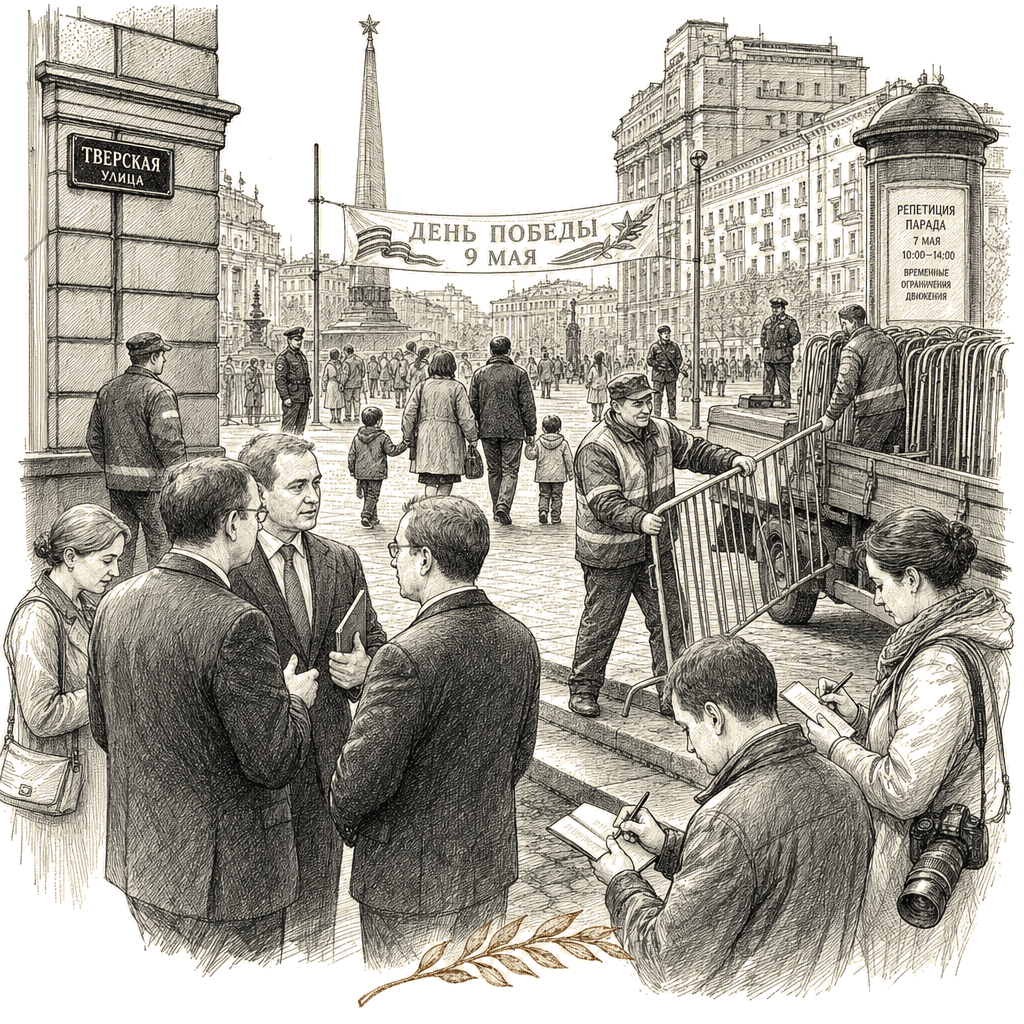
Putin, who has ruled Russia for more than 25 years, has used the Soviet Union’s victory in World War II to rally support for the war in Ukraine and project global clout. The traditional Red Square parade will take place without tanks, missiles and other military equipment for the first time in nearly two decades, aside from war planes in a flyover. Officials attributed the change to the “current operational situation,” without elaborating.
The Ministry of Digital Development said all mobile internet access and text messaging services would be restricted in Moscow on Saturday to ensure public safety. Alexander Baunov of the Carnegie Russia Eurasia Center wrote in an analysis that a parade held “furtively … and with the internet jammed … demonstrates nothing but fear and weakness.”
Russian officials have repeatedly warned that Moscow would take decisive action, including a potential mass strike on Kyiv, if Ukrainian attacks disrupt official events. Russia’s Foreign Ministry advised foreign embassies and international organizations in Kyiv to evacuate their offices in case of such a strike.
Several foreign leaders, including the heads of Kazakhstan, Uzbekistan, Belarus, Laos, and Malaysia’s king, were expected to attend Victory Day celebrations in Moscow. Slovak Prime Minister Robert Fico, a European Union member, laid flowers at the Tomb of the Unknown Soldier after arriving in Moscow on Friday but planned to stay away from the parade.