The National Federation of Independent Business said Tuesday that its small-business optimism index slipped 0.6 points to a seasonally adjusted 95.3 in May, the third consecutive month below the long-term average of 98. Economists polled by The Wall Street Journal had expected a reading of 96.2.
The NFIB survey, which captures conditions at roughly 40,000 small businesses that together employ nearly half of the private-sector workforce, showed that higher fuel prices are pinching margins and restraining expansion plans. Small firms are generally less able than larger competitors to pass sudden cost increases on to customers.
“More small business owners are struggling with significant and unpredictable hikes in fuel prices, which are more challenging for small businesses to pass on to their customers compared to their larger corporate competitors,” NFIB Chief Economist Bill Dunkelberg said in a statement.
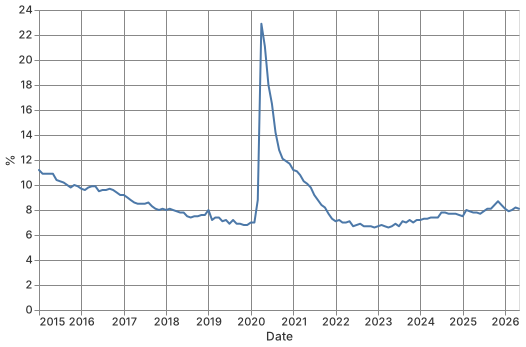
The hiring picture weakened markedly. A seasonally adjusted net 9% of owners reported plans to create new jobs over the next three months, the lowest share since May 2020. That reading suggests the labor market, while still tight by historical standards, is cooling in the sector that historically generates the bulk of net new U.S. jobs. Broader data from the Labor Department show the U-6 underemployment rate — which includes discouraged workers and those forced into part-time roles — stood at 8.1% in early June, according to Federal Reserve data.
Pricing pressures remain elevated. The net share of owners who raised average selling prices jumped 6 percentage points from April to 36%, the highest since March 2023. A net 34% said they plan to raise prices in coming months, the most since July 2022 — a sign that inflation may be proving stickier for small firms even as broader price measures have moderated.
Uncertainty about the economic path ahead intensified. The NFIB’s uncertainty index rose 3 points to 91, far above its historic average of 68. Dunkelberg described the outlook as divided. “Despite the enthusiasm around AI, the overall picture is divided,” he said.
The May reading adds to a pattern of modestly softening business sentiment that had already emerged in consumer confidence and retail spending data, as households and business owners alike navigate elevated fuel costs and elevated interest rates.