- U.S. stock futures rose Tuesday, with Nasdaq futures up 0.5%, as the technology sector extended its recovery from the previous week’s selloff, according to the Wall Street Journal.
- Brent crude oil fell 1.2% to $93.08 a barrel after Iran and Israel agreed not to escalate further following Sunday’s exchange of strikes.
- President Donald Trump told reporters a peace deal to reopen the Strait of Hormuz was close and could be agreed to within days.
- Asian equities rallied, led by an 8.2% surge in South Korea’s Kospi as semiconductor stocks rebounded.
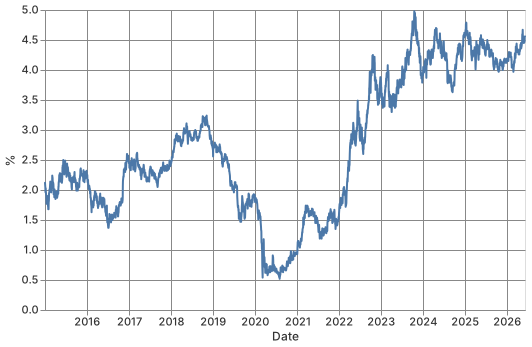
- The 10-year U.S. Treasury yield held at 4.55% ahead of Wednesday’s consumer price index release for May.
U.S. stock futures pointed higher Tuesday, extending a technology-led recovery, as oil prices fell on signs of de-escalation between Israel and Iran, the Wall Street Journal reported.
Nasdaq futures gained 0.5% in premarket trading, while S&P 500 futures rose 0.2%. The Dow Jones Industrial Average was flat. The moves followed a rally in Asian markets where South Korea’s Kospi surged 8.2% and Taiwan’s Taiex advanced 2.8%, led by semiconductor stocks.
Crude oil prices pulled back after two volatile sessions. Brent crude fell 1.2% to $93.08 a barrel in early European trading, while West Texas Intermediate futures declined 1.8% to $89.68 a barrel. The declines came after Iran and Israel agreed not to renew attacks unless the other did first, breaking the cycle of escalation that began with strikes Sunday.
President Donald Trump told reporters Tuesday that a peace deal to immediately reopen the Strait of Hormuz remained close and could be finalized within days. The waterway, through which about 20% of global oil passes, has been effectively closed since late April after Iran warned commercial shipping it would enforce restrictions.
Analysts at Saxo Bank attributed the limited rally in crude during recent supply disruptions partly to a 29% year-on-year drop in Chinese crude oil imports in April, alongside a surge in U.S. exports, releases from the Strategic Petroleum Reserve, and some demand destruction.
European stocks traded mixed. The Stoxx 600 was flat, with technology shares gaining but healthcare and software firms declining. Germany’s DAX edged up 0.1% as chipmaker Infineon Technologies rose 2.7%, while London’s FTSE 100 slipped 0.3% on weakness in drugmaker GSK. France’s CAC 40 added 0.3%, and Italy’s FTSE MIB climbed 0.7%.
The dollar weakened against major currencies as safe-haven demand moderated. The DXY dollar index fell 0.2% to 99.838, according to Deutsche Bank analysts. U.S. Treasury yields were little changed, with the 10-year note at 4.55% and the 2-year yield at 4.155%.
Gold slipped 0.3% to $4,351.80 a troy ounce. MUFG analyst Soojin Kim said higher-for-longer rate expectations remained a headwind for non-yielding assets.
Bitcoin edged down 0.2% to $63,366 as the cryptocurrency struggled to recover from its worst week since the 2022 crash, having touched a 20-month low of $59,125 on Friday, according to LSEG data.
Investors will turn their attention to Wednesday’s consumer price index report for May, which will offer the latest reading on inflation ahead of the Federal Reserve’s next policy meeting.