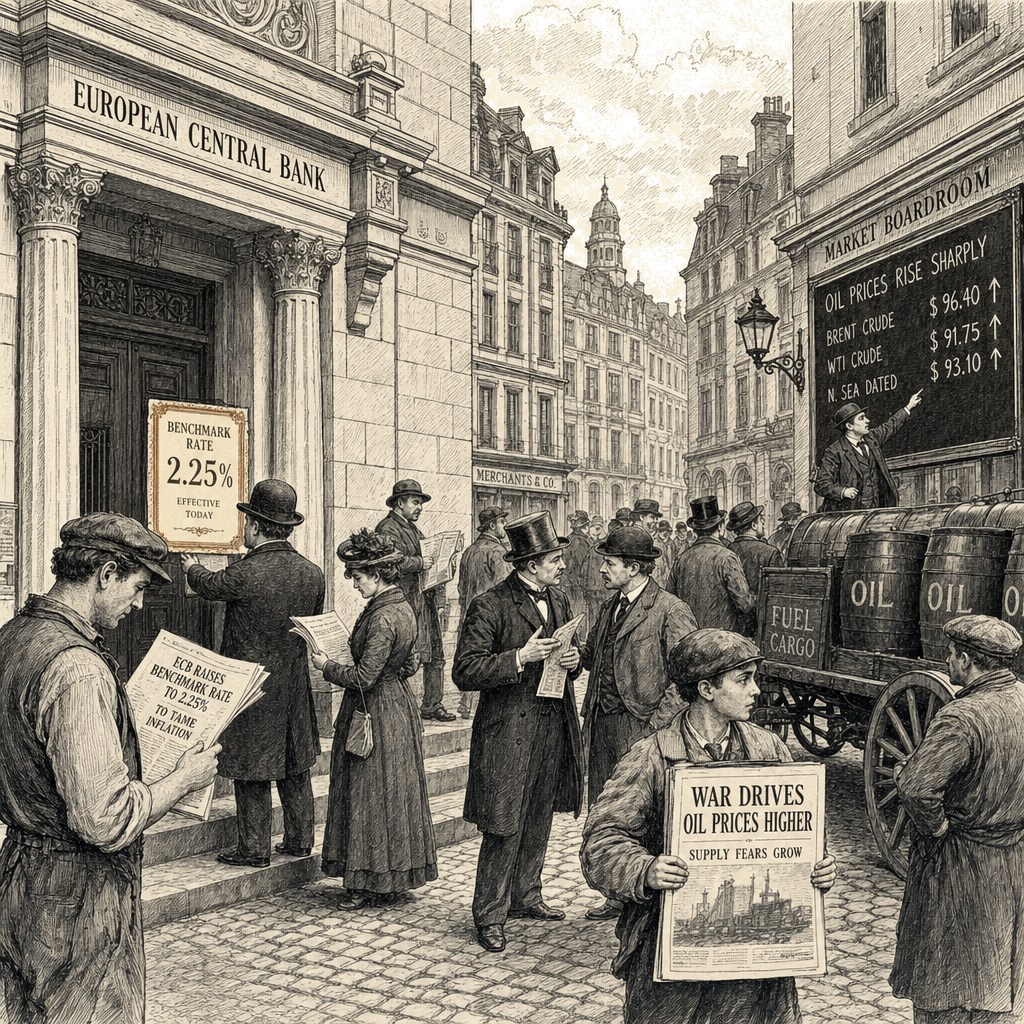
The European Central Bank’s rate-setting council on Thursday voted to raise its benchmark interest rate to 2.25%, up from 2% where it had stood for a year, according to a statement reported by the Associated Press. The quarter-point increase makes the ECB the first major central bank to tighten monetary policy in direct response to the inflation ignited by the Iran war, as policymakers around the world confront the economic consequences of sharply higher oil prices.
Oil prices have risen steeply since Iran began choking off the flow of crude through the Strait of Hormuz, the strategic waterway that in normal times carries roughly one-fifth of the world’s oil and fuel products. The resulting jump in costs for gasoline, diesel, heating oil, and other petroleum-derived goods has fed consumer price inflation across advanced economies, the ECB said in its explanation of the rate decision.
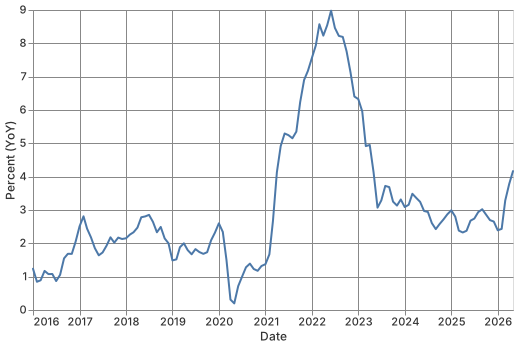
The ECB’s move is the first rate increase by a major central bank since the Iran war disrupted global energy markets in April. It sets the stage for a consequential week of monetary policy meetings: the U.S. Federal Reserve, the Bank of Japan, and the Bank of England are all scheduled to hold rate-setting deliberations next week. New Fed Chair Kevin Warsh, confirmed by the Senate in May, faces the pressure of rising inflation as the U.S. consumer price index rose 4.17% year over year in May, according to Bureau of Labor Statistics data archived by FRED.
In the eurozone, the rate increase is designed to dampen consumer price inflation fueled by higher costs for products made from crude oil. The ECB had held its benchmark rate at 2% for a year prior to Thursday’s move, as the conflict in the Middle East scrambled earlier projections for monetary easing. Economists surveyed by wire services had widely expected the quarter-point increase following the surge in oil prices.