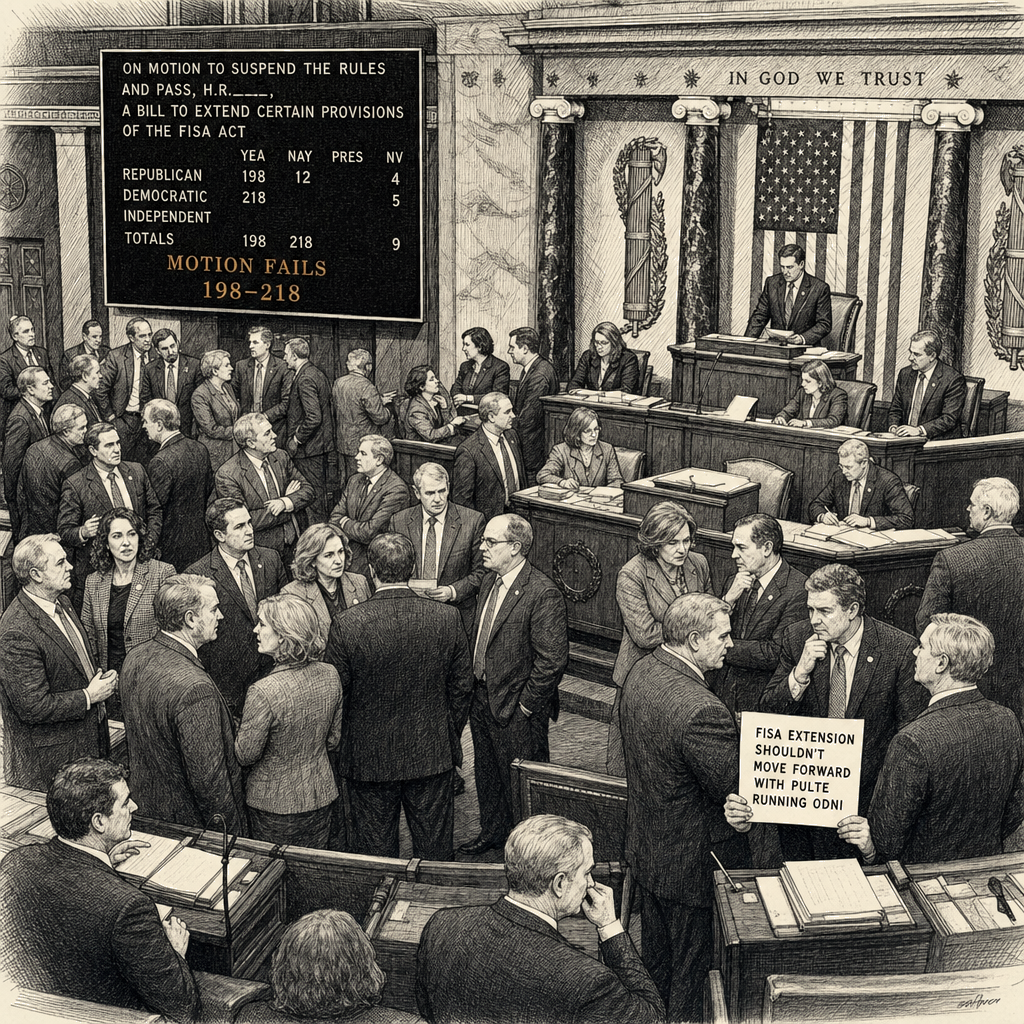
The House vote came after Republican leaders attempted to fast-track the extension under a procedure requiring a two-thirds supermajority. They fell short, with 19 Republicans joining nearly all Democrats in opposition.
The congressional deadlock leaves Section 702 of the Foreign Intelligence Surveillance Act, enacted after the Sept. 11, 2001, attacks, set to expire Friday. The provision permits US intelligence agencies to intercept foreign communications without a court warrant.
Democrats said they pulled out of bipartisan compromise talks after Trump named Pulte, the head of the Federal Housing Finance Agency and heir to a home construction fortune, to the top intelligence post. In a statement released before the vote, top House Democrats — including Minority Leader Hakeem Jeffries, his deputies, and the ranking members on the intelligence and judiciary committees — said Pulte “has no relevant national security experience.” They added: “The apparent motivation for his elevation is the demonstrated willingness of Bill Pulte to search government databases for alleged dirt on President Trump’s chosen political enemies.”
The statement concluded: “There is a path to reauthorizing FISA, but it will require enacting meaningful reforms. We oppose this bill to kick the can further down the road.”
Republican leaders in both chambers had been trying to forge a three-year renewal deal with Democrats and with members of their own party who have civil-liberties concerns about the law. Those talks collapsed after Pulte’s appointment.
The failure in the House follows a Senate vote last week in which a three-year extension also failed. All Democrats except Sen. John Fetterman of Pennsylvania voted against the measure in protest of Pulte’s appointment. Seven conservative Republicans who raised civil-liberties objections also voted no.
In response to the Senate defeat, the Republican chairs of the Senate intelligence and judiciary committees sent a letter to Secretary of State Marco Rubio, asking the administration to prepare for what they described as a “potential significant gap in foreign intelligence collection.”