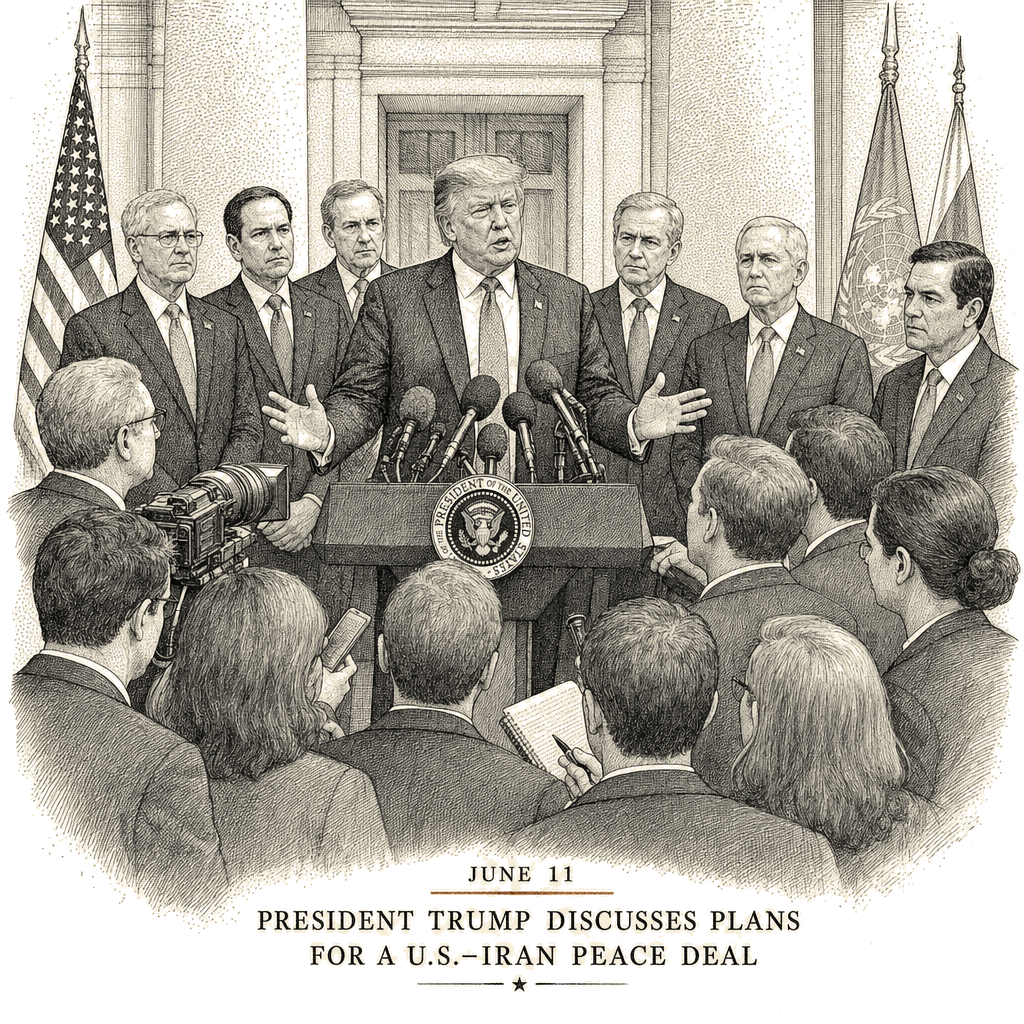
President Donald Trump told reporters on June 11 that the United States and Iran have reached plans to sign a peace deal that would end their ongoing conflict. Trump said it was his understanding that Iranian Supreme Leader Ayatollah Ali Khamenei had also approved the agreement. According to the president, the proposed deal would reopen the Strait of Hormuz — a critical maritime passage for global oil shipments that Iran has closed during the conflict — while also denying Iran a nuclear program. No timeline for a signing ceremony has been announced.
The announcement is the latest development in a monthslong negotiation process that has seesawed between escalatory military action and diplomatic breakthroughs. Trump has repeatedly described negotiations as being near completion, only to later walk back that assessment or order military strikes. In late May, the US conducted strikes on Iranian positions even as Trump said the two sides were advancing toward a deal. Earlier that month, Trump said the ceasefire with Iran was on “life support” after rejecting Tehran’s response to a US ceasefire proposal as “totally unacceptable.”
The US has sought to end Iran’s nuclear ambitions and reopen the Strait of Hormuz, which Iran blockaded earlier this year in response to the conflict. Trump has used the threat of military force as leverage in the talks, at times calling off planned strikes when negotiations appeared to progress and at other times escalating with a naval blockade of Iranian ports.
The president’s latest assertion that a peace deal is imminent and has Khamenei’s approval could not be independently confirmed. No Iranian officials have publicly commented on the claimed agreement or Khamenei’s alleged approval.