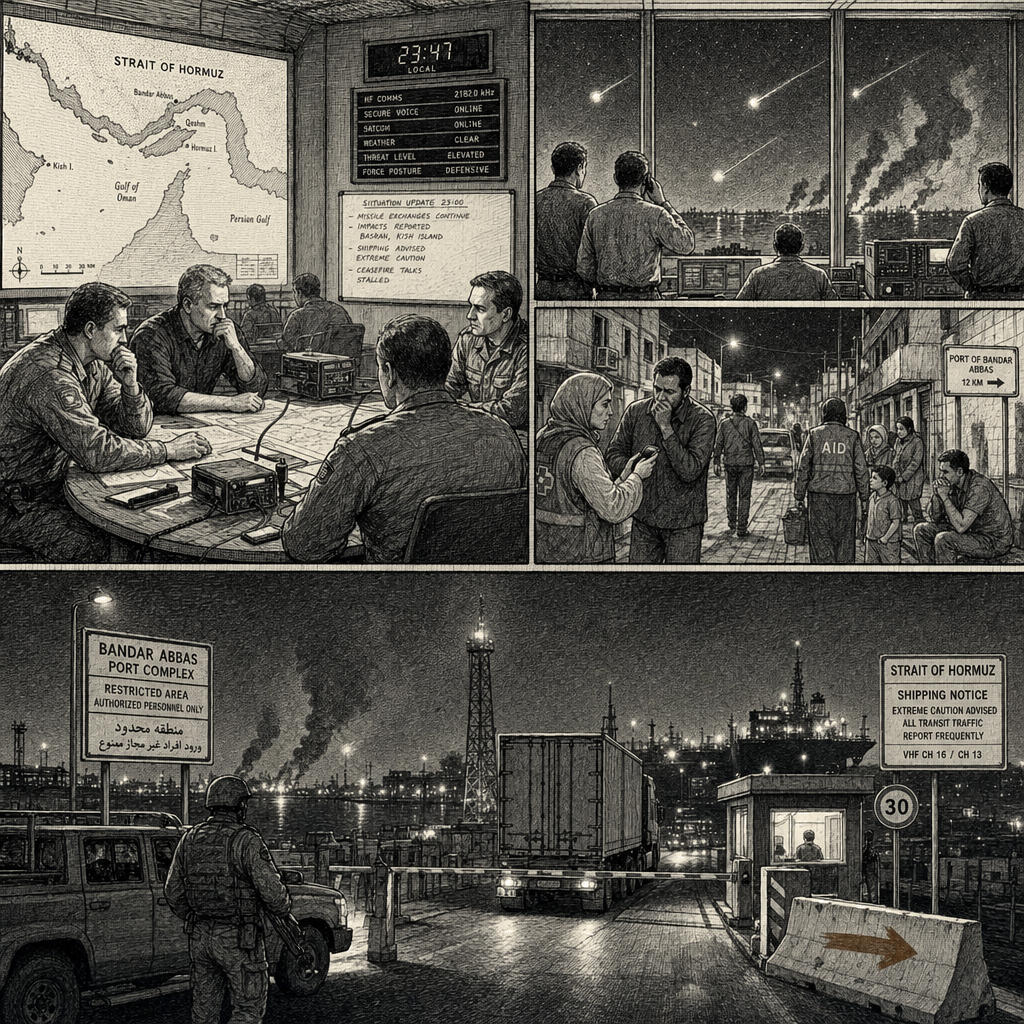
- The U.S. and Iran launched missiles at multiple targets across the Middle East for a second consecutive day on June 11, 2026, as diplomatic efforts to secure a nuclear deal stalled.
- President Trump said Iran was “playing us for suckers” for not accepting U.S. terms for the deal and promised to escalate military force.
- Defense Secretary Pete Hegseth said Wednesday, “If we need to negotiate with bombs, we’ll negotiate with bombs, and we’re very good at it.”
- Iran’s parliamentary speaker wrote on X that Tehran “prefer the language of diplomacy, but we speak other languages far more fluently” than English.
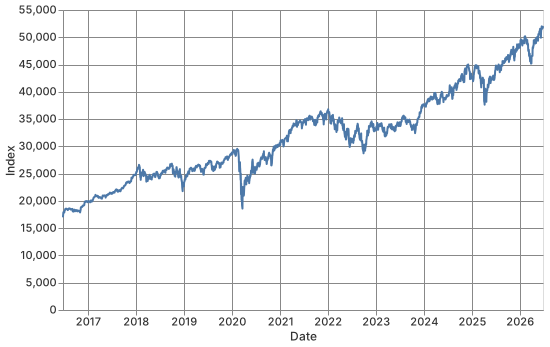
- The U.S. government released inflation data Wednesday showing persistent price pressures, with the Dow Jones Industrial Average closing at 49,918.78 on Thursday.
The United States and Iran traded missile strikes for a second day Thursday, turning what the White House had described as a pressure campaign to force Tehran into a nuclear deal into what President Donald Trump himself characterized as an open-ended military engagement.
“This is more like a ceasefire-in-name-only,” The Wall Street Journal’s Washington coverage chief Damian Paletta wrote in a newsletter published Thursday, describing a pattern he called a “dizzying rinse-and-repeat cycle” in which the U.S. and Iran alternate between talk of a diplomatic breakthrough and military escalation.
Trump said this week that Iran was “playing us for suckers” because it had not accepted U.S. terms for a nuclear agreement. In response to Iran’s refusal, he is promising to hit Iran harder than ever, according to the Wall Street Journal report.
Defense Secretary Pete Hegseth echoed the president’s posture Wednesday. “If we need to negotiate with bombs, we’ll negotiate with bombs, and we’re very good at it,” Hegseth said.
Iran’s leadership signaled no inclination to return to the table. “We prefer the language of diplomacy, but we speak other languages far more fluently,” Iran’s parliamentary speaker wrote on X this week.
The administration’s central pressure tactic — a military blockade of the Strait of Hormuz intended to squeeze Iran’s economy — has not yet produced its intended effect, according to the Journal. Meanwhile, gas prices remain stubbornly high because of the Iran conflict, and the U.S. government released worrisome inflation data on Wednesday. FRED data from the article’s date shows the Dow Jones Industrial Average closing at 49,918.78 on Thursday, reflecting market anxiety over the dual pressures of military escalation and persistent inflation.
The pattern of mixed signals from the White House has become a recurring feature of the conflict. Since late March, Trump has at times publicly indicated that negotiations were advancing toward a deal, even as U.S. forces continued to strike targets inside Iran. Iran, for its part, has repeatedly denied that any direct talks with the White House were occurring. The cycle — talk of a deal, a strike, more talk of a deal — has left U.S. allies and domestic observers uncertain about the administration’s endgame.
Trump is set to receive an intelligence briefing at 11 a.m. ET Thursday and is scheduled to sign a proclamation at 3 p.m., followed by a policy meeting at 4:30 p.m. and tele-rallies at 6:30 p.m. and 7 p.m.
The president’s schedule coincides with a “big birthday weekend” of festivities in Washington, according to the Journal, but the Iran situation threatens to overshadow the event if the military confrontation deepens further.