Summary
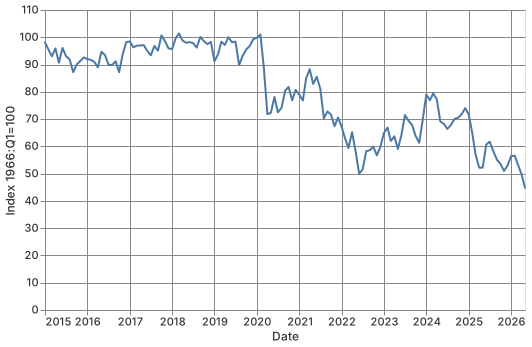
- The University of Michigan Consumer Sentiment Index rose to 49.8 in June 2026 amid easing average gasoline prices, which fell to $4.10 a gallon from $4.50 in mid-May, according to the survey’s director.
- Joanne Hsu, director of the surveys of consumers, said consumers “feel burdened by the recent escalation in inflation and worry that higher inflation could remain stubborn going forward.”
- Inflation hit a three-year high in May, according to new economic data released earlier this week, reaching over 4% for the first time since 2023.
- A White House spokesperson said the American economy “remains resilient thanks to this administration’s pro-growth agenda,” taking credit for the uptick in sentiment.
The University of Michigan’s Consumer Sentiment Index registered 49.8 in June, according to the survey’s director, Joanne Hsu — a four-point improvement from mid-May, when average gasoline prices sat at $4.50 a gallon, according to AAA. The index reading represents the survey’s authoritative vintage-correct value for the period.
The improvement was fueled largely by easing prices at the pump. AAA data showed average national gas prices have dropped to $4.10 a gallon, though that remains $1 more per gallon than a year ago. Hsu said that falling gas prices in May led to some relief for American consumers.
The uptick in sentiment was broad-based, according to Hsu, and was seen across age groups, education levels and political parties. Lower-income households — the most sensitive to gasoline price fluctuations — exhibited a particularly strong increase, the survey found.
Despite the improvement, Hsu said “views of the economy are still relatively dour.” The sentiment index remains below levels recorded during the Covid-19 pandemic and after last year’s introduction of a new slate of tariffs. Recent economic data showed inflation hit over 4% in May, a three-year high, contributing to consumer unease.
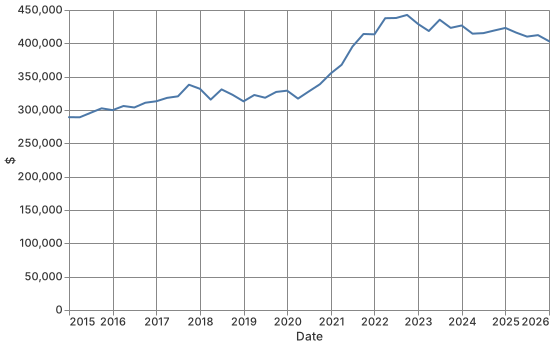
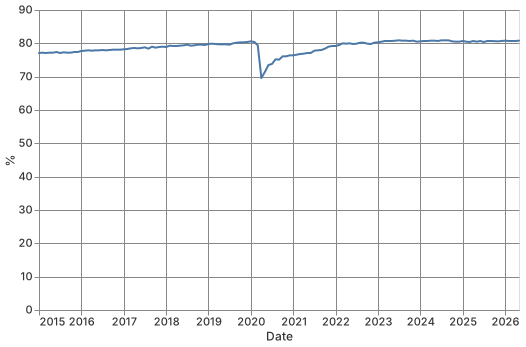
Americans’ expectations of their personal finances improved this month, Hsu said, even as many households continue to face elevated costs across housing, food and fuel. The median sales price of houses sold stood at $403,200, according to FRED data, a level that continues to strain affordability for many buyers. The prime-age employment-population ratio held at 80.8%, near multi-decade highs.
The economy is likely to play a crucial role in the midterm elections in November, when control of Congress will be determined. A Times/Siena poll published in late May found that nearly 76% of voters rated today’s economic conditions as fair or poor. A little over half of respondents said the war in Iran would not be worth the costs, and nearly two-thirds, including 73% of independent respondents, said entering the Middle East conflict was the wrong decision.
The White House celebrated the sentiment figures. “Despite temporary disruptions from Iran’s attempts to control the Strait, the American economy remains resilient thanks to this administration’s pro-growth agenda,” Kush Desai, a White House spokesperson, said in a statement.
The sentiment improvement comes amid a broader period of consumer economic pressure that MSI has tracked extensively. A June 10 MSI report noted that inflation surged to 4.2% in May, a three-year high, and in early June MSI reported that the average gas price of $4.16 a gallon had drawn public comment from President Donald Trump, who said prices were “not very high.” Consumer anxiety had been building for months; in May, as fuel costs rose with the Iran conflict, MSI reported that consumers were reassessing spending plans, and a late-May MSI article documented how the gap between rising Wall Street records and declining consumer mood had widened to historic proportions.