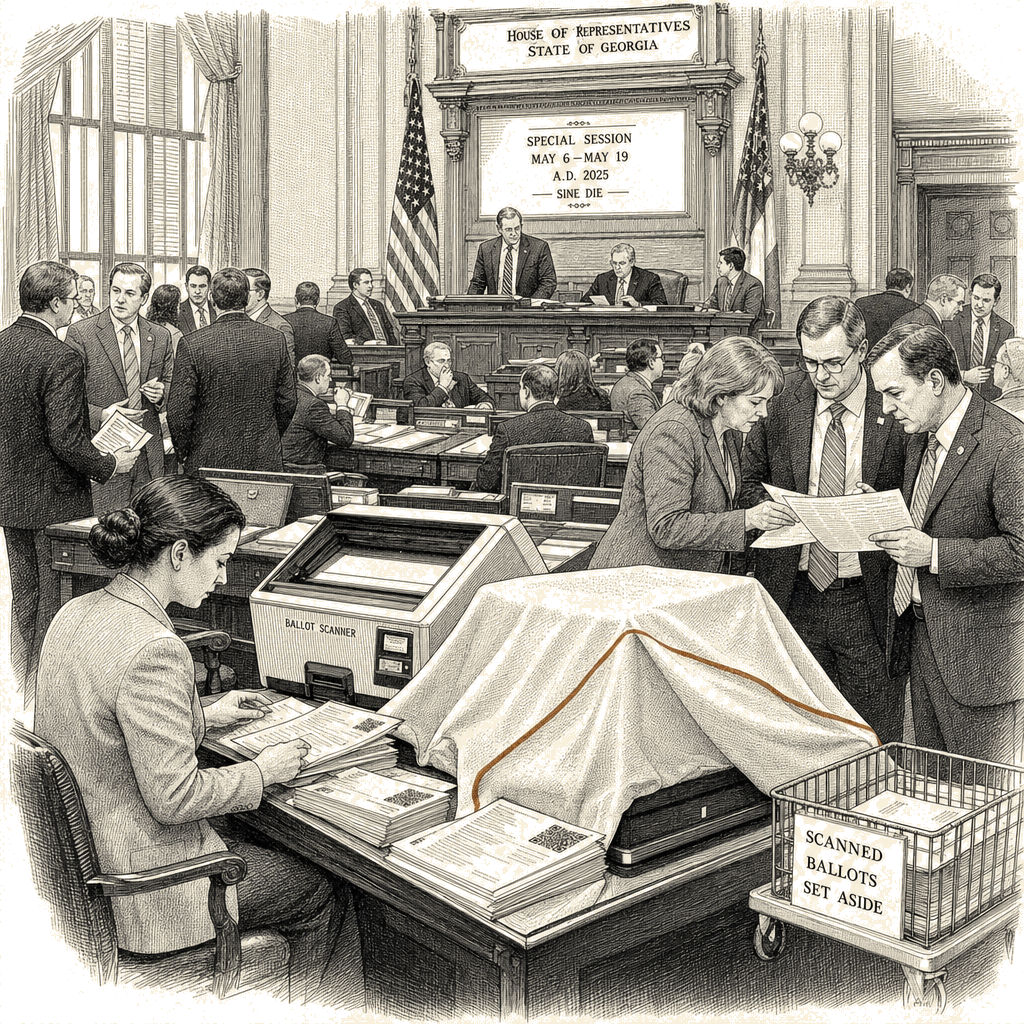
Georgia lawmakers return to the state Capitol this week for a special session called by Republican Gov. Brian Kemp, facing a self-created election administration crisis. The state’s voting system, used across all counties, relies on QR codes printed on paper ballots to tally results. In 2024, the legislature passed a law prohibiting the use of those barcodes for the official vote count after July 1, 2026 — but it never passed a replacement method to tabulate ballots.
Kemp, in the proclamation calling the special session, directed lawmakers to “address issues created” by that legislation, the Associated Press reported. The deadline for the QR-code ban to take effect is now two weeks away, and without legislative action, Georgia would have no legally authorized machine-tabulation method for elections.
The confusion has been compounded by conflicting signals from state election administrators. The secretary of state’s office, led by Brad Raffensperger, and the State Election Board have issued contradictory guidance to county election directors about how votes should be cast and counted, the AP reported. County officials have been left uncertain which set of instructions to follow.
Georgia is a perennial presidential battleground and has a full slate of elections scheduled for 2026, including races for governor, U.S. Senate, and the state legislature. The special session gives Kemp and lawmakers a narrow window to clarify or replace the law before in-person voting begins later this year.
The QR-code system was implemented statewide as part of a 2019 voting-machine upgrade purchased after the 2018 gubernatorial election, which was marked by widespread complaints about long lines, malfunctioning equipment, and allegations of suppression. The touch-screen machines produce a paper ballot with a human-readable summary and a machine-readable QR code that is scanned at the tabulator. Critics of the ban have argued that discarding the QR code without a reliable alternative would slow count times and introduce human error.
Legislative leaders have not publicly detailed a specific replacement plan. The special session was originally called for other purposes, including redistricting, before the QR-code deadline became a pressing issue.