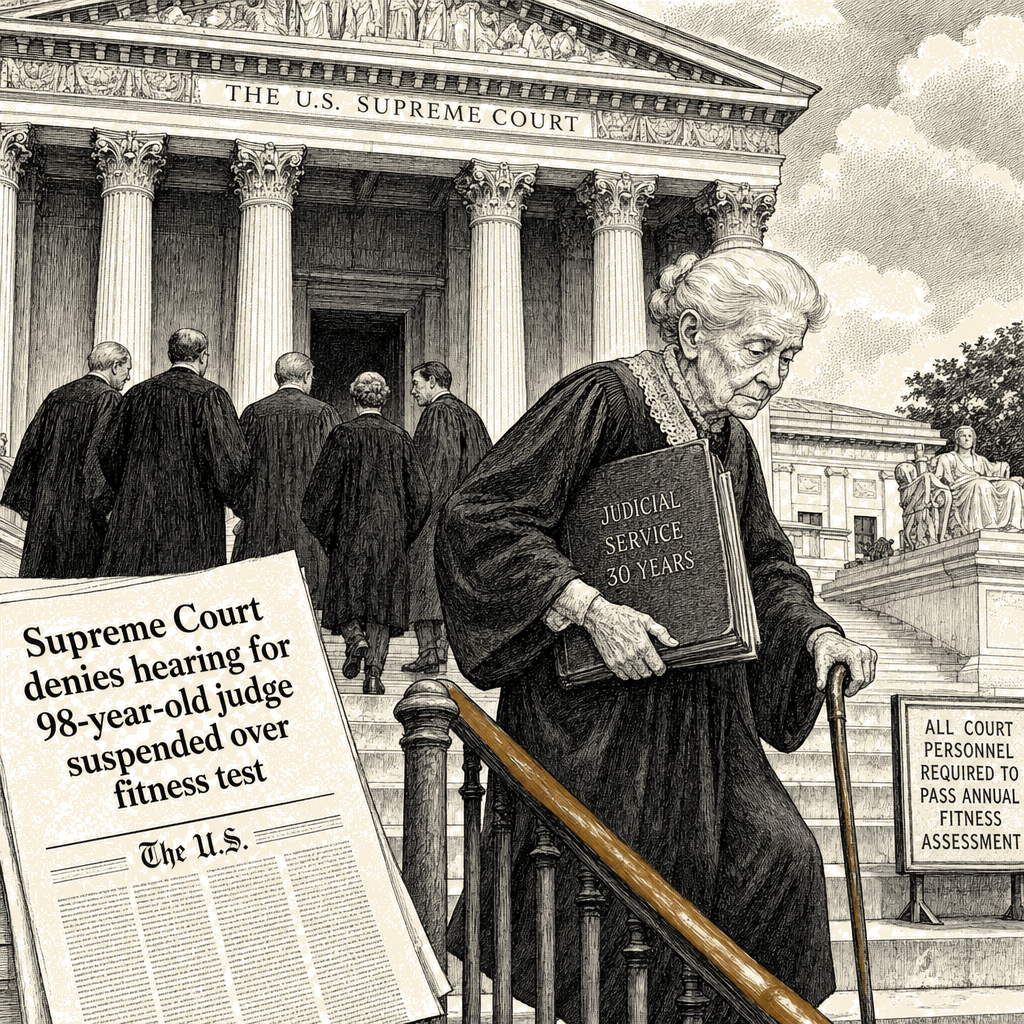
The U.S. Supreme Court on Monday declined to hear a request from Judge Pauline Newman, the oldest active federal judge, to lift her suspension, according to an order issued June 15. Newman, who turns 99 on Saturday, has been suspended from hearing new cases for nearly three years after she refused to comply with orders for mental fitness testing.
Newman has served on the U.S. Court of Appeals for the Federal Circuit since 1984, two years after the court was established. She has written more than 300 dissenting opinions over her career, earning her the nickname “the Great Dissenter.”
The dispute began when Federal Circuit Chief Judge Kimberly Moore said Newman experienced health issues in 2021 that made her “unable to discharge the duties of an active circuit judge,” according to filings in the U.S. Court of Appeals for the Federal Circuit. Moore also said Newman fainted after an argument and was unable to walk in 2022. Newman subsequently agreed to reduce her caseload.
A special committee of two Federal Circuit judges, convened by Moore, ordered Newman to undergo neurological and neuropsychological testing and to submit medical records. Newman instead provided expert reports from two doctors. The committee recommended that she be barred from hearing cases for one year, subject to renewal. The court approved that recommendation in September 2023, and Newman has remained under suspension since.
Newman filed a lawsuit against her colleagues in the Federal Circuit, arguing the suspension is unconstitutional. Her attorneys told the Supreme Court that the case involves “crucial constitutional and statutory aspects of lifetime tenure and judicial independence, especially the availability of judicial review for intra-branch infringements on judicial service.”
Moore had told Newman she could either retire or accept senior status, a form of semi-retirement that reduces a judge’s caseload. Newman refused.
The Supreme Court’s one-line order did not explain the decision. Denials of certiorari typically do not include reasoning.
The case highlights the tension between a judge’s constitutional protections and the judiciary’s internal mechanisms for addressing concerns about a member’s capacity. Newman’s suspension remains in effect indefinitely, with no clear path to appeal beyond the Supreme Court, which has now declined to take up the issue.