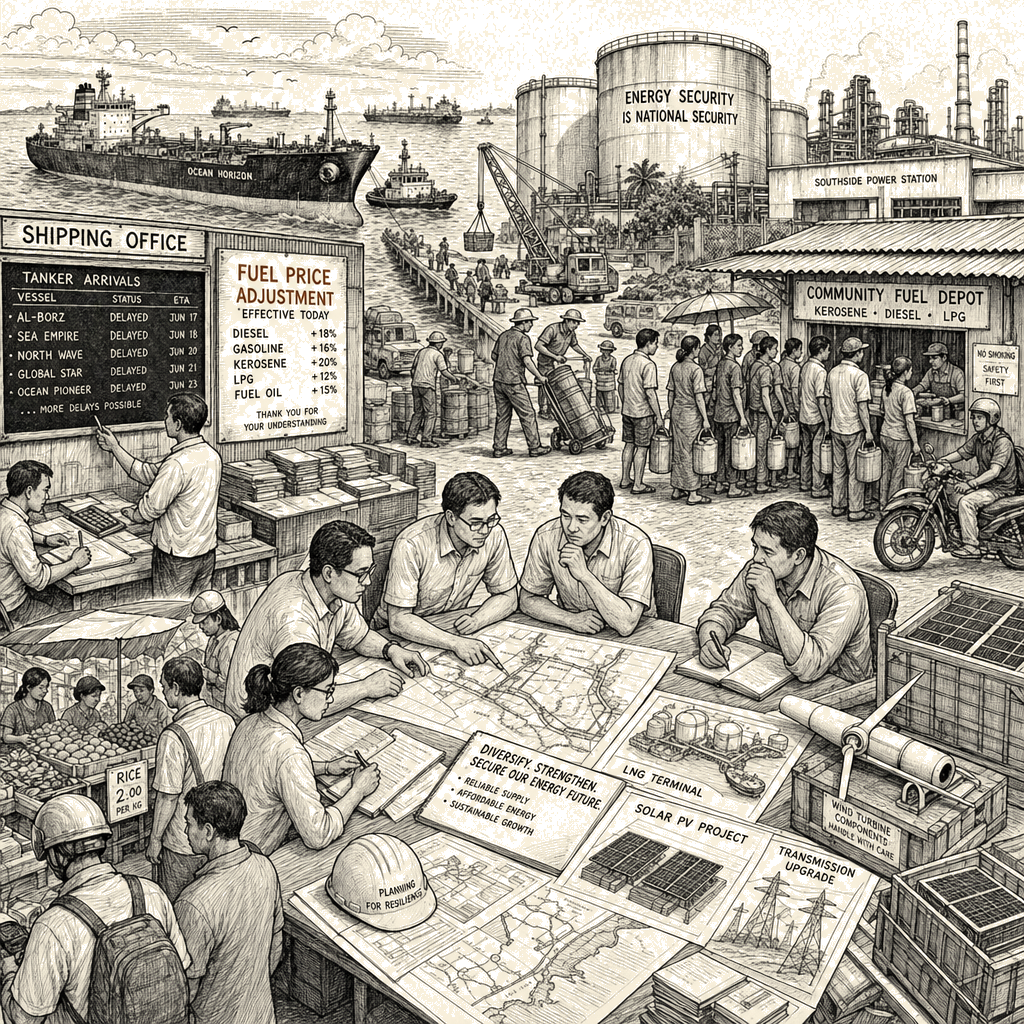
BANGKOK — The International Energy Agency warned Tuesday that Southeast Asia’s overreliance on oil and gas transported through the Strait of Hormuz has left it dangerously exposed to shocks from the Iran war, and that without sweeping reforms the region’s energy import bill could triple to $245 billion by 2035.
The IEA’s report, released June 16, described the war as a “stark wake-up call” for Southeast Asia’s energy security. The region currently imports about $80 billion a year in energy, the report said, and if it fails to diversify its sources, that figure could nearly triple over the next nine years.
According to the agency, the conflict has already spurred some changes in Southeast Asia. Sales of electric vehicles are rising, several countries have renewed interest in nuclear power, and rooftop solar and other renewable-energy installations have seen a boom. But the report said these shifts, while significant, are not yet sufficient to insulate the region from future supply disruptions.
“Diversification of energy sources and supply routes is now a central priority,” IEA Executive Director Fatih Birol said in a statement accompanying the report.
The warning comes as the Iran war, now in its third month, continues to disrupt global energy markets. The Strait of Hormuz, through which about a quarter of the world’s oil and natural gas passes, has been a focal point of the conflict, with shipping and pipeline infrastructure repeatedly threatened. Southeast Asia’s heavy reliance on that chokepoint, the IEA said, makes it among the most vulnerable regions to any further escalation or extended disruption.
The report also noted that the war presents both a risk and an opportunity: the crisis could accelerate a long-term transition away from fossil fuels, but only if governments act quickly on policy reforms to support renewables, grid modernization, and energy efficiency. Without those measures, the region’s growing demand for imported energy will continue to drive up costs and deepen its exposure to geopolitical shocks.
The IEA’s analysis comes as MSI has reported on the ongoing economic fallout of the Iran war across Asia, including its strain on energy buffers, its impact on tourism in Southeast Asia, and its contribution to a broader global energy cost shock.