Social Security’s finances have been deteriorating steadily for more than a decade and a half, with the program’s primary trust fund now shrinking by hundreds of billions of dollars annually as actuaries project an automatic benefit cut if Congress does not act, according to a report in The Wall Street Journal.
The Old-Age and Survivors Insurance Trust Fund is now projected to be depleted in the fourth quarter of 2032, according to Social Security actuaries cited by the Journal. At that point, unless Congress has taken action, incoming payroll tax revenue would be insufficient to pay full benefits, and monthly checks would be reduced by more than one-fifth. The 33 senators elected to full terms in November would be the first U.S. politicians who may have to confront automatic benefit cuts while in office, the Journal reported.
But the funding problem is not merely a future political headache. Payroll taxes stopped being enough to cover the combined retiree and disability programs’ expenses 16 years ago, the Journal reported. Interest income kept the combined trust funds from shrinking until five years ago. Last year, the retiree-and-survivor fund’s reserves shrank by $200 billion to $2.34 trillion, and the shortfalls are expected to grow.
Payroll taxes that support Social Security are spent right away, with any surplus converted into special-issue IOUs outside the regular Treasury debt market, the Journal reported. Now that the main trust fund is shrinking, the line item for Social Security spending in the federal budget looks the same, but the government needs extra cash from regular Treasury investors — a need that is growing more difficult to meet at a time of rising fiscal worries.
The funding gap matters for all Americans, including those with enough personal savings to consider Social Security a supplement rather than their primary source of retirement income, according to the Journal. It could affect taxes, mortgage rates, and stock and bond portfolios.
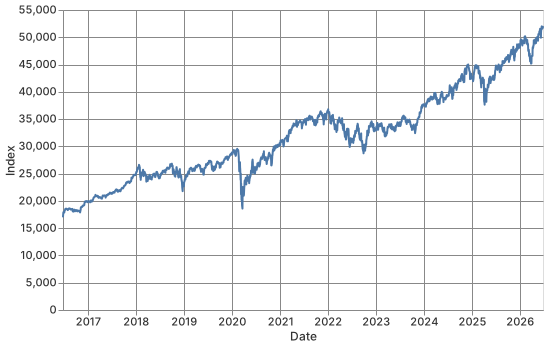
The Dow Jones Industrial Average closed at 51,999.67 on June 17, the most recent trading day.
Congress has several options to address the shortfall, and bold fixes have happened before — notably on a bipartisan basis in the 1980s, the Journal reported. Options include raising payroll taxes or extending the levy to investment income. Congress could also direct the general federal budget to plug the gap, but that would mean either raising regular income taxes or borrowing more. Even with optimistic assumptions such as no recessions, the Congressional Budget Office already projects a federal budget deficit of $2.7 trillion in fiscal year 2033, according to the Journal.
Benefit cuts could also help close the gap, such as by slowing cost-of-living adjustments or paying less to wealthy retirees, the Journal reported. However, Social Security accounts for a large enough share of national income that the consumer spending impact would be felt regardless of who receives smaller monthly checks.
MSI previously reported that the Social Security trustees’ annual report, released June 9, projected the retirement fund would run short by late 2032. The current analysis by the Journal describes the immediate fiscal pressure that shortfall is already exerting on federal borrowing and financial markets.