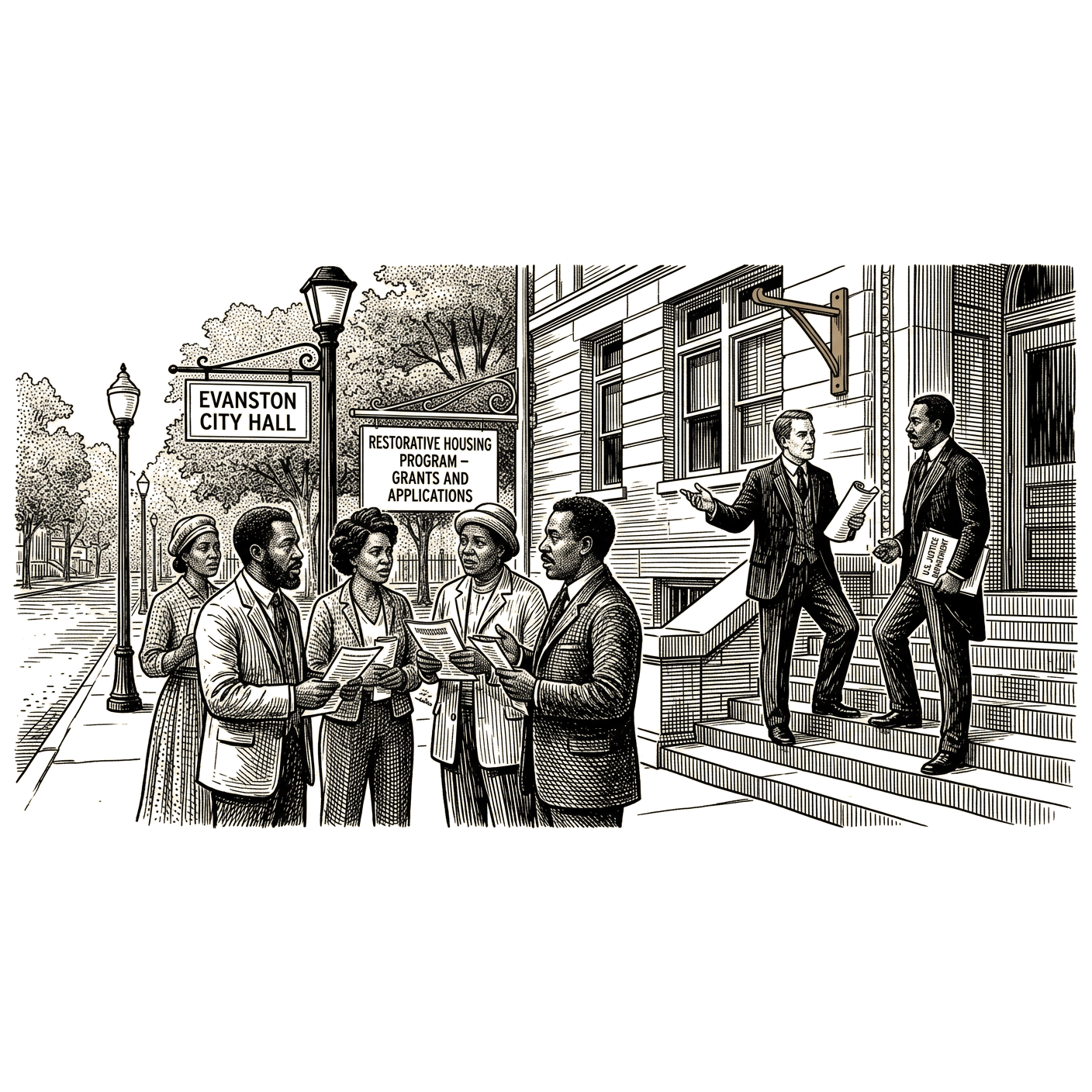
The Justice Department on Wednesday joined a lawsuit against the city of Evanston, Illinois, in an effort to block the suburb’s first-in-the-nation housing reparations program for Black residents. The legal action targets the Restorative Housing Program, which uses $10 million in revenue from cannabis sales taxes to provide grants of up to $25,000 for home purchases, repairs, or property-related costs.
Harmeet Dhillon, assistant attorney general in the Justice Department’s Civil Rights Division, said in a statement that the program amounts to “race discrimination, pure and simple” and is illegal. The department specifically cited the Fair Housing Act of 1968 — a law originally intended to eliminate discriminatory housing practices — as grounds for the lawsuit, arguing that Evanston is “offering and providing financial assistance for housing because of race.”
The program was approved by the Evanston City Council as a remedy for decades of discriminatory housing policies the city enforced between 1919 and 1969. Eligible residents must be Black and be direct descendants of someone who experienced discrimination during that period. Residents who can document harm from policies after 1969 may also apply.
Evanston has a population of about 76,000, of whom approximately 25% identify as Black or interracial. The program has so far awarded roughly $5 million to 212 applicants, according to city figures.
Evanston Mayor Daniel Bliss told Evanston Now that the city stands behind “our first-in-the-nation reparations program, are confident in its constitutionality, and look forward to defending it in court.”
The lawsuit is the latest in a series of legal challenges by the Trump administration against local policies it considers race-based, including suits over Denver’s assault weapons ban and a conservative group’s challenge to Los Angeles school desegregation policies. The case tests whether local reparations programs can survive constitutional scrutiny under the Fair Housing Act.