A new Wall Street Journal poll of 2,000 adults conducted May 7–18 finds economic anxiety has spread up the income ladder, with even the wealthiest Americans expressing significant financial unease. The survey, which has a margin of error of 2.2 percentage points, asked respondents to identify their economic class and then probed their financial outlooks. The results reveal a pervasive pessimism that has sharpened since 2017.
Among respondents who described themselves as upper class or upper-middle class, 86% said they lack confidence that their children’s lives will be better than theirs has been — a striking increase from 64% in a 2019 WSJ/NBC News survey. More than 40% in that group said they have not saved enough to retire comfortably. Only about 40% reported that their financial security is where they thought it would be at this point in their lives. Nearly three in five said they are strained by high gasoline prices.
The most affluent classes also showed a dramatic rise in the belief that the system is rigged against them. Some 65% said America’s political and economic systems are “stacked against people like me,” compared with 29% in a 2017 survey. “What we’re seeing in this poll is Americans under siege,” said John Anzalone, a Democratic pollster who helped conduct the survey.
Republican pollster Adam Geller, who also worked on the poll, noted that while stress levels are not as high as those experienced by working-class Americans, the anxiety among the wealthy is “very real.”
The poll found that many middle-class Americans face intense financial strain. When asked what makes them middle class, respondents cited having a good salary, owning a home, and affording basic needs. Yet when asked about specific aspects of financial life, retirement saving, health insurance costs, housing and grocery bills, and carrying debt were all areas of stress. Only about one in five middle-class respondents described the middle class as a place of comfort; about half said it is both comfortable and stressful.
Among middle-class households, only about one in four said they make enough money to save beyond emergency expenses, have enough to retire comfortably, or have achieved the financial security they expected at this point. Roughly the same share reported credit-card debt they cannot pay off each month.
Faith in a college degree as a ladder to financial success has eroded: 56% of middle-class respondents said a four-year degree was not worth the cost, while only a third said it was.
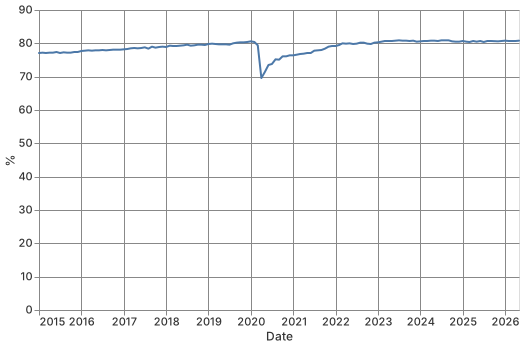
Despite these findings, conventional economic indicators remain strong. The prime-age employment-population ratio stood at 80.8% in May, near historic highs. The S&P 500 closed at 7,500.58 on June 19, and the Dow Jones Industrial Average at 51,492.55. Yet the poll captures a persistent disconnect between aggregate economic performance and household-level experience. The share of credit-card balances delinquent for at least 90 days has hit a 15-year high, the Federal Reserve Bank of New York reported.
Across all income classes, roughly seven in 10 respondents said the nation is on the wrong track. About one-third of all classes expect their personal finances to improve in the next year, though working-class respondents were more likely to expect a downturn.
The poll also revealed a paradox: while many respondents reported upward mobility from the class they grew up in, they do not expect that mobility to continue for their children. Nearly half of self-described middle-class respondents said they grew up in a lower class. Among upper-middle class respondents, more than three-quarters said they started lower. Yet the overwhelming majority across groups expressed doubt that the next generation will climb as they did.