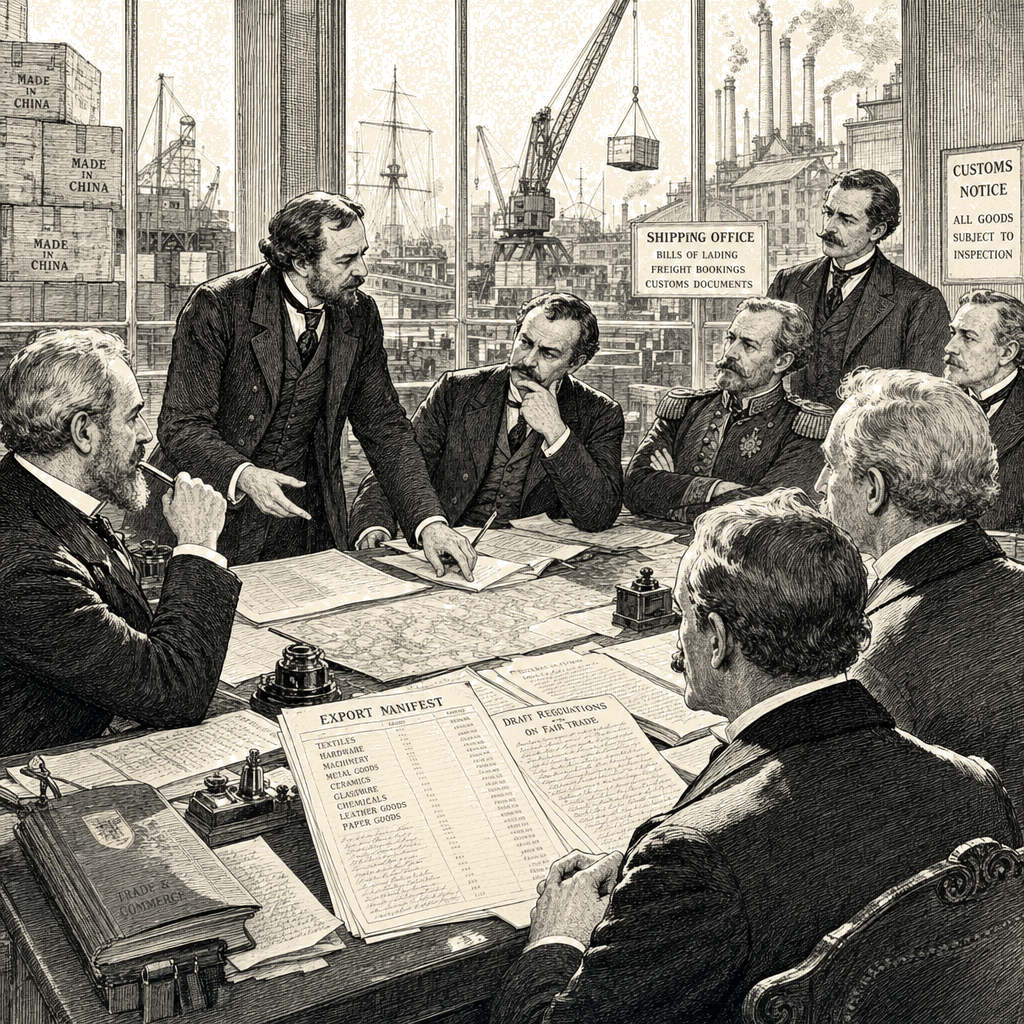
European leaders meeting in Brussels this week expressed growing alarm over a flood of Chinese exports they say is threatening the bloc’s industrial base, with a growing number calling for new trade-defense tools to counter Beijing’s state-subsidized industries and undervalued currency. The European Commission is seeking expanded legal authority to impose trade measures against entire sectors rather than individual products, according to people familiar with the matter, as the EU’s trade deficit with China swells.
At a summit on Thursday, Luxembourg Prime Minister Luc Frieden described China as “an existential threat for our industries.” Some EU officials say half of Europe’s industrial base is at risk from Chinese imports, the Wall Street Journal reported.
The EU’s trade deficit with China soared to a record 360 billion euros — about $413 billion — in 2025 and is on track to reach roughly €400 billion this year, an EU official said. The deficit reflects a surge in Chinese exports of subsidized manufactured goods, from electric vehicles to machinery, that European officials say is enabled by Beijing’s vast state aid and a persistently cheap yuan.
Even Germany, whose economy has long relied on exports to China, is alarmed. Chancellor Friedrich Merz said this week that Beijing keeps its currency up to 30% undervalued, calling it “a massive competitive disadvantage.” Germany’s automotive industry has lost one-seventh of its workforce since 2019, according to accounting firm Ernst & Young. An analysis by the Centre for European Reform think tank found that German exports to China fell by the equivalent of about 1 percentage point of the country’s gross domestic product over the past five years.
“The Chinese are systematically subsidizing their industry, and we are picking one product at a time,” said Oliver Richtberg, head of foreign trade at the VDMA machinery industry association, describing the EU’s current approach as insufficient.
French President Emmanuel Macron last month called for new trade measures that could mirror Section 301 of the 1974 U.S. Trade Act, which allows U.S. presidents to impose permanent tariffs based on unfair trade practices.
But divisions persist among member states over how aggressively to act. Past efforts to contain economic risks have faltered, as countries including Germany and Spain still benefit from trade and investment ties with Beijing. Spain’s Prime Minister Pedro Sanchez called China a potential ally on Thursday. The EU’s existing anti-coercion tool, which allows the bloc to easily impose tariffs, quotas or export restrictions, has never been used.
Berlin’s position is now critical to any European response. Merz told lawmakers last week that the government would protect the economy against market-distorting trade practices. But his government remains nervous about provoking a full trade war with China, the Wall Street Journal reported.
China could open antidiscrimination and supply-chain security investigations if the EU adopts a new trade-defense tool, a social-media account run by China’s state broadcaster said last month. Still, Beijing is also dependent on Europe: it faces economic weakness at home and much higher U.S. trade barriers, making the EU a crucial export market. European officials say tougher measures would aim to stabilize the two economies’ relationship, something they argue is in both sides’ long-term interest.
At a dinner Thursday night, EU leaders agreed to keep talking with China about its economic policies and “to develop and eventually complement” their instruments for defending the bloc’s trade and industrial interests, an EU official said. Any new measures are likely to be generic and theoretically usable against any trade partner, but European diplomats said China is the real target. One diplomat described Beijing’s policies, including its subsidies and cheap currency, as akin to an economic attack against Europe.