- The U.S. Trade Representative announced a Section 301 probe targeting Germany’s plan to cut pharmaceutical spending, citing what the agency described as Germany’s “persistent underpayment for innovative pharmaceutical products.”
- Germany announced in April plans to save billions of dollars annually by requiring drugmakers to offer larger discounts on medicines, aiming to close a funding gap in its public healthcare system.
- Eli Lilly and Boehringer Ingelheim have both scaled back planned investments in Germany following the announcement, warning the changes would stifle medical innovation.
- The investigation is the latest in a series of Section 301 probes launched by the Trump administration; it is expected to take several months to complete.
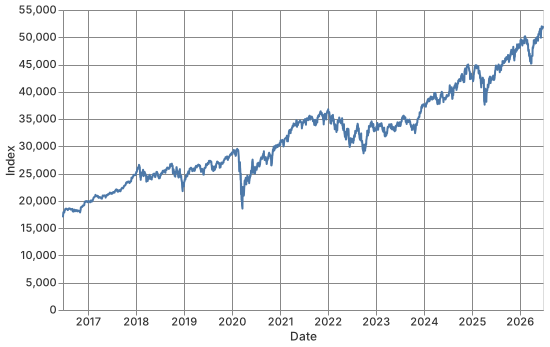
- The Dow Jones Industrial Average closed at 51,492.55 on Friday.
The U.S. government launched a trade investigation Thursday into Germany’s plan to cut spending on pharmaceuticals, opening a new front in the Trump administration’s efforts to reshape global drug pricing. U.S. Trade Representative Jamieson Greer announced the Section 301 probe, accusing Germany of “persistent underpayment for innovative pharmaceutical products.”
“President Trump has made clear that American patients should not be shouldering a disproportionate share of global pharmaceutical research and development,” Greer said in a statement.
The investigation targets Germany’s plans, announced in April, to save billions of dollars a year by requiring drugmakers to offer larger discounts on medicines. The German government aims to close a looming funding gap in the country’s public healthcare system.
A spokesman for the German Health Ministry declined to comment on policy decisions by other countries, adding that Health Minister Nina Warken has been in talks with the U.S. about drug prices.
The Dow Jones Industrial Average closed at 51,492.55 on Friday.
The German proposal has already drawn pushback from the pharmaceutical industry. Eli Lilly and Boehringer Ingelheim have both cut planned investments in the country following the announcement, warning that the policy shift would discourage medical innovation.
Section 301 of the Trade Act of 1974 allows the president to impose tariffs against countries that discriminate against American companies without congressional approval. The Trump administration has used the authority repeatedly to pressure trading partners, including a 100% tariff order on some patented drugs signed in April as part of an escalating trade dispute with several nations.
The investigation is expected to take several months. Greer called on Germany to follow the U.K.’s example, which has pledged to spend more on innovative medicines to avoid threatened U.S. tariffs.
It remains unclear how new tariffs on Germany would be implemented. The U.S.-EU trade deal reached last year capped tariffs on pharmaceuticals at 15%. EU lawmakers approved legislation to eliminate tariffs on many U.S. imports this week, following through on a pledge from that deal after President Trump threatened new tariffs on the bloc earlier this year over its slow implementation.