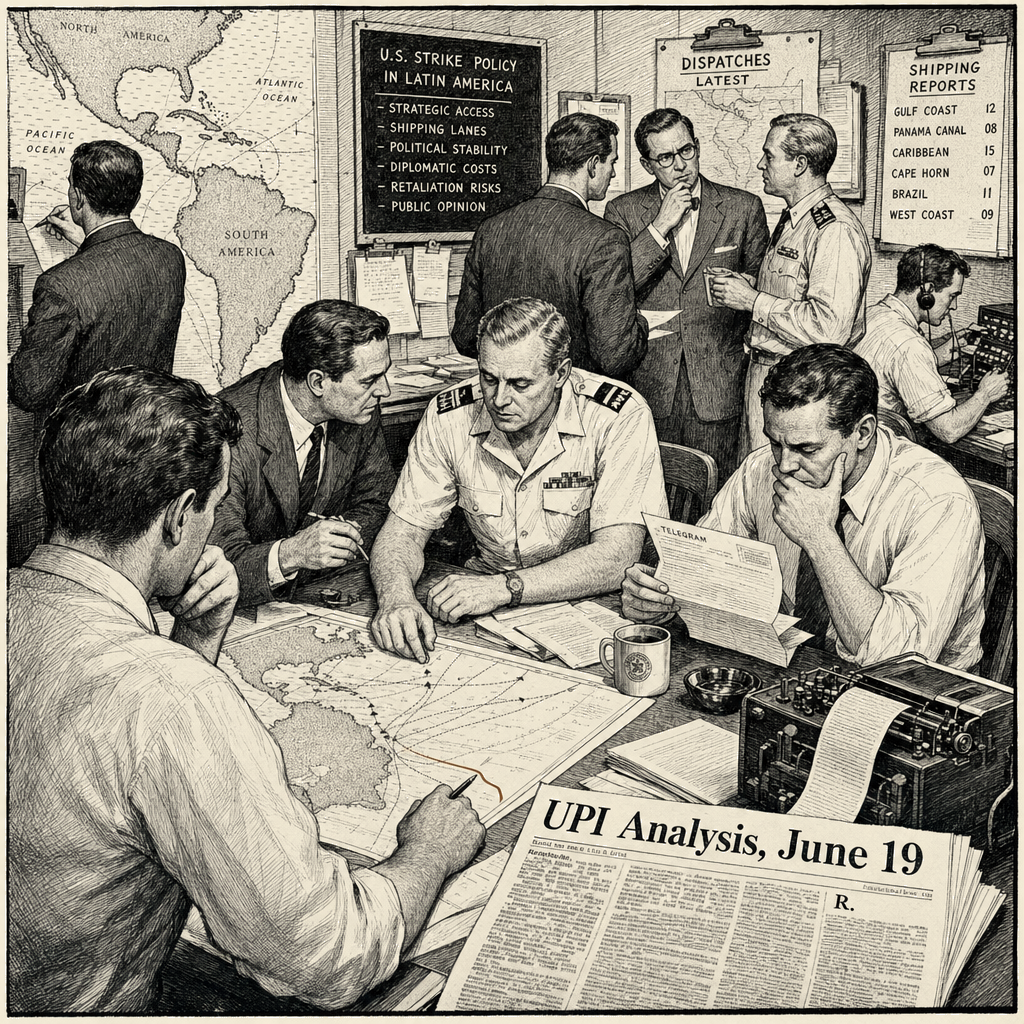
R. Evan Ellis, a senior non-resident associate at the Center for Strategic and International Studies and author of “China Engages Latin America: Distorting Development and Democracy,” published the analysis June 19 through United Press International. The piece focuses on “how the United States can pursue its security objectives most effectively in a complex environment” — not on the legality or morality of such operations, Ellis wrote.
The analysis follows the U.S. strike that killed Tren de Aragua founder Héctor “Niño” Guerrero Salazar in Venezuela’s Bolívar state and Secretary of War Pete Hegseth’s subsequent public comments, which Ellis said “have focused regional attention on U.S. lethal force as a tool against designated terrorist organizations.”
Ellis wrote that while such strikes “superficially resemble tactics used against key figures in extremist groups during the post-September 11 global war on terror,” the strategic pitfalls of applying them against narco-terrorist organizations today “are greater and deserve serious consideration by U.S. policymakers.”
The five risk categories Ellis outlined are: adversary adaptation, fragmentation and violence, partner trust erosion, political blowback, and erosion of U.S. strategic positioning.
Adversary adaptation. Lethal strikes carry an intended deterrent effect, but Ellis wrote that narco-traffickers have demonstrated in response to U.S. operations in the Caribbean that they can shift to less observable behaviors — moving from fast boats to commercial cargo containers and more southerly routes. He cautioned that where partner capability or coordination is imperfect, “a strike may degrade a partner’s knowledge of the network more than it degrades the network itself.”
Fragmentation and violence. Ellis cited historical patterns in which “decapitation strikes have accelerated fragmentation within adversary networks, often accompanied by increased violence as less-seasoned subordinates and competing organizations struggle for control.” He pointed to leadership strikes against the Sinaloa, Gulf, Zeta, and CJNG cartels in Mexico, as well as dismantled crime families in Guatemala and Honduras.
Partner trust. When U.S. actions are taken without genuine partner consent — or with consent that is effectively coerced — “the trust essential to effective cooperation erodes,” Ellis wrote. He cited examples of Dutch and British counterparts curtailing intelligence sharing on “legal, political, or other principled grounds” following U.S. lethal strikes in the Caribbean.
Political blowback. Ellis wrote that even strikes with genuine host-nation consent “can feed opposition narratives of sovereignty violation,” with collateral damage or targeting errors magnifying the damage. The Sheinbaum government’s “sustained refusal to permit U.S. strikes on Mexican soil, and the Arévalo government’s swift denial that such strikes were being contemplated in Guatemala, illustrate the depth of those sensitivities,” he wrote. Excessive strikes combined with a posture perceived as disrespectful of sovereignty, Ellis warned, risk “the political ouster of a compliant partner and its replacement by a government actively hostile to Washington.”
Strategic positioning. Ellis argued that while no single U.S. action is likely to tip the scales, “a sustained pattern of perceived unilateral conduct erodes U.S. goodwill in Latin America and beyond.” He stated that China is already exploiting perceptions of coercion through its public statements and diplomatic engagements, building consensus around alternative governance structures — including the Global Development Initiative, the Global Security Initiative, the Global Civilization Initiative, and the Global Governance Initiative — that “advantage Beijing and undermine Washington.”
Ellis concluded that the five risks “are not arguments against action — they are arguments for fully accounting for the consequences before committing.” Thoughtful planning, messaging, and respectful consultation with partners can substantially reduce associated risks, he wrote, calling such prudence “the strategic wisdom required to manage the nation’s affairs in an environment where every action carries consequences well beyond the immediate target.”