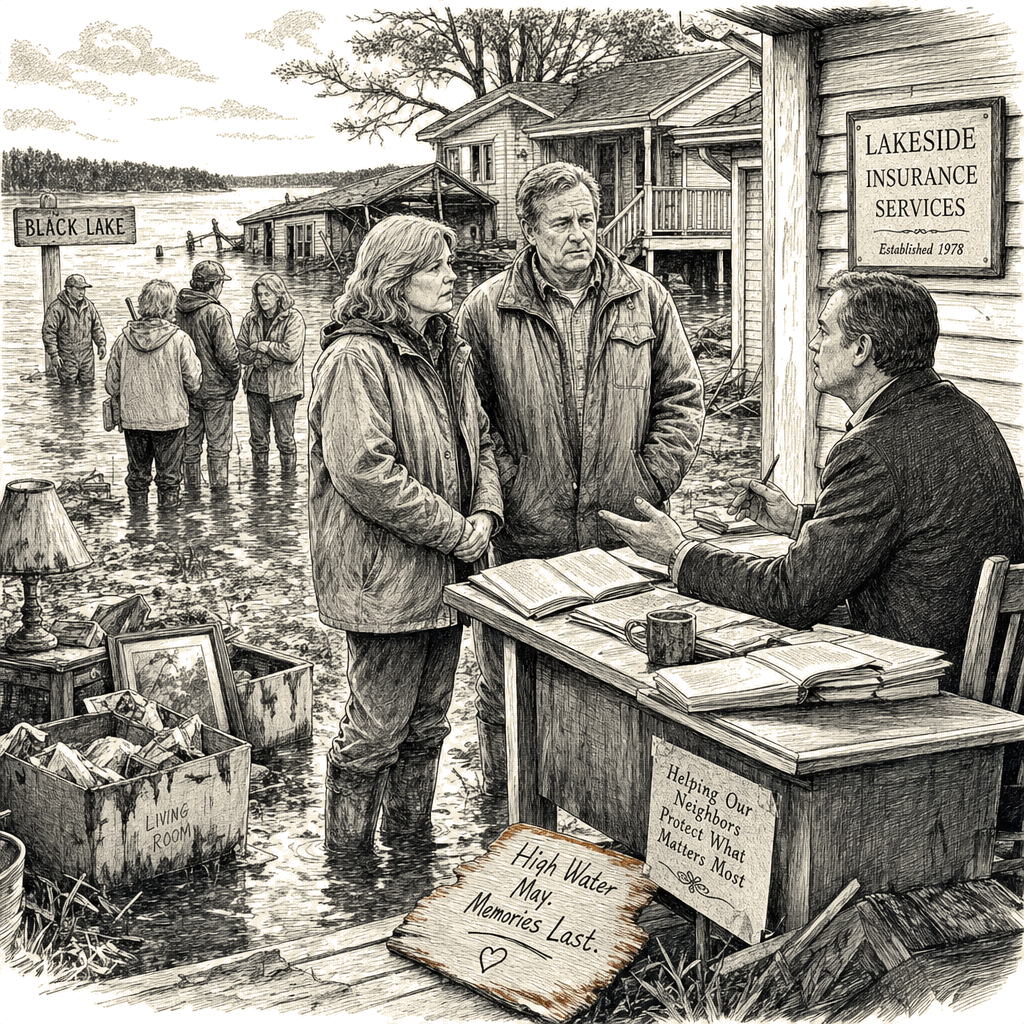
Tom and Diane Peterman moved to their retirement home on the shores of Black Lake in Onaway, Michigan, 14 years ago. When they tried to buy flood insurance, they were told it was not available, according to the Associated Press. John Solum’s family bought a 1940s-era cabin on the same lake and was informed the property was not in a flood zone.
This spring, historic and devastating floods struck northern Michigan — in some areas for the first time anyone can remember, the AP reported. The floodwaters swamped homes, pushed dams to the brink of failure and washed out roadways. Dozens of counties were placed under a state of emergency.
Black Lake rose so high that floating ice broke apart decks and crashed through windows, the AP reported.
The experiences of the Petermans and Solum underscore a broader problem: many residents in flood-prone areas lack clear information about flood risk and the means to obtain insurance coverage, even as climate change increases the frequency and severity of extreme weather events. The AP’s reporting highlights how gaps in flood mapping and insurance availability leave homeowners financially exposed when floods strike areas not previously considered high-risk.