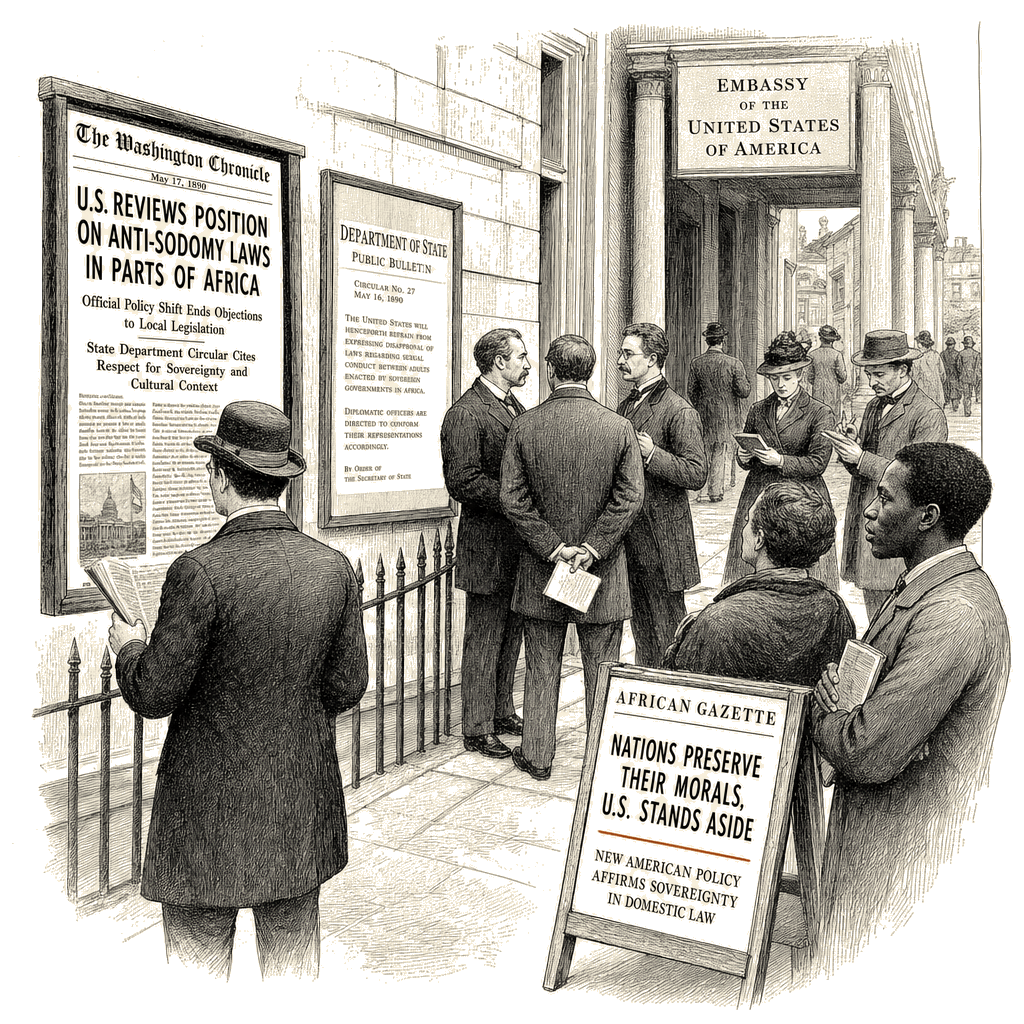
The Trump administration has taken no public position on Ghana’s antigay legislation, passed in May and awaiting the signature of President John Mahama, who has signaled support for it. The law would make being gay, same-sex marriages, and public displays of affection between gay people imprisonable offenses, with penalties of up to three years behind bars.
The silence marks a departure from the Biden administration’s response to Uganda’s 2023 Antigay Act, which imposed life sentences for same-sex intercourse and the death penalty for some acts. Washington expelled Uganda from the African Growth and Opportunity Act, imposed visa restrictions on officials, cut defense funding, and redirected HIV/AIDS relief financing. The World Bank, under U.S. pressure, suspended $5 billion in development funding for Uganda.
Anne Frühauf, head of political-risk research on Africa at Teneo, said the Trump administration has “less appetite” for using financial pressure in the interests of human rights. She said last year’s shutdown of the U.S. Agency for International Development had left less money for the U.S. to leverage. “I think it’s very unlikely that Ghana’s legislation will trigger a similar response from Washington,” Frühauf told the Journal. “We’re in a different world now.”
The State Department declined to say whether it would eventually take a stance on the Ghana law. “We refer you to the governments of Ghana and Uganda regarding legislation in their countries,” a spokesperson said in response to questions from The Wall Street Journal.
The Trump administration has taken stands against human-rights abuses in some parts of Africa, sanctioning commanders of Sudan’s Rapid Support Forces and Rwanda’s military for sponsoring insurgent groups. But the administration has reversed previous U.S. positions on culture-war issues such as gay rights and workplace diversity, and some of its positions resonate in predominantly Christian and socially conservative countries like Uganda and Ghana.
Ghana’s National House of Chiefs, which advises the government on traditional matters, said in a 2021 statement attached to the bill’s memorandum that “the idea of man marrying man and woman marrying woman is an abomination to our tradition and culture as Ghanaians.”
Leila Lariba, director at One Love Sisters Ghana, a human-rights nonprofit in Accra, said gay people in her country often face blackmail, eviction and violence. “Conversations about sexuality and gender diversity were either absent, heavily stigmatized, or framed as something foreign and unacceptable,” she told the Journal.
Gay acts are illegal in more than half of Africa’s 54 nations. In March, Senegal’s president signed a law doubling the maximum prison sentence for sexual acts by LGBTQ couples to 10 years and criminalizing the “promotion” of homosexuality. In June, Niger’s military junta enacted a new penal code punishing gay acts with up to a decade in prison.