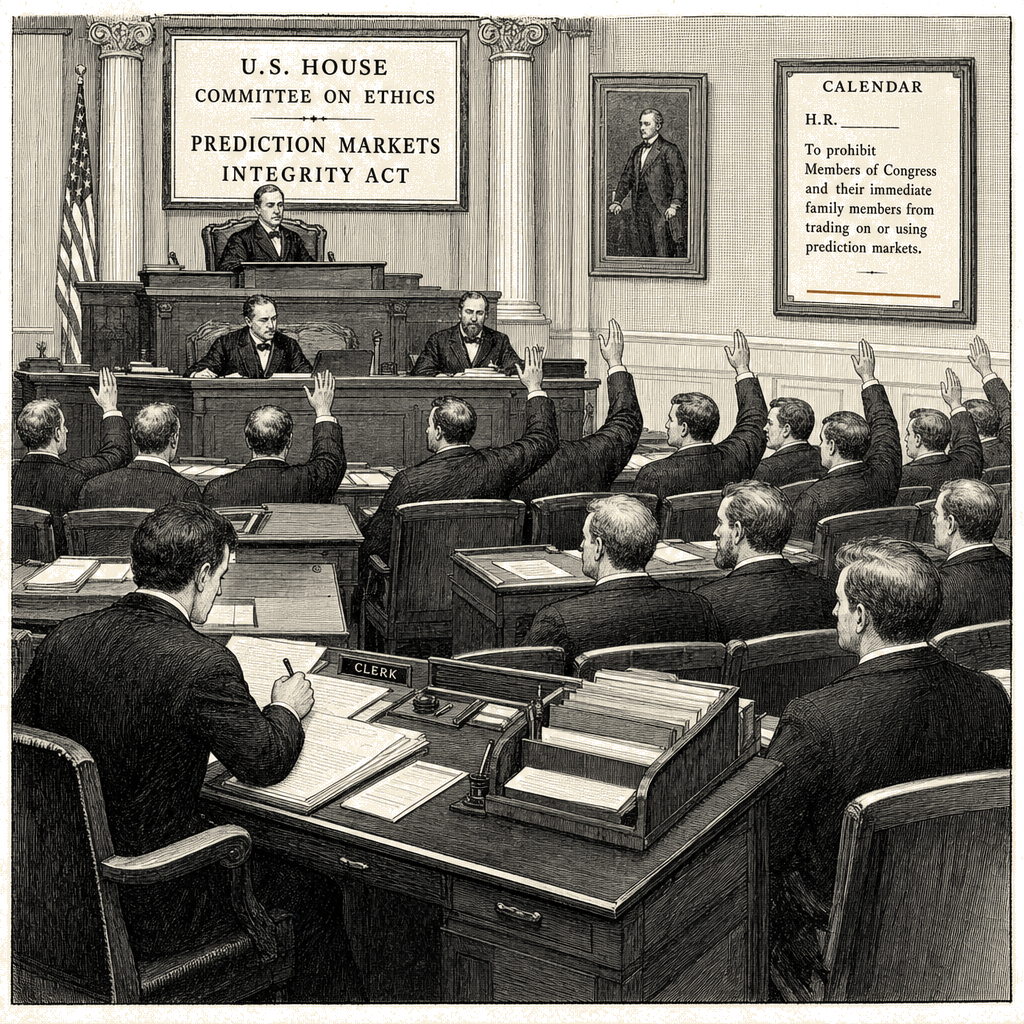
The House Administration Committee voted along party lines Wednesday to send to the floor a bill that would restrict members of Congress and their close family members from participating in prediction markets tied to elections and government actions, the committee said in a social media post.
The Stop Lawmakers from Predicting Act, introduced by committee chairman Rep. Bryan Steil, R-Wis., would bar lawmakers, their spouses, and their dependent children from wagers on political outcomes. The bill sets penalties for violations and prohibits the use of campaign funds, official allowances, or political contributions to pay those penalties. It would take effect 180 days after House passage.
Steil said in a statement that the measure was needed to ensure the public can trust that lawmakers are not using non-public information for personal bets. “The American people deserve to know their member of Congress is not profiting off insider information,” he said. “The Stop Lawmakers from Predicting Act ensures that cannot happen. This legislation is critical to restoring the public’s trust in their elected officials. Lawmakers should be writing policy, not wagering on its outcome.”
Democrats on the committee criticized the bill as insufficient. Rep. Joe Morelle, D-N.Y., said the legislation was “so filled with loopholes that it looks more like a sieve than a bill.” He noted that the Senate in April had passed a unanimous, two-page resolution banning senators and their staff from prediction markets with immediate effect. “The Senate did it in a matter of minutes — no six-month grace period, no procedurally laborious process,” Morelle said. “They just went to the floor with a two-page resolution and banned it all unanimously. We should do the same.”
The Senate’s April vote banned senators and their staff from trading in prediction markets. The House bill, by contrast, covers only lawmakers and their immediate families, not congressional staff. The bill also includes a six-month implementation delay, which Morelle said was not necessary.
The House bill now moves to the floor for a vote. Its prospects in the Democratic-controlled Senate are unclear.