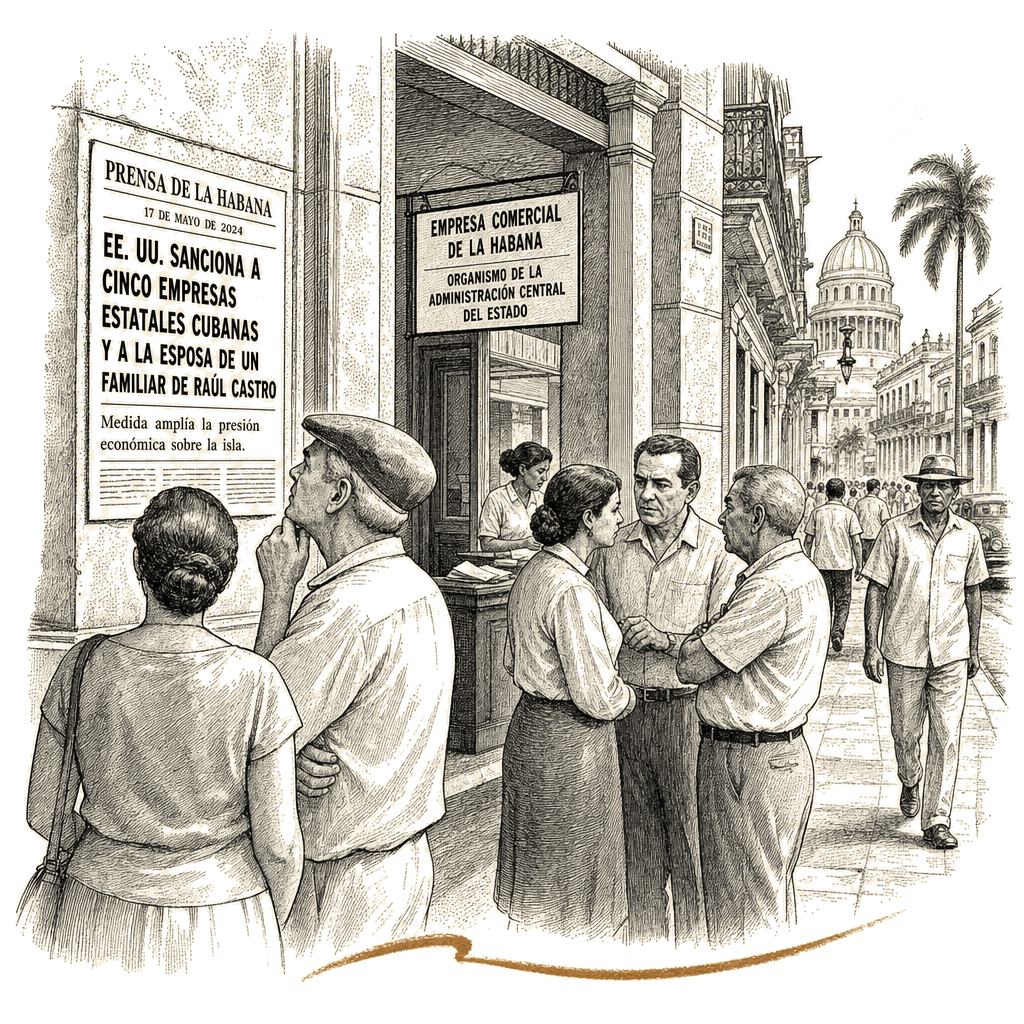
The United States on Tuesday sanctioned five Cuban state-owned companies, including three tied to Cuba’s sprawling military-run business network, and Annalie Lilliam Rueda Cadero, the wife of Alejandro Castro Espin, who is the son of former Cuban President Raúl Castro.
Alejandro Castro was sanctioned by the Trump administration earlier this month. Tuesday’s designations against Rueda Cadero mark the latest in a widening net of U.S. economic penalties targeting the Castro family and the Cuban state apparatus.
The three companies blacklisted by the State Department are associated with Grupo de Administracion Empresarial, or GAESA, a military-run umbrella conglomerate that the U.S. initially sanctioned during the first Trump administration on accusations that it controls extensive holdings throughout the Cuban economy. The two other entities sanctioned Tuesday were accused of operating in Cuba’s mining sector with Australian foreign investment and in collaboration with Russia.
Secretary of State Marco Rubio said in a social media statement that GAESA network entities were sanctioned for “diverting” Cuba’s money and assets and the two other firms for “exploiting” the island’s mineral and metal reserves.
“The situation in Cuba is devolving as the island’s corrupt, brutal and anti-American Communist regime continues to prioritize its own total control over the freedom, opportunity and basic well-being of the Cuban people,” Rubio said.
The sanctions generally freeze any U.S.-based property or interests in property belonging to the designated parties and threaten foreign businesses with secondary sanctions for conducting transactions with them.
The United States has long maintained a blockade and sanctions against Cuba, but the punitive economic measures have increased sharply during the second Trump administration, exacerbating power and energy shortages that have caused blackouts. The supply shortages have forced more than 100,000 people, including 11,000 children, to wait for surgeries, according to the United Nations.
Tuesday’s designations were issued under an executive order Trump signed in May authorizing sanctions against those operating in Cuba’s energy, defense, mining and financial services sectors, as well as those complicit in human rights abuses or corruption related to Cuba or providing services to the Havana government. Trump has used that order at least five times to designate Cuba-related entities and individuals since signing it, according to the State Department.
Trump has been intensifying pressure on Cuba since the U.S.-backed ouster of Venezuela’s authoritarian leader in January, declaring a national emergency with respect to the island early this year. As covered in prior articles, the administration has also sanctioned Cuban President Miguel Díaz-Canel and indicted Raúl Castro over the 1996 shootdown of civilian aircraft by the Cuban air force.
Cuban officials condemned the new sanctions. Foreign Minister Bruno Rodriguez accused the Trump administration on Tuesday of increasing its sanctions regime against Havana because, he said, Cuba continues to prove it is “stronger, more capable and efficient than it expected.” He accused the administration of “collectively punishing” the Cuban people.
Ernesto Soberon, Cuba’s ambassador to the United Nations, accused the United States of lying about employing sanctions due to human rights concerns. “No government, no person with even a shred of common sense — and certainly not the people of #Cuba, who are suffering the humanitarian impact of the U.S. economic war — can believe that the tightening of the blockade, the energy siege and the newly announced sanctions are intended to support the Cuban people,” Soberon said on social media. “Anyone who has doubts should ask the parents of the more than 12,000 children currently awaiting surgery in Cuba as a result of the U.S. government’s genocidal policy.”