The Pentagon confirmed the change Wednesday, according to a Pentagon official who spoke to the Associated Press on condition of anonymity to discuss details not yet cleared for public release.
Hegseth in late April directed that flu vaccination would no longer be mandatory for all U.S. troops, describing the change as a matter of “medical autonomy” and religious freedom. The order allowed individual military services to request exceptions — permission to keep the vaccine mandatory — within 15 days of its rollout.
The Pentagon official said those exception requests were being finalized in early June, and that the timing of the decision to allow services to re-impose mandates overlapped with the outbreak at the Air Force’s boot camp but was coincidental.
The outbreak at Lackland Air Force Base in San Antonio, Texas, which handles roughly 700 new recruits each week, has produced 275 confirmed cases of the flu, according to Democratic Rep. Joaquin Castro of Texas, who posted the figure on social media. Castro’s district includes part of the base. The outbreak is now about three weeks old, the official said, and the total number of ill has approached 300.
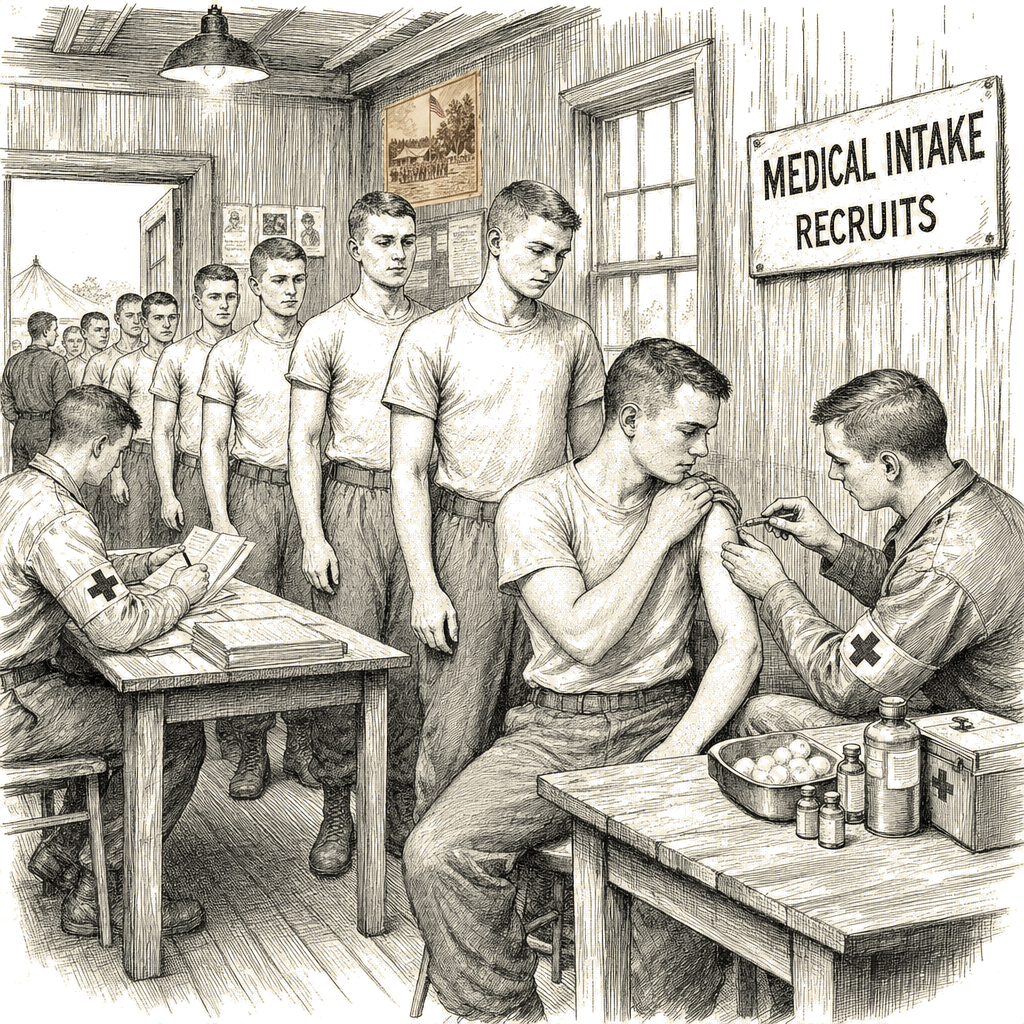
Recruits live in close quarters — sleeping in large open rooms, showering communally, and conducting instruction and inspections in close contact — conditions that military health experts have long recognized as conducive to respiratory disease spread.
Only 40% of new trainees moving through the Lackland boot camp opted to receive the flu shot after it became optional, according to a person familiar with the matter who spoke to the AP.
Arnold Monto, a flu expert and emeritus professor at the University of Michigan, said the outbreak was “not unusually concerning” but added that vaccination is especially important in group settings. “If you want to prevent flu outbreaks, it is especially necessary to vaccinate when there are group settings,” Monto said.
Sean Parnell, the Pentagon’s top spokesman, confirmed in a statement that exceptions allowing mandatory vaccination were granted to the Army, Navy, and Air Force, as well as to the National Security Agency and the Defense Health Agency. He did not offer further details. Army and Navy officials have said they also asked for permission to require the shot for certain personnel within their services.
Michele Slafkosky, executive director of the advocacy organization Families Fighting Flu, welcomed the change. “For decades, the military prioritized the health and safety of troops and the public by requiring flu vaccine for recruits. It’s unfortunate that more than 200 individuals at Lackland Air Force Base in Texas became ill when that requirement was rescinded,” Slafkosky said in a statement. “This updated guidance from the military will save lives.”