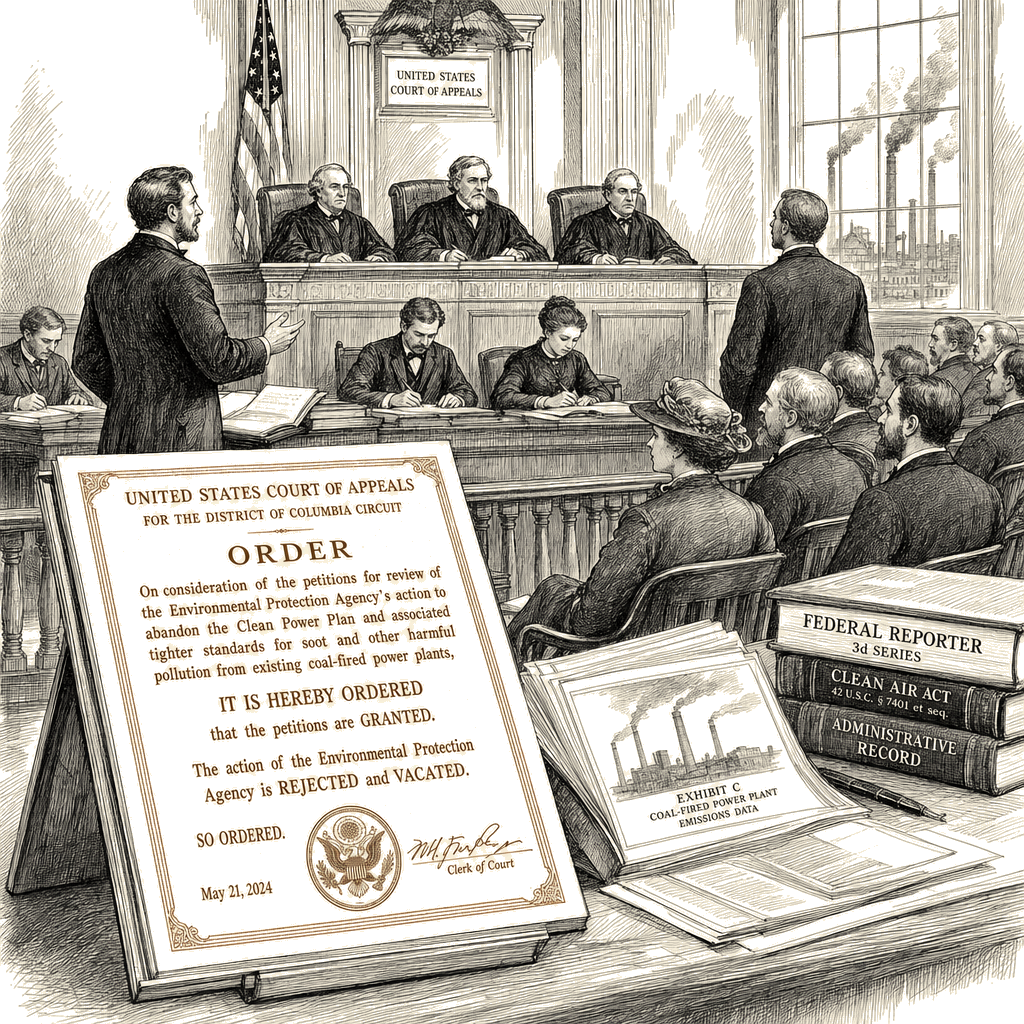
WASHINGTON — A federal appeals court on Friday rejected the Environmental Protection Agency’s attempt to abandon a Biden-era rule that sets tighter standards on deadly soot pollution from coal-fired power plants and factories, a setback for the Trump administration’s deregulatory agenda.
The unanimous ruling by a three-judge panel of the U.S. Court of Appeals for the District of Columbia Circuit leaves the 2024 standard in place for now, blocking the Trump EPA’s effort to invalidate the rule on grounds that the agency had exceeded its statutory authority and failed to consider costs to businesses.
The EPA under President Donald Trump asked the appeals court last year to invalidate the Biden-era rule, arguing that the agency under previous leaders had exceeded its statutory authority and acted unreasonably by failing to consider costs to businesses affected by the rule, according to court records.
The decision is the latest in a series of judicial setbacks for the Trump administration’s efforts to roll back environmental regulations. MSI previously reported that the Trump EPA has moved to weaken rules on toxic coal ash groundwater protections, mercury emissions from coal-fired power plants, and the 2009 endangerment finding that underpins Clean Air Act climate regulations.
Fine particulate matter, or soot, is linked to respiratory illness, heart attacks, and premature death. The 2024 rule tightened the National Ambient Air Quality Standards for fine particulate matter, requiring industrial sources including coal plants to meet a stricter annual limit. The EPA under the Biden administration had estimated the rule would prevent thousands of premature deaths annually.
The Trump administration’s challenge argued that the EPA had not adequately weighed the economic costs of compliance against the public health benefits. The appeals court’s ruling did not address the merits of that argument directly but rejected the agency’s bid to withdraw the rule.
The decision keeps the tighter standard in effect while the legal challenge proceeds. The Trump administration could appeal the ruling to the full D.C. Circuit or to the Supreme Court.