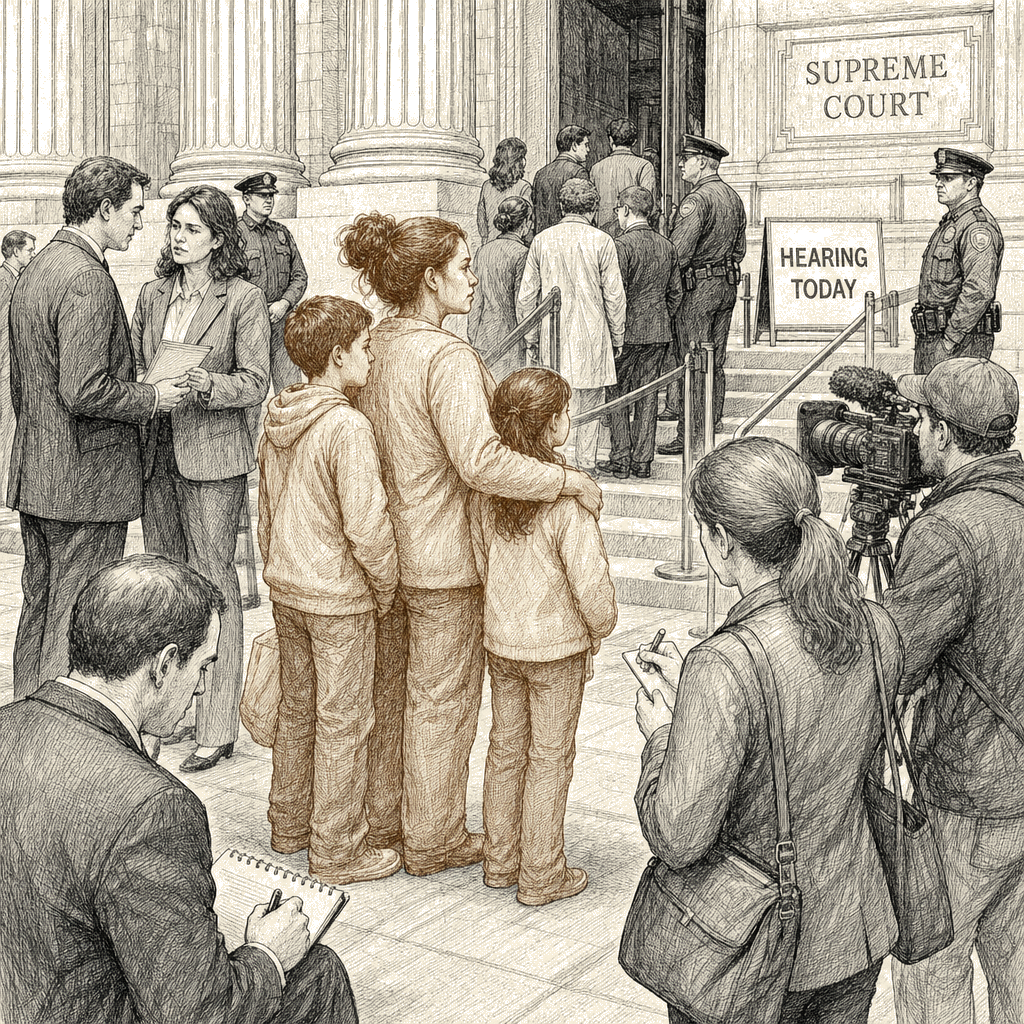
The Trump administration on Friday asked the U.S. Supreme Court to let it detain people arrested in its immigration crackdown without allowing them to seek bond, even if they have lived in the country for years. The filing, made public Friday, urges the justices to overturn a May decision by a divided panel of the 6th U.S. Circuit Court of Appeals that rejected the administration’s reinterpretation of a decades-old immigration law now underlying its mass detention policy.
The administration filed the appeal earlier this week, before the Supreme Court handed it a pair of major wins on immigration policy on Thursday, including rulings that allowed it to strip hundreds of thousands of Haitian and Syrian immigrants of protections against deportation.
At the heart of the dispute is a legal question over who qualifies as an “applicant for admission” under federal immigration law. Bucking a longstanding interpretation, the Department of Homeland Security last year took the position that non-citizens already living in the United States — not just people arriving at the border — fall into that category and are therefore subject to mandatory detention without bond while their removal proceedings are pending.
The Board of Immigration Appeals, a part of the Justice Department, issued a decision in September that adopted that interpretation. Immigration judges nationwide began ordering mandatory detention as a result.
Solicitor General D. John Sauer, in the petition, urged the justices to intervene and resolve what he described as a “critically important question of immigration law.” He argued that “detaining aliens who are living in the country after an illegal entry while their removal proceedings unfold prevents those aliens from evading hearings and helps ensure their removal from the United States.”
The 6th Circuit’s ruling came in cases out of Michigan involving citizens of Mexico, El Salvador, Venezuela, Nicaragua and Guatemala who had lived in the United States for years before being arrested by Immigration and Customs Enforcement or Customs and Border Protection. A 2-1 panel of the Cincinnati-based appeals court held that the administration misinterpreted a provision of the Illegal Immigration Reform and Immigrant Responsibility Act of 1996 and that the migrants were denied bond hearings in violation of their due process rights under the Fifth Amendment.
Three federal appeals courts have joined with hundreds of lower-court judges in rejecting the administration’s detention practice, while two other appeals courts have endorsed it. Sauer noted that split as he asked the Supreme Court to take up the matter. The case is one of several immigration detention disputes working their way toward the high court as the Trump administration accelerates enforcement and thousands of detained immigrants challenge their custody in habeas corpus petitions.