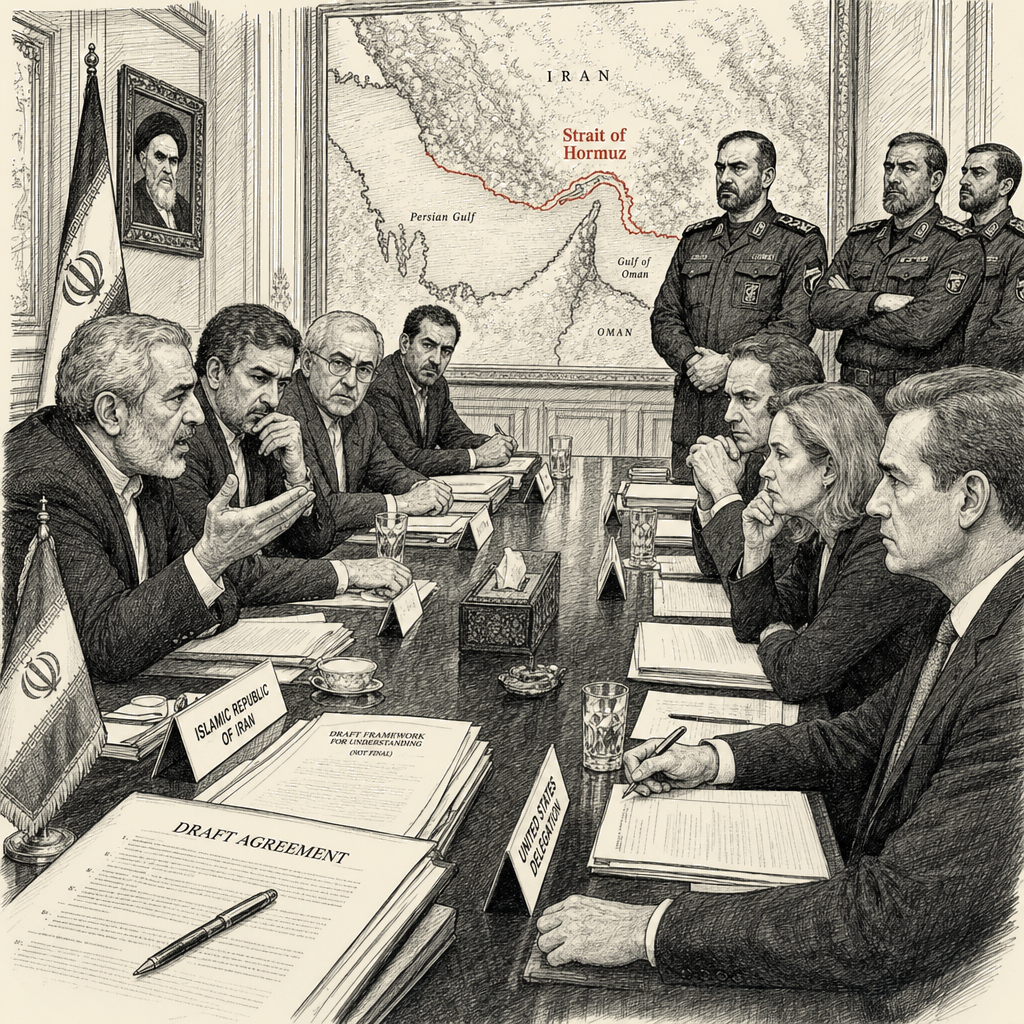
A power struggle inside Tehran is threatening U.S.-Iran peace talks, with civilian leaders seeking billions in frozen assets and hardline military officials pressing for control of the Strait of Hormuz, said officials familiar with the negotiations, as reported by The Wall Street Journal.
President Masoud Pezeshkian is aiming to free up billions of dollars in frozen funds to bring relief for millions of Iranians struggling with the economic aftershocks of the war and critical damage to its oil industry, according to the officials. The Islamic Revolutionary Guard Corps, which now dominates Iran, has other priorities. The IRGC aims to keep full control of the critical strait regardless of cost, with plans to install a lucrative toll regime to enrich the country’s armed forces and dominate the regional security map, the officials said.
The Revolutionary Guard has told mediators it would close the passage again if it does not obtain guarantees that Iran is in sole control of the Strait of Hormuz at the Doha talks. It also demands that the U.S. and other countries abandon plans to run ships through the southern reaches of the strait, near Oman. “For the military, Hormuz is the most effective way to stay in the driving seat in the talks,” said Mustapha Pazkad, chairman of Pakzad & Co., who advises companies on Iranian politics. “They feel as long as they can rule Hormuz, they will be calling the shots both with the U.S. and internally.”
The IRGC has already shown its willingness to risk the release of billions frozen in Qatar by targeting ships exiting the Persian Gulf through a U.S.-backed channel through Oman’s waters rather than Iran’s. One of the vessels Iran attacked last week as it passed through Omani waters was carrying 2 million barrels of oil from Qatar, a key mediator between Iran and the U.S. Officials familiar with the talks said it was a way for the IRGC to indicate it was ready to risk a collapse of the peace talks if it could not keep the strait under its control.
The U.S. responded by striking the naval facilities used to attack shipping. The tit-for-tat delayed talks on implementing a peace deal that were due to restart in Switzerland this weekend, forcing their relocation to Qatar. Both sides agreed to stop the exchanges and restart negotiations late Sunday, but the Revolutionary Guard quickly resumed its threats to passing ships, saying they could not pass the strait without its consent. Traffic through the waterway collapsed from 75 vessels last Wednesday to 22 on Sunday, according to commodities data provider Kpler.
President Trump’s top envoys, Steve Witkoff and Jared Kushner, are meeting mediators in the Qatari capital of Doha on Tuesday to discuss the implementation of the peace deal. An Iranian team will then join them later this week for indirect talks to discuss access to Iran’s frozen assets, Iranian Foreign Ministry spokesman Esmail Baghaei said Monday. Baghaei said that $6 billion out of the total $12 billion of Iranian resources in Qatar will be released and returned to the country.
Pezeshkian, who was elected two years ago on a pledge to revive the economy and encourage engagement with the West, is being undermined by what analysts say is the real power in Iran, the Revolutionary Guard. U.S. officials have said any release of funds would depend on Iran’s behavior, including keeping the strait open. Free passage through the critical waters is the single most important element in the initial peace deal signed earlier in June.
The IRGC, which controls the naval force patrolling Iranian waters, views the Strait of Hormuz as a valuable asset. It aims to establish a mechanism to impose fees for free passage, nominally to pay for security and environmental costs. Iranian officials have privately said such payments could generate $40 billion a year. Revolutionary Guard advisers and mediators say controlling Hormuz is a greater priority than the release of frozen funds, which the U.S. has earmarked for humanitarian spending.
Some of Iran’s most powerful clerics have thrown their weight behind the IRGC’s hardball tactics. Iran’s Assembly of Experts, an advisory body that tends to reflect the view of the supreme leader, told the country’s negotiators Saturday that the strait should remain closed unless Israel stopped attacking Lebanon. “The opening of the Strait of Hormuz is contrary to the obligations of the officials and is considered a strategic mistake,” the assembly said.
The hard-liners’ posture has led Pezeshkian to rush to court senior clerics in Qom, the main center of religious learning in the country. There he touted the benefits of securing the release of the $6 billion frozen in Qatar before Ayatollah Shubairi Zanjani, one of the nation’s most senior clerics. Pezeshkian also said the peace agreement had the support of Supreme Leader Mojtaba Khamenei, saying that factions both in and out of the country were aiming to disrupt the diplomatic process. Khamenei, who assumed Iran’s top position after his predecessor and father was killed in a bombing attack, has taken an ambiguous position on the peace deal, saying he originally disapproved of it but allowed Pezeshkian to go ahead with it after a collective vote.