Sinokor controls about 10% of global VLCC fleet
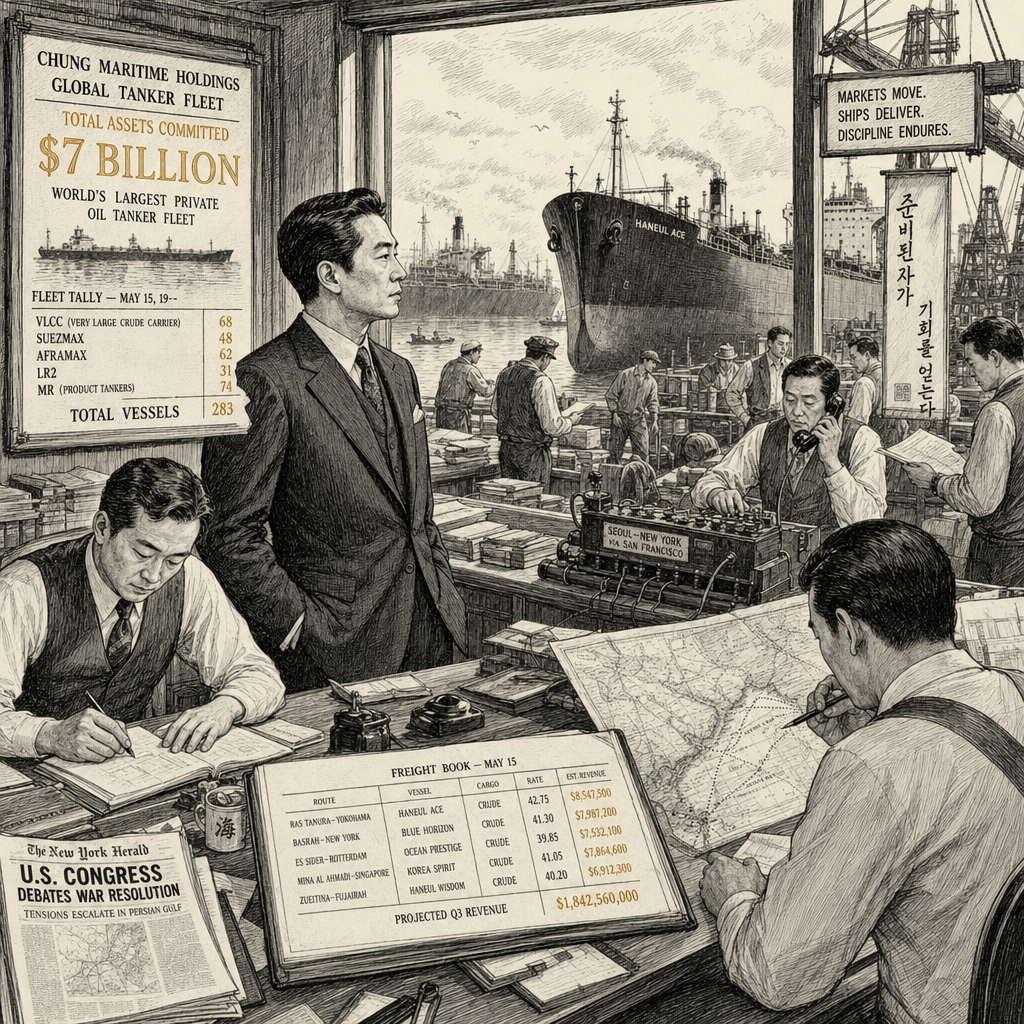
Ga-Hyun Chung, a reclusive South Korean magnate, has emerged as one of the biggest financial beneficiaries of the U.S.-Iran conflict after spending roughly $7 billion to amass the world’s largest private fleet of oil tankers before hostilities began, according to people familiar with the deals.
His firm, Sinokor, now controls an estimated 10% of the world’s very large crude carriers (VLCCs), industry analysts and brokers said. Much of the funding came from Gianluigi Aponte, the Italian billionaire co-founder of container shipping giant Mediterranean Shipping Co., who had accumulated cash during the pandemic-era boxship boom, the people familiar said.
The timing of Chung’s wager, described by industry veterans as among the biggest in maritime history, proved exceptional. When the Strait of Hormuz effectively shut after the U.S. and Israel attacked Iran, shipping markets went haywire. Traders paid record sums to move oil from Europe and the U.S. to Asian economies that had relied on Persian Gulf supplies.
In March, soon after the conflict began, average daily earnings for the largest oil tankers surged to more than $385,000, according to shipbroker Clarksons — by far the highest level on the firm’s records going back to 2000. While tanker rates have since moderated, they remain elevated, and shipping veterans expect convoluted trading patterns to outlast the conflict, the Journal reported.
Secrecy surrounds Chung’s partnership with Aponte. A recent regulatory filing in Greece showed a subsidiary of MSC has agreed to buy a stake in Sinokor, but even people who have worked on ship deals with Chung said they do not know all the details of the arrangement, according to The Wall Street Journal.
Chung’s exploits were a talking point at a recent shipping conference in Athens, where he was seen smoking cigars at late-night parties surrounded by bodyguards, the Journal reported. In an industry of big personalities, the scion of a Korean shipping family eschews the media. He did not respond to questions from the Journal. Executives who have dealt with him described him as a keen judoka who forms large WhatsApp groups with other shipowners to discuss the market.
Sinokor’s derivative traders, who buy and sell paper contracts tied to freight markets, also stood to profit when rates rose, people familiar with the matter said.
Industry insiders said they suspect Chung is betting that a single player with deep pockets can amass a big enough fleet to push up freight prices by holding back some tankers from the market, the Journal reported. They noted that none of the big Greek, Nordic or Asian owners holds a dominant position, that the mainstream tanker market is shrinking as ships are sold into the so-called shadow fleet that ferries sanctioned oil, and that competition authorities struggle to track purchases in the opaque secondhand market.
Previous attempts to corner shipping markets offer a cautionary tale, the Journal noted. During China’s economic boom in the 2000s, Taiwanese tycoon Nobu Su earned a fortune after taking control of a large portion of dry-bulk ships that move coal and iron ore. He tried to repeat the strategy in tankers and failed as the world economy seized up in 2008.
As the Strait of Hormuz tentatively reopens after the U.S.-Iran peace deal, Chung is positioned to profit again. A week after President Donald Trump signed the agreement with Iran, Sinokor’s vessel Plata Carrier began sailing from waters off the United Arab Emirates inside the Gulf toward Hormuz, according to ship-tracking data. As of Thursday, it was rounding the southern tip of India, heading to a refinery on the country’s east coast, the Journal reported.
Eirini Diamantara of Greek firm Xclusiv Shipbrokers estimates that Sinokor has more than 160 tankers, with nearly half being VLCCs capable of carrying 2 million barrels of oil in a single voyage, according to the Journal.