Turkey’s domestic clampdown and defense gains under closer U.S. ties
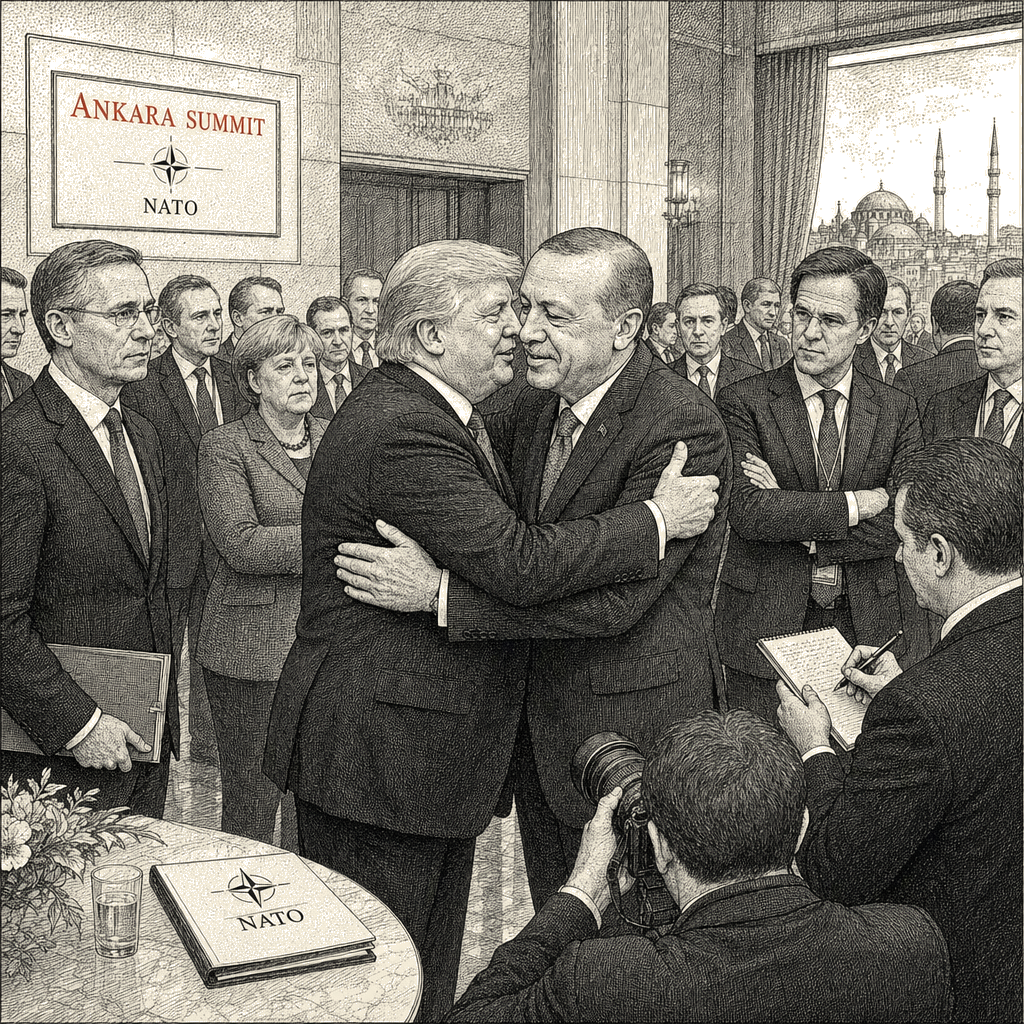
ISTANBUL — During an Oval Office meeting with NATO’s secretary-general, Trump said he might not have made plans to attend the alliance’s annual summit next week if it weren’t being held in Turkey. “Erdogan is a strong man. Everything I ever asked him for, he’s done,” Trump said.
White House spokeswoman Anna Kelly said Trump has “a great relationship” with Erdogan, who has been “an incredible partner in the region.” Trump’s approach marks a departure from the Biden administration, which kept Erdogan at arm’s length.
Turkish authorities have in recent months jailed hundreds of people in Turkey’s largest opposition party, including Istanbul Mayor Ekrem Imamoglu, a likely presidential candidate seen as a credible challenger to Erdogan. Turkish officials say Imamoglu is on trial for corruption charges, which he denies. In nighttime raids in June, police arrested activists, lawyers, an academic and an LGBTQ rights activist on terrorism charges, according to Human Rights Watch. Turkish authorities also banned public demonstrations in Ankara during the NATO summit.
David Satterfield, who served as U.S. ambassador to Turkey during Trump’s first term, described the arrests of opposition figures as “deliberate decapitation of political challenges.” “All of that is being done with a brazenness that I don’t think four years ago would have been quite possible,” Satterfield said. He also said Western allies should register concern about the trajectory of Turkey’s political system, which he described as a “competitive authoritarian” system, and argued that failing to raise such issues does not enhance the ability to work with Turkey on strategic matters.
Before Trump became president, such actions might have drawn public criticism from Turkey’s NATO partners in Europe, if not the United States. Today few are calling Erdogan out, analysts and former officials said.
Sinan Ulgen, a former Turkish diplomat and director of the Istanbul-based think tank Edam, said Erdogan’s relationship with Trump is helping to contain the U.S. president’s criticisms of the alliance. “Erdogan is playing a role in essentially containing the ire of Trump,” Ulgen said. “What the Erdogan factor does, in my belief, is that it prevents this stance of the U.S. president from becoming too toxic.”
Turkey commands NATO’s second-largest army and its defense industry has become an increasingly important supplier to the alliance. Turkish-made drones earned international acclaim after Ukraine used them against Russian military vehicles in 2022. Baykar, the company that manufactures the drones, now exports them to more than 33 countries and last year established a joint venture with a major Italian aerospace firm. Another Turkish company designed and installed equipment at a Texas factory that is now one of the Pentagon’s largest suppliers of artillery rounds.
Marc Pierini, a former European Union ambassador to Turkey and now a senior fellow at Carnegie Europe, said the defense industry’s technical success carries political weight for Erdogan. “He wants this technical success for the Turkish defense industry to be reflected in political success for himself,” Pierini said.
Vice President JD Vance said in June that U.S. officials were looking into ways to sell Turkey the advanced F-35 jet fighter. The first Trump administration had removed Turkey from the F-35 program after it purchased a Russian S-400 air-defense system, a transaction that drove a wedge in NATO and triggered years of discord in Turkey’s defense relationship with Washington.
A person familiar with government thinking said Turkey’s defense-industry success did not necessarily translate into political gains, pointing to current American sanctions on the Turkish defense-industry agency and Turkey’s long-stalled application to join the European Union. “It’s very difficult to talk about trade-offs here,” the person said. “I don’t think that the West is turning a blind eye to what is going on in Turkey in return for mutual interests.”
Erdogan and other Turkish leaders have also played an expanding diplomatic role. They helped broker last year’s cease-fire between Israel and Hamas and have mediated in the war with Iran, making use of Turkey’s ties to both sides. Turkey has hosted multiple rounds of Russia-Ukraine peace talks despite maintaining an economic relationship with Moscow, and has built warships that expanded Ukraine’s Black Sea fleet. Ukraine’s President Volodymyr Zelensky has praised Erdogan’s diplomatic efforts.
Erdogan has served as Turkey’s prime minister and then president for more than two decades. A conservative Islamist and onetime political prisoner, he has overhauled Turkey’s political system, concentrated power in the presidency, and still faces broad opposition over the country’s faltering economy and the erosion of political freedoms.
Satterfield, the former ambassador, argued that the diminished pushback from NATO allies represents a shift. “The die is never cast forever in terms of competitive authoritarian systems,” he said. “You need to register concern.”