Tight Senate race could be decided by rural fuel costs
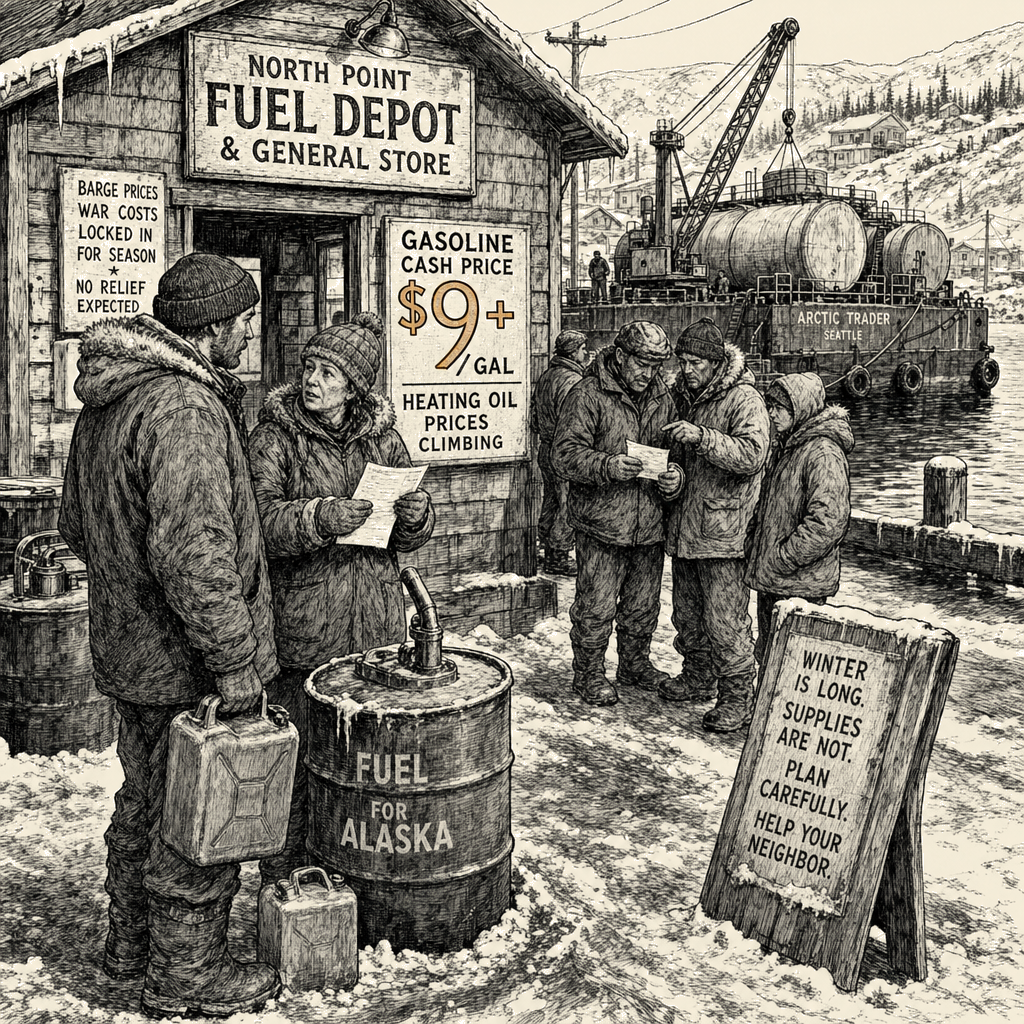
In the coastal city of Dillingham, gasoline station owner John Stelling said he had just pushed his pump to $9.10 a gallon when he wondered whether the meter could handle $10. “Not sure if it’ll handle those,” he said of double-digit prices. His station and the city’s two others all sell gas at about $9 a gallon; heating oil sells for roughly the same price, and diesel slightly more.
Remote Alaska communities are not connected to the road system. Fuel arrives by barge in summer, and the last barge to unload sets the price until the next delivery months later. Many towns placed their annual orders in the spring, just as the U.S. war with Iran sent global crude prices surging. The Journal reported that even if a peace deal reopens the Strait of Hormuz, rural Alaskans will be stuck with expensive fuel long after prices fall elsewhere.
Alaska Gov. Mike Dunleavy said the situation is a function of scale and geography. “The small scale of rural Alaska works against them, the distances work against them,” Dunleavy said in an interview. “It could end up being a tough fall and winter.”
Residents are already bracing. Gust Wahl, 84, who lives in the woods outside Dillingham, said he paid about $600 a month to heat his home last winter and expects to pay more once the barges arrive. This winter he plans to use a wood stove he bought eight years ago. Still, Wahl said he fully supports Trump and would give him a third term if he could. “If I had my way, I’d give him a third term,” he said.
Dillingham City Manager Jack Savo Jr. said the recent breakthrough in U.S.-Iran talks offers little comfort for his community. The city estimates it will need to spend $166,015 more in the 2027 fiscal year to heat buildings and fuel vehicles. It plans to reduce overtime and suspend some merit raises among other cuts. “Our prices do not react immediately to market changes and things happening in the world,” Savo said.
Alaska is the nation’s fifth-largest oil-producing state, but most of its crude is shipped abroad. A federal statute that restricts foreign ships from shuttling goods between U.S. ports makes it cheaper for remote communities to import fuel from other countries than to buy it from Alaska’s three main refineries. Mark Smith, an independent fuel-logistics expert, said “it’s way, way cheaper to get a foreign tanker and load it up in Korea and bring it to Alaska than it is to buy one gallon at the Alaska refinery.”
The Trump administration has made Alaska the centerpiece of its energy agenda, aiming to unlock new production and lower prices. In May, Interior Secretary Doug Burgum visited the Pikka project, which is set to produce 80,000 barrels a day later this year, and hailed “the Great Alaska Comeback.”
Tom Atkinson, the recently retired chief executive of the electric utility in the rural city of Kotzebue, said the new development has not yet helped ordinary residents. “In many ways, the oil-and-gas development hasn’t really got filtered down to the people who really need to be seeing the savings from it the most,” Atkinson said.
The high fuel costs are reshaping Alaska’s Senate race. Incumbent Republican Sen. Dan Sullivan is defending his seat against former Democratic U.S. Rep. Mary Peltola, in a contest that political observers expect will be tight. Justin Askoak, the fuel distributor in the village of New Stuyahok about 60 miles upriver from Dillingham, said he currently sells gasoline at $10 a gallon. He said he did not vote for either Trump or Kamala Harris in 2024 but is considering voting for Peltola. “Everything that we purchase is double,” Askoak said, “and it falls right into one spot, one administration.”