Next PM ‘confronted by Nato allies’ over 3% target
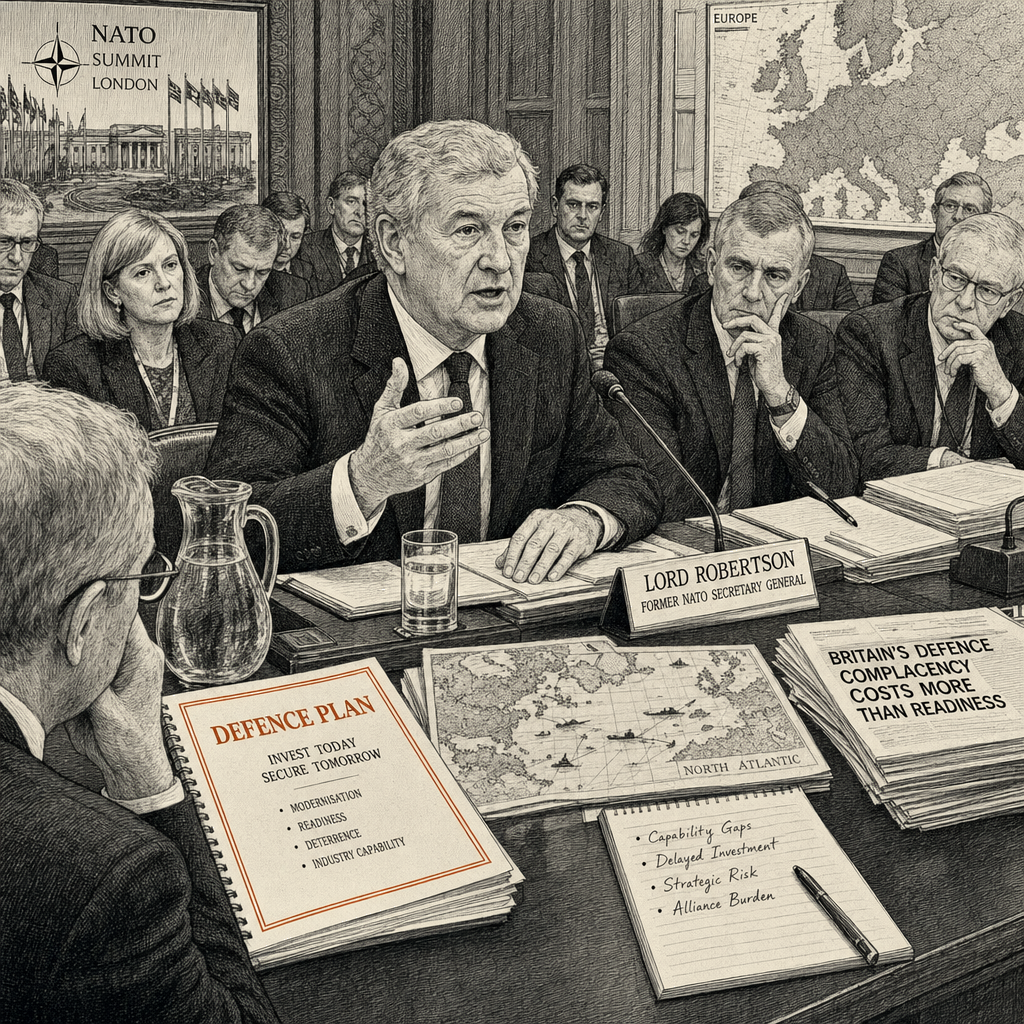
Lord Robertson, the former Nato secretary general who wrote a strategic review of defence for Sir Keir Starmer, appeared before the House of Commons Defence Committee on Tuesday and told MPs that the government’s defence investment plan was, in his view, “unconvincing”.
Robertson said the delay of the defence investment plan (DIP) had “caused a degree of confusion inside the Ministry of Defence and considerable disturbance in the industry as well”. He told MPs the challenge of increasing military spending to meet the threats facing the UK “is now bigger, more serious, and earlier than we had anticipated, and yet the defence investment plan itself doesn’t come up to it”.
The former Nato chief said a warning he made in a speech in April about “corrosive complacency” towards defence “applies to the whole political leadership”. He added: “There is a degree of complacency in the country as a whole, which I think is very very dangerous, and people need to be woken up.”
Robertson said the UK is “under daily attack at the present moment and that will be ramped up”, and that it may take a “crisis” to raise sufficient funds to fight a war. He said the UK “will have a force to fight with when the day comes”, but that “in this country, we need to get used to the fact we are no longer immune and we are being targeted”.
Starmer arrived in Ankara on Tuesday for a Nato summit attended by US President Donald Trump, who is expected to press allies over defence spending commitments. The DIP will push the military budget to 2.7% of GDP by 2029 and put the UK on track to hit Nato’s core target of 3.5% of GDP by 2035. However, a target date for reaching 3% of GDP was not included in the plan; the government said that would be set out at the next spending review, currently scheduled for 2027.
Robertson said the next prime minister will be “confronted by allies in Nato, especially by the American president” over the 3% target. “So the assumption by Nato and the Americans is we’re going to have to plot our way towards that. And that is where the DIP is unconvincing.”
Starmer’s successor is widely expected to be Makerfield MP Andy Burnham. In an interview last week, Burnham said he would “take my responsibilities fully to fund the defence investment plan” and “take those responsibilities extremely seriously — no compromise on the security of the nation”.
But Robertson said the next prime minister would have to look at the DIP again. “Speaking as a politician, the new prime minister is going to have to look at the DIP again,” he said.
The prime minister’s spokesperson declined to speculate on the plan’s future, saying Starmer would make clear at the summit “that the UK’s contribution to Nato will not waiver” and that the government remains “committed to reaching 3.5% of GDP on defence spending by 2035”.