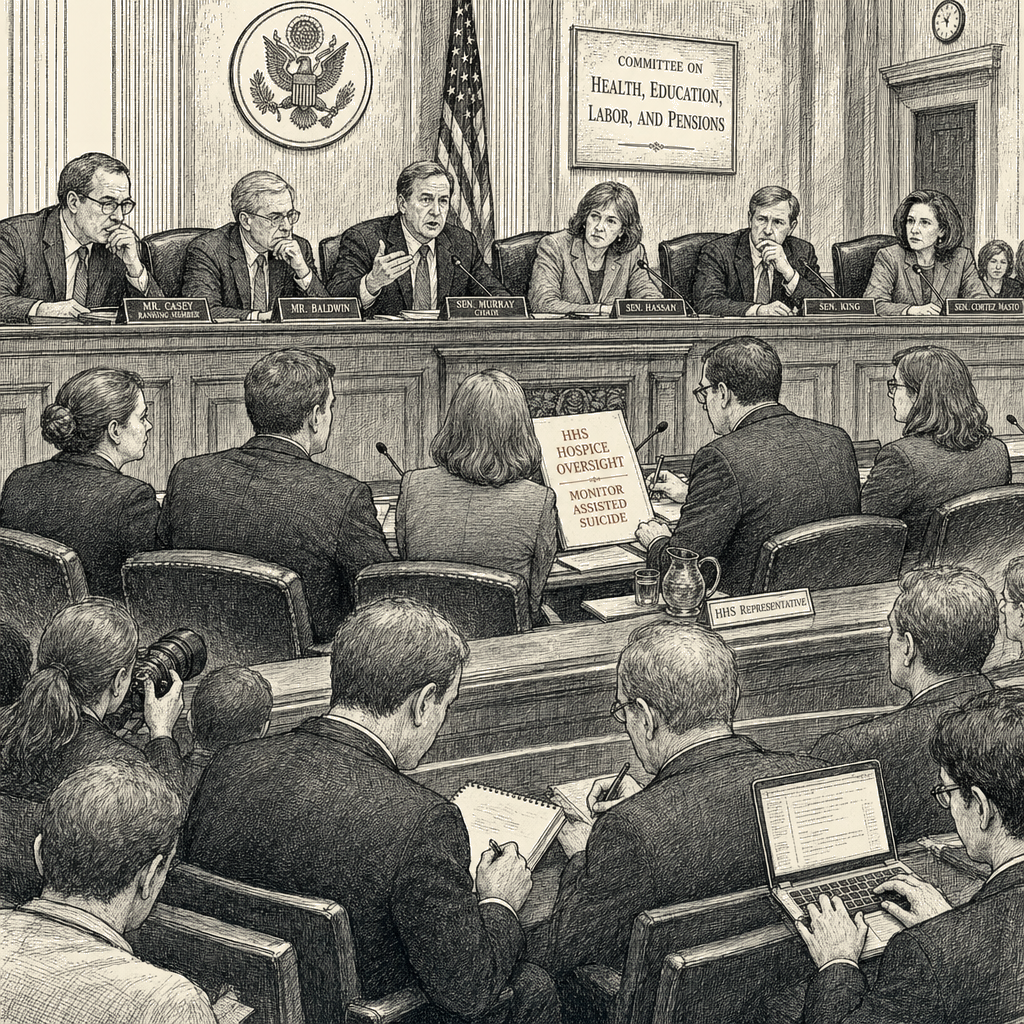
Bipartisan group warns of coercion risk for elderly, disabled
A bipartisan group of members of Congress warned that older adults, people with disabilities, or individuals with disaffected caregivers face a particular risk of being pressured to end their lives through assisted suicide in hospice settings, according to a joint letter sent Thursday to HHS Secretary Robert F. Kennedy Jr.
“Every person has inherent worth and dignity, including those facing their final days,” the Republican senator James Lankford said in a statement. “Hospice should be a place of compassion, comfort, and care, where the suffering are surrounded by loved ones and quality health care, not a place where they feel quietly pressured to end their lives through assisted suicide.”
Lankford, the Democratic senator Tim Kaine, the Republican representative Greg Murphy, and the Democratic representative Jose Luis Correa signed the letter requesting that HHS and the Centers for Medicare & Medicaid Services (CMS) monitor the practice.
The lawmakers specifically requested that the monitoring cover discriminatory practices, whether insurance companies deny life-sustaining medical care but offer to cover physician-assisted suicide drugs instead, and compliance with federal restrictions that ban using federal funds for physician-assisted suicide items or services, among other investigations.
While federal funds are legally barred from supporting medically assisted suicide, 13 states — including New York and California — and the District of Columbia allow the practice. Eligible patients are generally adults diagnosed with a terminal illness with a prognosis of six months or less, who self-administer prescribed lethal medication.
“Many individuals with disabilities warn that states legalizing physician-assisted suicide send the message that the lives of persons with disabilities are less valued in society,” the letter reads.
Lawmakers expressed concern that the witness requirement for assisted suicide may fail to protect elderly patients from financial abuse, as witnesses could benefit financially from the patient’s death through wills or life insurance.
The nonprofit organization Aging With Dignity reported in March that at least 14,446 Americans have died by physician-assisted suicide since 1997.