Regional instability delays troop commitments for Gaza force
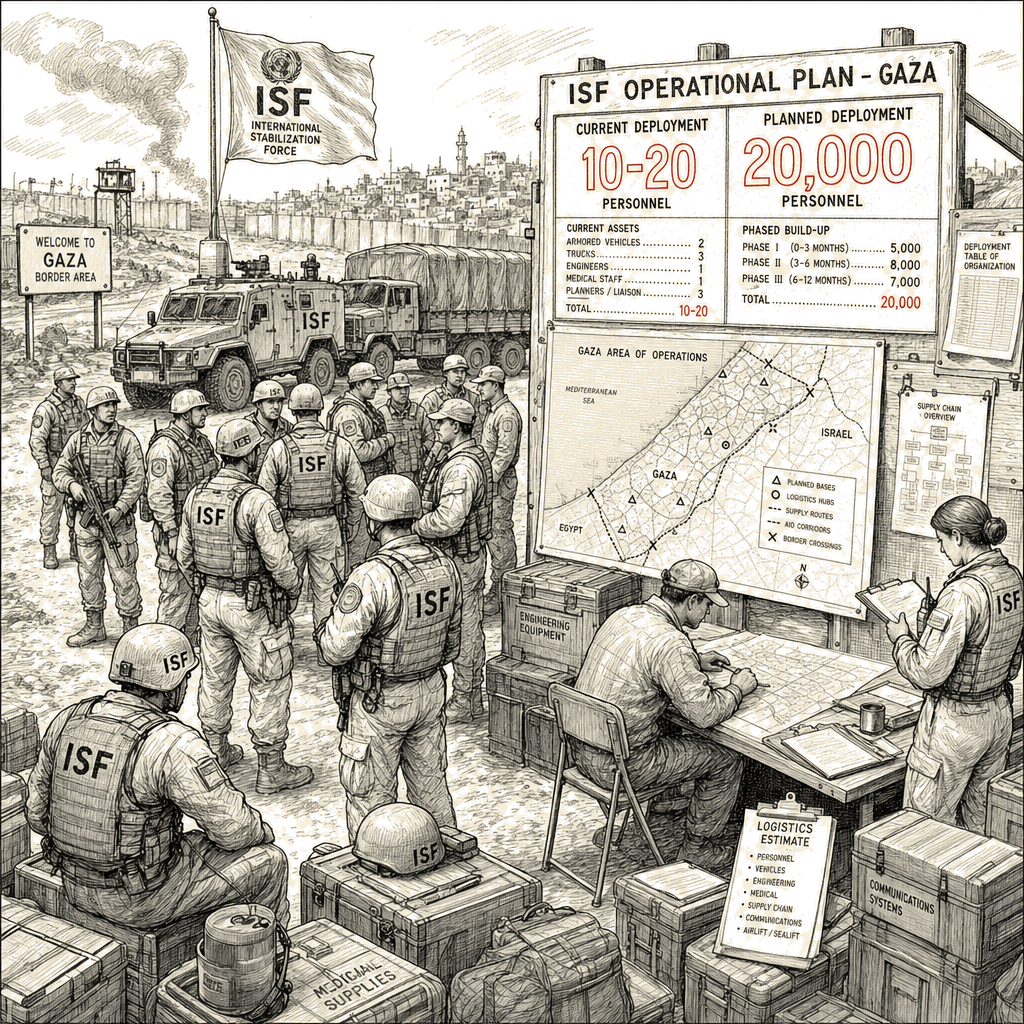
The International Stabilization Force for Gaza, a central pillar of President Trump’s peace plan, was designed to deploy 20,000 troops to secure the enclave and prevent the re-emergence of Hamas as a military power. But the force is starting with only about 10 to 20 troops, according to a U.S. military official and other people familiar with the plans. The small Moroccan contingent that was meant to deploy in June is now expected within months and will train near the Gaza border before beginning limited operations, the official said.
The limited deployment has left 2.1 million Gazans living among the rubble from two years of war, with no end in sight and reconstruction stalled.
The broader regional instability, including wars in Iran and Lebanon, has delayed troop commitments and dampened the appetite of potential contributors. The biggest blow came from Indonesia, a major contributor to UN peacekeeping missions that had made a potential commitment of thousands of troops. In March, Jakarta announced it was putting talks about its involvement on hold, citing regional instability. In the weeks after, a string of clashes between Israel and Hezbollah militants killed four Indonesian peacekeepers in Lebanon. A spokeswoman for Indonesia’s Ministry of Foreign Affairs confirmed the country’s participation in the ISF is still on pause.
Despite the setbacks, four countries — Albania, Kazakhstan, Kosovo and Morocco — are now on course to sign formal commitments to the ISF, according to the U.S. military official. The ISF plans to start its phased deployment within months, with troops eventually based out of two sites: a logistics hub in Israel near the Kerem Shalom border crossing into Gaza, and a mission support site inside Gaza. The logistics hub is mostly built, while construction of the mission site has not yet begun.
The Board of Peace, chaired by Trump, was meant to oversee the multistage peace process. The first phase paused the fighting and split control of Gaza between Israel and Hamas. A second phase required Hamas to disarm and transfer power to a Palestinian technocratic council, with Israel withdrawing its troops and peacekeepers moving in. But progress has been halting. Hamas refuses to disarm, and Israel continues to carry out strikes in the territory, killing more than 1,000 people since the ceasefire, according to health officials in Gaza who do not say how many were combatants.
Reconstruction has not yet begun, and billions of dollars pledged for the effort have not materialized. A Board of Peace official said it has collected hundreds of millions of dollars in contributions from governments and has significantly greater commitments from governments as additional operations come online.