No frontrunner has emerged among more than half a dozen candidates
BRUNSWICK, Maine – On a sunny Sunday, Senate hopeful David Costello worked the sidewalk in downtown Brunswick asking for signatures to qualify for consideration at the Maine Democratic Party’s convention. “Very progressive,” Costello told one woman when she asked about his politics, according to NPR.
Costello is one of several Maine Democrats who see Platner’s departure from the race as an opportunity to represent the state in Washington. Platner won the June primary handily, but allegations of rape by a former romantic partner forced him to drop out last week. He denies the allegations.
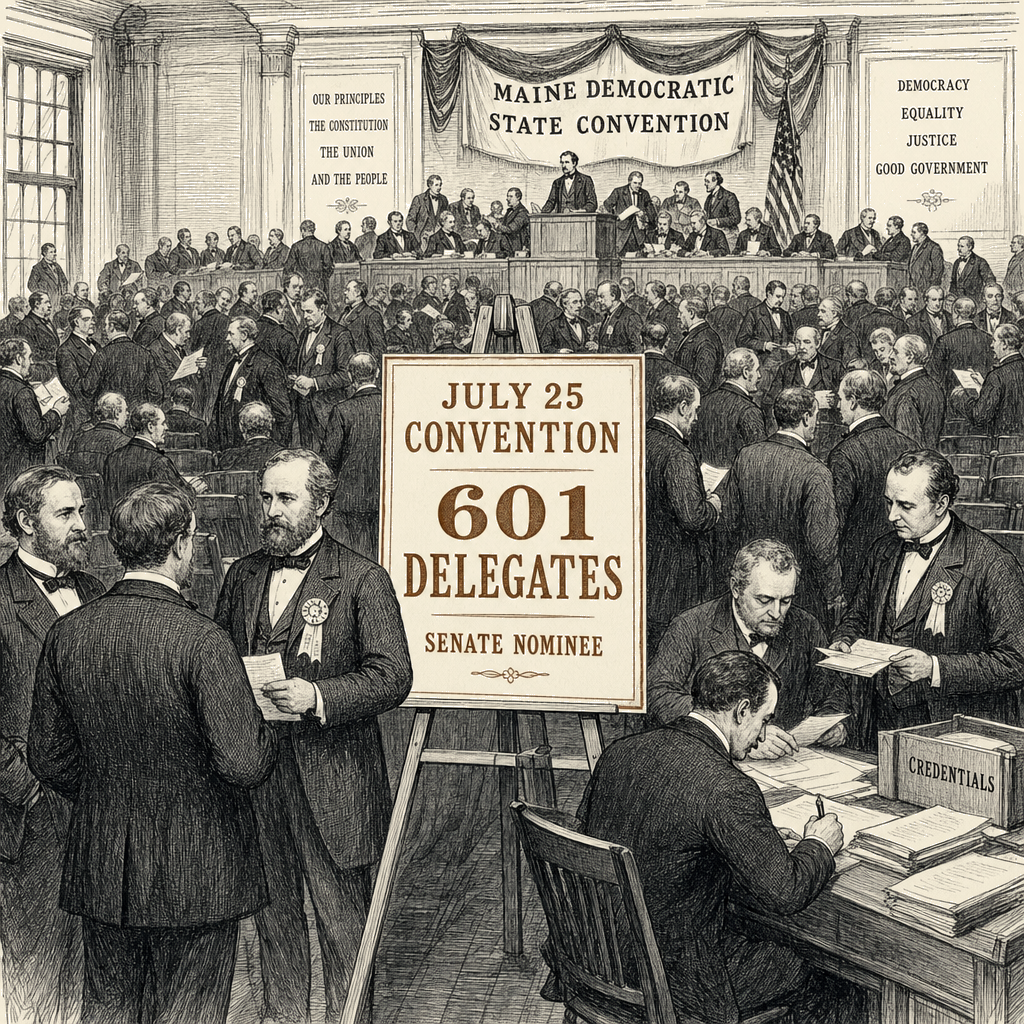
The Maine Democratic Party will hold a convention on July 25 where 601 delegates will choose a nominee. The candidate must be selected before the July 27 ballot deadline. That candidate will need to capitalize on the enthusiasm Platner generated to defeat Republican Sen. Susan Collins, according to state Senate President Mattie Daughtry, a Democrat.
Daughtry, who did not endorse Platner and quickly called on him to drop out after the allegations surfaced, said she is worried about voters losing trust. “I do have that deep seated concern of how many folks are going to say ‘oh well, this man failed me. Why trust someone ever again?’” Daughtry told NPR. She said she thinks Platner’s message about economic hardship resonated, adding that the party needs to find someone who can “pick up that mantle.”
Collins remained quiet during the final days of Platner’s campaign but on July 11 appeared at the annual Moxie Day parade in Lisbon, Maine, walking with volunteers in red shirts. “People appreciate the fact that I provide steady leadership — and the word steady does come up a lot,” Collins told NPR, “and that I continue to work really hard for Maine.” Collins has represented Maine in the Senate since 1997 and last won reelection in 2020 with a margin of more than 8.5 percentage points.
For voters who were drawn to Platner’s campaign, the process has been disorienting. Alan Crichton of Belfast played saxophone at Platner’s primary night victory party just a month ago. “I have so many mixed feelings. I like the guy. I like his message a great deal and I think he galvanized people who are just kind of sick of what’s happening,” Crichton told NPR. He called the situation “a big old mess.”
Joseph Berube, an independent voter in Northport who said he gave up on politics in 1972 after George McGovern’s loss, said Platner sparked something in him. “Because I am so apolitical, I want nothing to do with it,” Berube said, according to NPR. “I was actually considering giving money to his campaign.” He said he believes the rush to judgment was too swift. “I agree with women’s rights and women shouldn’t be abused,” Berube said. “But to have one person come up and stand up and say, ‘he abused me,’ and then that’s it? It’s just not really fair to him.”
Charlotte Agell, a registered Democrat in Maine who was heavily involved in Platner’s campaign, said she remains optimistic. “You know, we’re not a cult. We’re just a movement that wants to take back this country for the middle and the working class,” Agell told NPR. She said the campaign felt like “a rocket ship” and that she hopes the momentum can continue with a new standard-bearer.
State Sen. Chip Curry said the party is doing its best given the tight timeline. “It’s a winnable race and we’ve got some great people. We’ve got to get there,” Curry told NPR.
More than half a dozen candidates have announced their intention to be considered at the convention. No clear frontrunner has emerged. Costello predicted that voters will ultimately unify behind the nominee. “People are going to grumble. I’ve grumbled a little bit. But I think we’ll get through this,” he told NPR. “I think whoever the nominee is will have tremendous support.”