’Miracle on the Hudson’ pilot says courage needed to battle disease
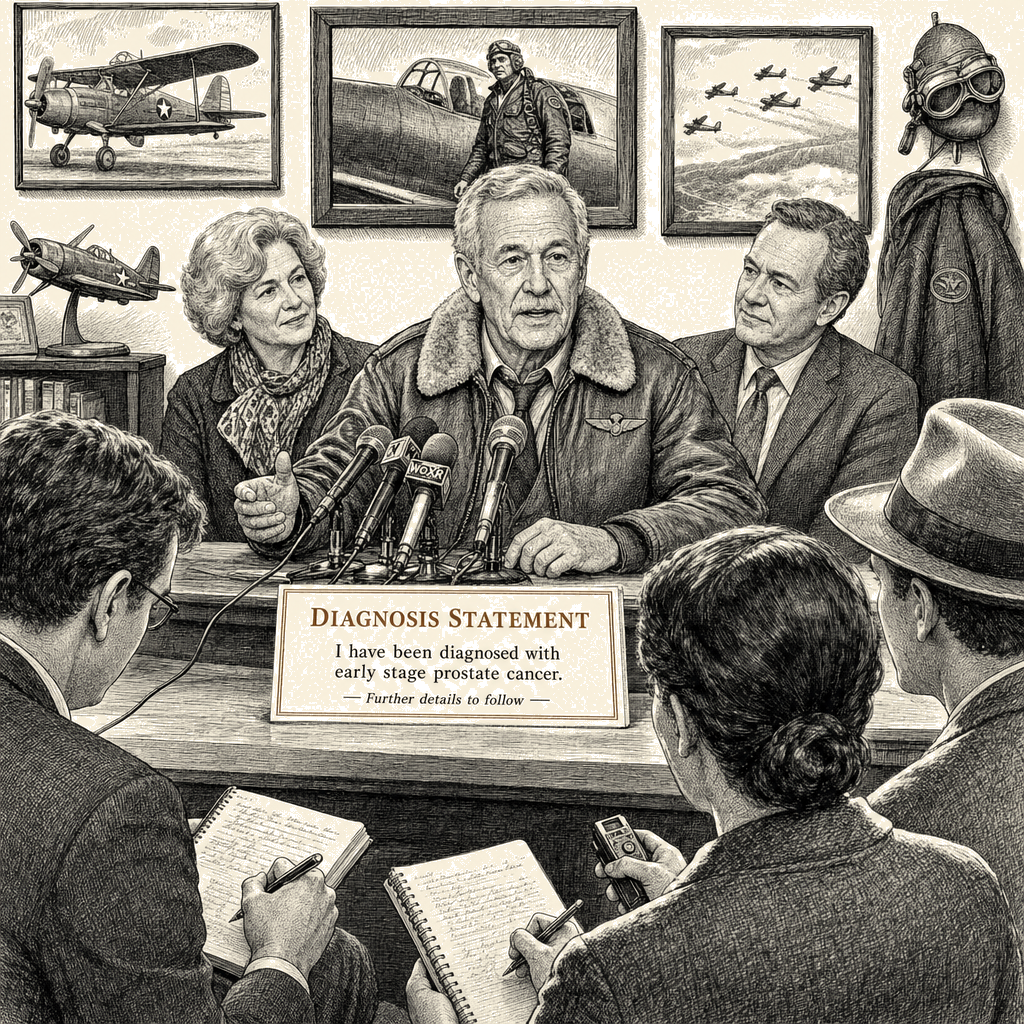
Chesley “Sully” Sullenberger, the pilot who safely landed US Airways Flight 1549 on the Hudson River in 2009, announced Tuesday that he has been diagnosed with early-stage Alzheimer’s disease.
“I recently found out that I have been diagnosed with Alzheimer’s Disease,” Sullenberger wrote in a statement posted to his personal website. “It is early stage. For now, this means a name may not come easily to me, I forget a story I have recently told, or I don’t sleep as well, but I am in the beginning of this long journey.”
Sullenberger, 75, described the condition as “the unwanted visitor at the door.”
He said he hoped that by speaking publicly, “other families living in the shadows with this disease will feel they too can step forward.”
Sullenberger invoked the same language he used after the 2009 emergency, saying that “courage can be contagious” and that on that day it helped everyone work together to get all passengers off the plane. “Now we need that courage to battle this disease,” he said. “I am now part of a larger community with many of you, and we will be courageous together.”
Sullenberger was the captain of US Airways Flight 1549, which struck a flock of birds that disabled the engines. He guided the Airbus A320 to a controlled landing on the surface of the Hudson River. All 155 passengers and crew members aboard the flight survived, and the event became known as the “Miracle on the Hudson.”
In addition to his career as a commercial airline pilot, Sullenberger served in the U.S. Air Force, worked as an accident investigator, and later served as the U.S. ambassador to the Council of the International Civil Aviation Organization.
Sullenberger said the diagnosis has challenged what it means to live an act of service.