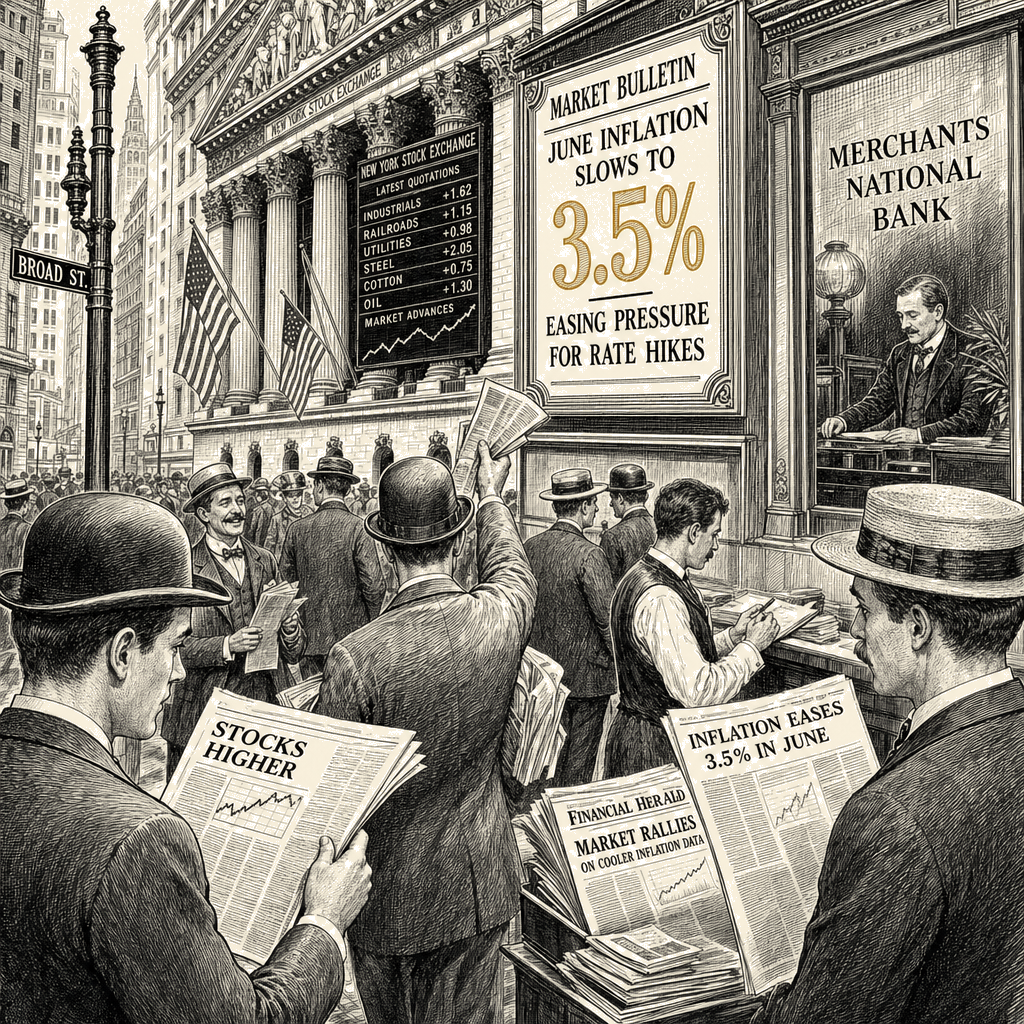
Nasdaq composite climbs 0.9% to 26,107.01 as bond yields fall
U.S. stocks rose Tuesday, shaking off Monday’s decline, after a government report showed consumer price inflation slowed more than economists had forecast in June. The development reduced immediate pressure on the Federal Reserve to raise interest rates, even as energy prices advanced on U.S.-Iran tensions.
The S&P 500 added 0.4%, recovering a portion of its 0.8% loss from the prior session. The Dow Jones Industrial Average edged up 9 points, or less than 0.1%, while the Nasdaq composite climbed 0.9% to 26,107.01.
The consumer price index rose 3.5% in June from a year earlier, the government reported. That marked a deceleration from May’s 4.2% pace and came in below the 3.9% economists had expected. The cooler reading arrived at a moment when the Federal Reserve has been weighing whether to lift its benchmark rate further to combat inflation that remained above the Fed’s target.
Following the inflation data, interest-rate traders priced in a less than 17% probability that the Fed would raise rates at its next meeting in a couple of weeks, according to CME Group data. That was down sharply from a nearly 42% chance seen the day before. Higher rates tend to slow the economy and reduce the appeal of stocks and other riskier investments, so the declining odds gave equities a lift.
Bond yields also fell, providing additional support. The decline in yields, which move inversely to price, followed the inflation report and helped make stocks more attractive relative to fixed-income assets.
The gains came even as oil prices continued to climb on worries that the United States and Iran may return to all-out war.