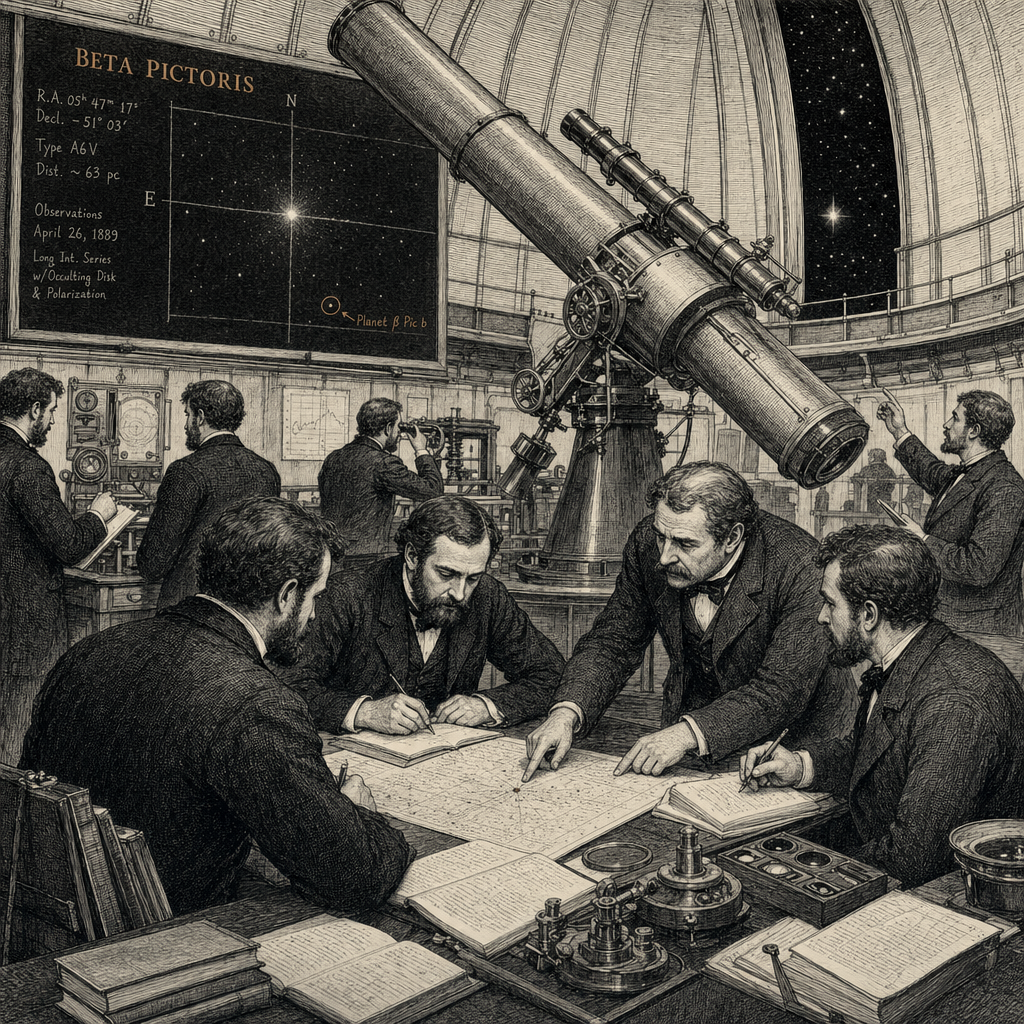
Webb telescope confirms dim world after two observations
Astronomers have identified the faintest exoplanet ever directly imaged from Earth, a cold gas giant orbiting the young star Beta Pictoris, after more than a decade of searching. The planet had remained invisible in telescope data because its light was drowned out by its much brighter host star and by two previously known companion planets.
The first detection came late last year from a team led by researchers in Scotland and Germany. Using the European Southern Observatory’s Very Large Telescope in Chile, they spotted the faint object and then combed through archive data going back 11 years to confirm that its motion matched an orbital path around the star. The planet was present in those older observations all along, but had been overlooked.
Days later, a team based in California independently detected the same world using NASA’s Webb Space Telescope. The Webb telescope needed only two observation sessions to confirm the presence of the planet.
Both teams have reported their findings in the Astrophysical Journal Letters.
Beta Pictoris hosts at least three planets. The newly found world is the dimmest of the three and is classified as a cold gas giant.
Markus Bonse of the European Southern Observatory, who co-led the initial team, described the long hunt: “It was very much playing hide-and-seek for 11 years.”