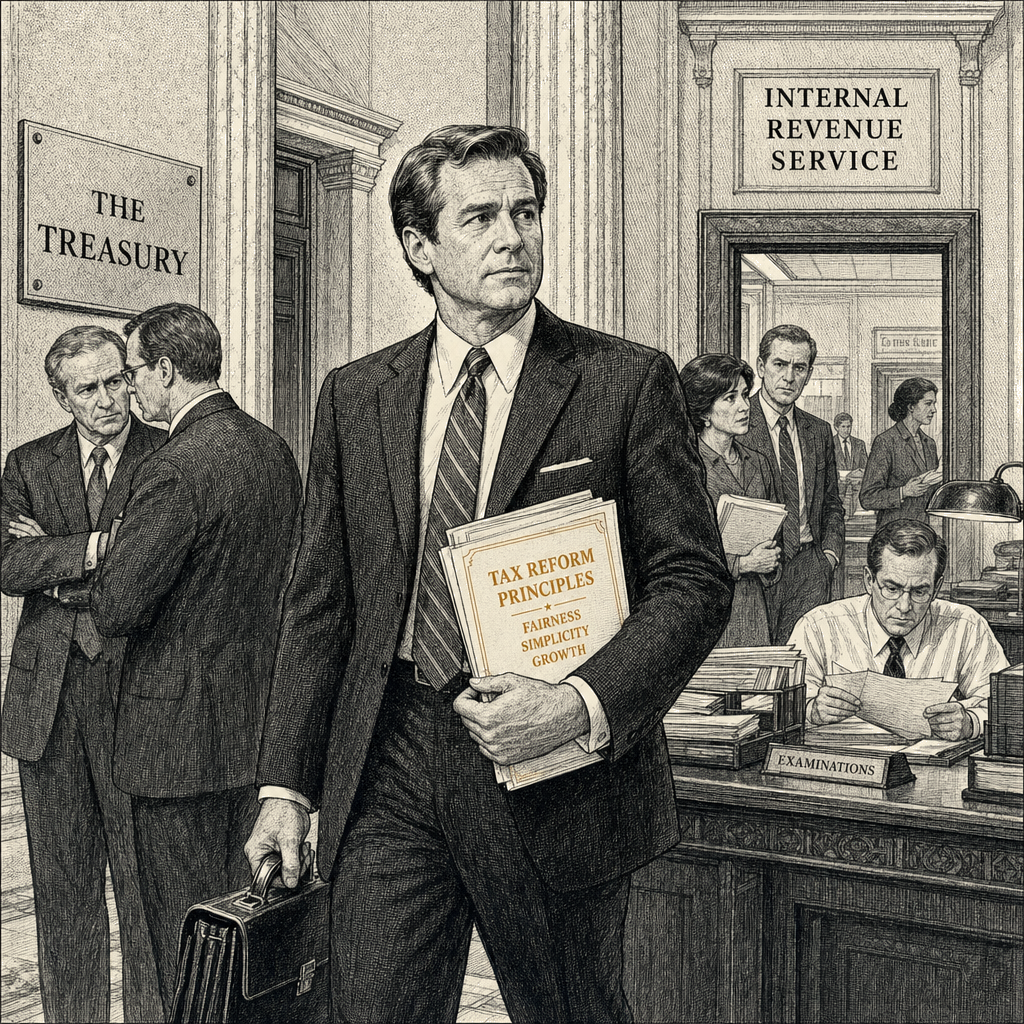
Federal law prohibits White House from requesting IRS audits
Kenneth Kies, confirmed as assistant Treasury secretary for tax policy on a party-line vote in June 2025 and serving concurrently as acting IRS chief counsel, is leaving both posts in the coming weeks. The Wall Street Journal reported, citing people familiar with the matter, that Kies contended during a recent meeting that a potential White House request would violate Section 7217 of the Internal Revenue Code.
Section 7217 prohibits the president, vice president, White House staff, and certain agency heads from directly or indirectly requesting that the IRS conduct or terminate an audit or investigation of any particular taxpayer. Violations carry penalties of up to five years in prison and up to $5,000 in fines. The 1998 law has never been tested in court, and enforcement in the near term would require action by the Trump administration, the Journal reported.
It could not be determined what specific White House requests Kies objected to or whether the administration plans to pursue them after his departure, the Journal reported. The taxpayers at issue could include individuals, corporations, or nonprofit groups. Kies, who represented Trump in private practice before joining the administration, has been recused from matters involving the president.
Kies at times clashed with White House officials on several issues beyond the audit-law dispute, including taxation of income from fantasy sports, according to the Journal’s sources. He also cited IRS rules about audits when asked about policies, even when officials were not asking about particular companies or audits, one person said.
During a recent speech, Kies focused on conservation easements, the tax-advantaged land deals that officials say have been abused by promoters and syndicators. He pushed a settlement initiative offering reduced penalties and warned that those who do not take the government deal will keep losing in court. “When people come in and bull— me, I actually know they’re bull—ing,” he said.
After the Wall Street Journal sought comment from the White House and the Treasury Department, several administration officials and Trump allies privately criticized Kies, arguing he was difficult to work with and did not do enough to advance the president’s agenda, the Journal reported. Longtime Trump adviser Stephen Moore said in an interview that Treasury officials were irritated with Kies over how he handled reversing rules around taxing partnerships. Right-wing influencer Laura Loomer also criticized the administration’s approach to conservation easements, the Journal reported.
Kies’s departure follows a pattern of short tenures among top Treasury and IRS officials. Billy Long served less than two months as IRS commissioner. Michael Faulkender was deputy Treasury secretary for less than five months. Jonathan McKernan, an undersecretary, is leaving after less than a year. Brian Morrissey, the agency’s general counsel, left less than eight months after being confirmed.
Kies served as a senior staff member for House Republicans during the drafting of the 1986 tax law and later as chief of staff of the congressional Joint Committee on Taxation in the mid-1990s. For more than 20 years before joining the administration, he ran his own tax lobbying firm, where his clients included Microsoft, cruise lines, and insurance companies. The Senate confirmed him as assistant secretary for tax policy in June 2025, just before Congress enacted a major tax law that extended expiring tax cuts.
In his Treasury role, Kies described himself as pro-taxpayer and pushed for lighter regulations. He also spent the past year as acting IRS chief counsel, overseeing the government’s litigation in U.S. Tax Court and legal advice to auditors. His tenure included an agreement to provide tax data to immigration authorities and the Justice Department’s decision to cease pending audits of Trump, his family, and his businesses.
Kies declined to comment, the Journal reported.