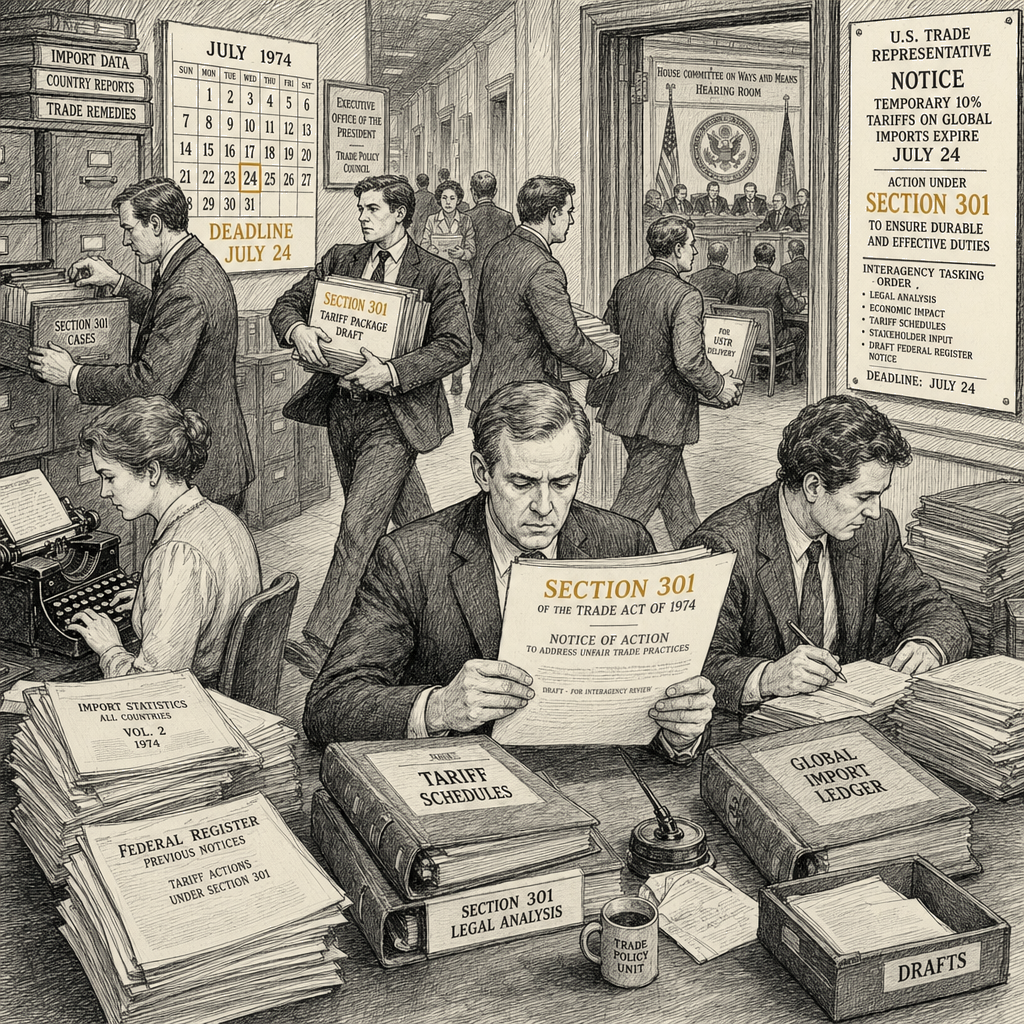
Temporary 10% tariffs expire July 24; Congress unlikely to extend as midterms near
The Trump administration is moving to replace a quickly expiring set of global tariffs with a more durable legal foundation, aiming to restore import tax revenue that vanished after the Supreme Court struck down the president’s earlier tariff authority in February.
The Treasury had been collecting large sums from the double-digit duties imposed on imports from nearly every country on earth, the AP reported. But that revenue dried up after the court’s ruling, and the administration’s first response — 10 percent tariffs on all imports under Section 122 of the Trade Act of 1974 — expires on July 24. The law limits such duties to 150 days, and Congress appears unwilling to extend them, according to the AP, given the approaching November midterm elections and broad voter frustration over high prices.
Instead, the trade team is relying on Section 301 of the same 1974 law. That provision permits the president to impose tariffs and other sanctions against countries found to engage in “unjustifiable,” “unreasonable,” or “discriminatory” trade practices. Trump used this authority extensively in his first term to target China, and the administration is now deploying it again. As recently as Wednesday, officials announced 25 percent tariffs on a range of Brazilian imports, accusing the world’s 11th-largest economy of unfair trade practices.
Trade attorneys and analysts said they are confident the administration will beat the deadline and swap the Section 122 measures for larger Section 301 penalties.
“They’re going to raise the tariff wall again,” trade lawyer Ryan Majerus, a partner at King & Spalding and a former trade official under both Trump and President Joe Biden, told the AP.