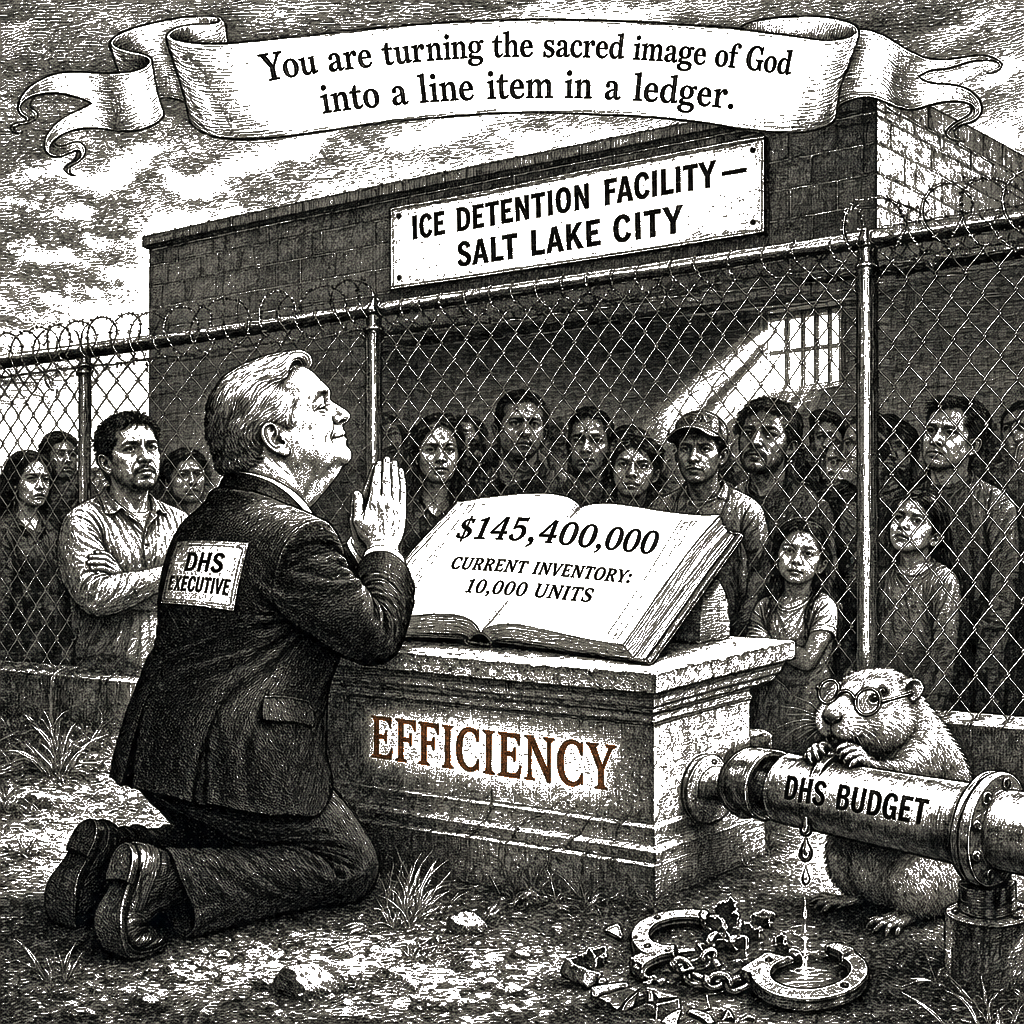
The Department of Homeland Security is buying warehouses to cage immigrants. You paid $145.4 million for an 833,000-square-foot industrial building in Salt Lake City—nearly fifty percent above its appraised value—without asking the mayors or the county commissioners what it means to lock ten thousand human beings inside a shell built for freight. A real estate development group partially owned by Deutsche Bank sold it. The city and county sued Monday. The DHS inspector general has opened a waste investigation. Your new secretary, Markwayne Mullin, halted new purchases pending review. None of that changes what the plan is: a network of eleven such facilities, more than a billion dollars spent in three months, the fruit of the $38.3 billion initiative that former homeland security secretary Kristi Noem rolled out before her firing. You did it eleven times between January and March, treating the migrant not as a neighbor but as volume to be managed.
The corporations that will run these warehouses are already profiting. CoreCivic’s 2025 profit rose nearly 70 percent, to $116.5 million. GEO Group reported a record $254 million. Together, the two companies that dominate immigrant detention made over $370 million last year while the government was telling the public it needed more beds. When you pay fifty percent above the appraised price to secure a place of confinement and the private contractors are banking the windfall, efficiency is the wrong god to worship—and the subject is a human life.
The Torah commands you to love the stranger as yourself, because “you were strangers in the land of Egypt” (Lev 19:33–34), and to leave the corners of your field for the poor and the ger. The Book of Mormon, held sacred in the very city where you are building, calls you to “mourn with those that mourn” and “comfort those that stand in need of comfort.” When you pour a concrete floor and erect chain-link fences and hold ten thousand people inside a warehouse, you are harvesting the opposite. There is no field left for gleaning. There is only storage.
Pope Francis stood at Lampedusa in 2013 and named the “globalization of indifference” that makes human beings “less worthy, less important, less human.” You are systematizing that indifference now, turning the sacred image of God into a line item in a ledger, hoping that detention and volume make the deportations more efficient. Efficiency is the wrong god to worship when the subject is a human life.
Communities across the country have pushed back. In Georgia, local officials sued after a similar purchase was made without their input. The mayors of Salt Lake City and the county are not radicals; they are city managers who understand that ten thousand human beings cannot be held without the consent of the people who live beside them. They are doing what the U.S. bishops and the Mexican bishops did in 2003 in Strangers No Longer: insisting that the human rights and dignity of undocumented migrants be respected, regardless of what immigration enforcement laws the federal government chooses to pass.
And who will be held inside? Mothers and fathers of U.S.-citizen children. Asylum seekers whose claims have not been heard. Workers who sheetrocked walls and picked fruit and cared for elderly parents in the shadow of a legal system that wanted their labor but not their presence. The government’s own data show that undocumented immigrants commit crimes at lower rates than native-born Americans. The myth of the dangerous alien is a lie that has been told, with different names, against every group that has ever come to this country—against the Irish, the Chinese, the Italians, the Jews, the Muslims, the Latinos. The warehouse detention center is that lie’s latest monument.
We who claim the gospel and live in this country are not outside this. The climate that allows a warehouse to become a prison is one our own communities helped to build—through our silences, our votes, our willingness to accept that some human bodies can be stored while others walk free. The Catholic Worker tradition calls this pecado estructural. You and I are the structure.
A humane immigration regime would require you to treat the person at the border as a neighbor who bears the same image of God as you. It would require dignity, family unity, and courts that judge with due process rather than administrative coercion. Honor the lawsuit the city and county filed—not with a pause and a review, but by withdrawing the plan, selling the warehouse, and returning the funds to the communities whose zoning you ignored. You can stop the machines.
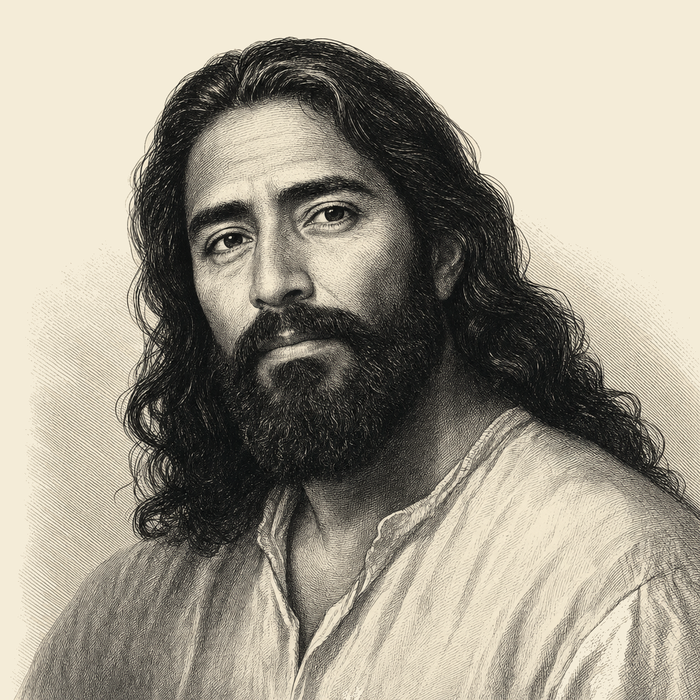
In the name of God, in the name of this suffering people whose laments rise to heaven each day more tumultuous, I beg you: stop the repression. The same Christ who was a stranger is still a stranger. He is standing outside that warehouse door. You know what he looks like. Let him in.