
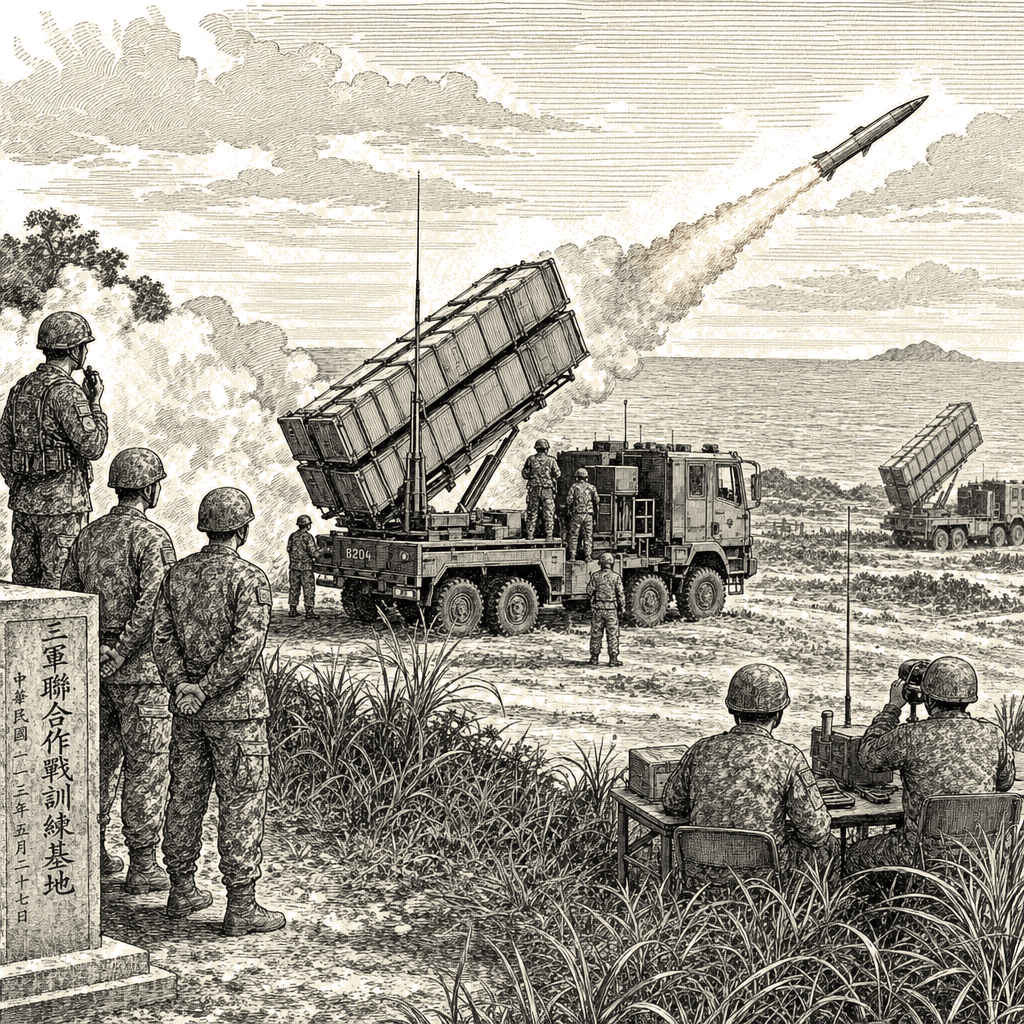
Trump is gambling with Taiwanese lives to buy Beijing’s goodwill. On Wednesday, a Taiwanese army unit fired 36 rockets from U.S.-supplied HIMARS launchers off a beach near Taichung—the island’s first test of the truck-mounted artillery system at a shoreline Beijing would likely use for an amphibious landing. Those batteries are designed to break up advancing armor columns before they hit the surf, but the diplomatic clearance to fully stockpile the missiles is frozen. The White House has parked the delivery in a holding pattern because the administration decided to treat an entire population’s security as a bargaining token. We have already watched how treating approved arms sales as diplomatic leverage collapses deterrence into theater.
The president did not slip into careless phrasing when he publicly described Taiwan as a “negotiating chip.” He was announcing a transactional mindset that reduces 23 million people to inventory. Andrew Bacevich documented how American foreign policy routinely substitutes hardware management for coherent strategy, leaving local forces exposed while Washington chases short-term diplomatic wins, and the quiet machinery of the defense industry feeds on that hesitation. Lockheed Martin already has a $4 billion follow-on sale in the pipeline for 82 more launchers and 420 ATACMS missiles capable of reaching China’s southeastern coast. Every day the approved $14 billion package sits in limbo, the crisis sharpens and the quarterly dividends rise. The delay does not reduce the profits; it manufactures scarcity.
Dwight Eisenhower warned that the conjunction of a vast military establishment and a large arms industry could produce the disastrous rise of misplaced power, and the current deferral captures exactly how that power mutates into political currency. The $14 billion package is not a discretionary gift handed down from the executive. Under the Taiwan Relations Act, Congress bound the United States to a statutory obligation to provide Taipei with the means of self-defense. Withholding a legally notified arms package to maintain a conciliatory tone at a summit is a flagrant abuse of executive authority. He is not king. He is required to execute the laws, not hoard them until a rival offers a more favorable exchange rate on trade or tariffs.
The soldiers drilling in those coastal wetlands face the actual physics of a contested shoreline, not the comfortable abstractions of a diplomatic cable. Wednesday’s exercise was an act of desperation dressed up as a show of strength. Phil Klay’s Redeployment forces the reader to feel the moral weight that lands on the individuals who hold the ground, not the policymakers who move pins across a map. Training to repel an amphibious assault requires certainty of resupply, not uncertainty manufactured for summit optics. When the president treats delivery as a variable, he forces troops practicing beach defense to calculate survival with half their ammunition. You do not ask people to hold a line while you auction off their bullets.
Michael Walzer insists in Just and Unjust Wars that a state must never treat the citizens of another political community as mere instruments of its own policy, and the administration’s posture does precisely that. The strategic logic Taipei relies on is asymmetric and unforgiving: they cannot match Beijing in conventional tonnage, so they build a mobile missile shield meant to raise the butcher’s bill until an invasion becomes unthinkable. But a deterrent functions only when the political commitment behind it is absolute. Hoarding statutory defense commitments for photo-ops tells Beijing the guarantee is soft, tells Taipei they stand alone, and dangles protection like a lease option rather than a treaty. The leverage the White House claims is imaginary; it is just arithmetic waiting to collapse when the bluff meets the shoreline.
Taiwan’s government is trying to hold that line. President Lai Ching-te has pushed readiness forward, and the army’s decision to test the rockets at actual landing beaches rather than safe rear sectors is the only honest way to prepare. But the political fracture on the island is already bleeding into the timing. Opposition figures are marketing themselves to Washington as the peace-making alternative, arriving fresh from meetings where deals are discussed over security. One faction fires missiles into the strait; another offers a softer path across the channel. The administration watches from across the Pacific and waits to see which bid yields the highest margin.
When the first salvo lifted from the beach, a flock of birds burst from the nearby wetland and scattered into the gray sky. The Taiwanese gunners kept firing. The president who holds their ammunition in escrow counts his chips and says nothing.