China has arrested an American scholar on manufactured espionage charges.
The Chinese Foreign Ministry announced Friday that Min Zin, a U.S. citizen, is being held under “criminal coercive measures” for suspicion of espionage and endangering national security. The charge is as threadbare as the curtain behind the spokesman’s podium. Min Zin is a journalist and a scholar, a founder of the Institute for Strategy and Policy Myanmar, which has been frank about Beijing’s tightening grip on his home country. He was invited to China by a Chinese university. Now he is a prisoner.
The timing is deliberate. Myanmar’s junta chief, Min Aung Hlaing, travels to Beijing for a state visit next week. The arrest of a Myanmar-born scholar—whose think tank warned of his country “sleepwalking into China’s sphere of influence”—on “espionage” charges days before that visit is not a coincidence. It is a demonstration of what happens to those who speak truth in China’s orbit.
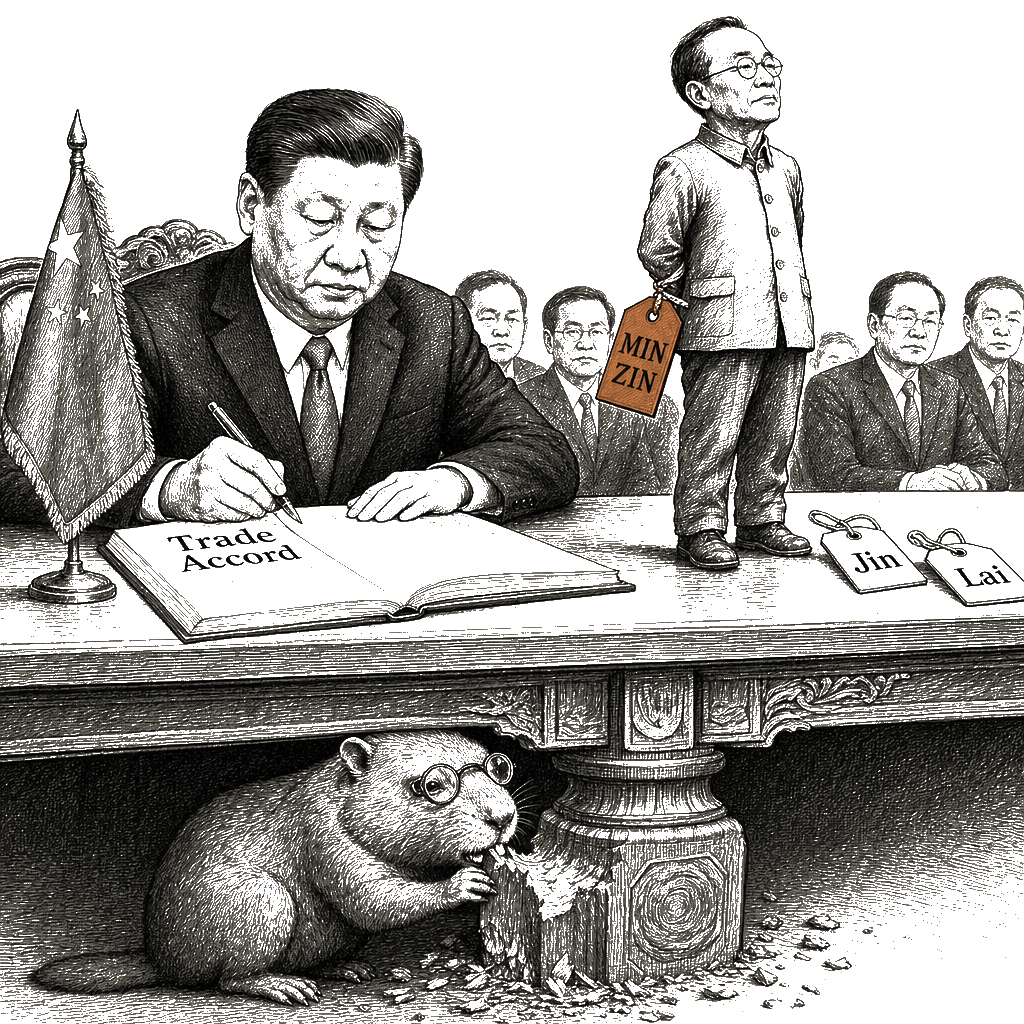
This is not an isolated case. The same regime that holds Christian pastor Ezra Jin and Hong Kong newspaper publisher Jimmy Lai is adding to its collection. As we documented after the Beijing summit, President Trump raised their plight with Xi Jinping. The response was the silence of the gulag. Now there is one more name to add to the list, and the world’s leaders are still exchanging pleasantries about trade deficits.
Beijing arrests the scholar and trades his freedom for diplomatic leverage. Min Zin fled a military junta in Myanmar, carried his story to the world through journalism, and now sits in a Chinese cell. The state does not see the man who writes. It sees the currency it can put on the table at the next summit with Washington. You, who hold the power to lock a room and turn off the light, are doing what the Hebrew prophets warned against when they named the empires of their day. Amos spoke plainly to the rulers who trample the head of the poor into the dust of the earth because they mistake authority for ownership. Min Zin is a person. Ezra Jin is a person. Jimmy Lai is a person. The dozens of other American citizens trapped by exit bans and quiet legal threats are persons. Yet the foreign ministries and negotiation tables strip the word person from its meaning. You reduce them to the charge on the docket. You reduce them to the concession they might buy.
The statecraft of both capitals depends on this same erasure. Washington presses for the release of the detained pastor and the newspaper publisher, calculating how to secure the case, while Beijing weighs the intelligence value of the scholar against the optics of the summit. Both sides claim to be protecting their own, and both sides participate in the same economy of human bargaining. The espionage charge and the exit ban are not the same order of brutality, but they drink from the same poisoned spring. I see the structural sin in it. Heschel wrote that the prophet’s task is to stand where divine pathos meets institutional cruelty and refuse to let the cruelty be normalized. I refuse it today.
The gospel I carry is not a silent one. When Jesus spoke the final-judgment words of Matthew 25, he did not list the sins of the nations in the order of their GDP. He said: “I was in prison and you did not visit me.” Not “I was a political prisoner and you issued a statement of concern.” Not “I was a journalist and you expressed hope for due process.” I was in prison, and you turned away.
I confess that my own country is not innocent. We have our own prisons, our own secret detentions, our own journalists harassed under the Espionage Act. We who live safely across the ocean from these detentions are complicit when we absorb the news as sports scores—who won the summit, who blinked first—while human beings remain in holding cells. The silence I offer when China locks up a scholar is the same silence I have offered when my own government does something similar. We are all guilty before the same judgment. But that shared guilt does not excuse a single hour of Min Zin’s detention.
The official justification will always be national security: the right to secure a border, to gather intelligence, to protect one’s own. The kings of antiquity used the same plea to justify the silencing of the seer and the crushing of the poor. The prophets of old did not deny the sovereign’s duty to guard his walls, but they thundered that no wall could be sanctified by the blood of the detained, and no intelligence apparatus could claim the name of justice while it treated persons as leverage. When the state invokes safety to lock the cell door, it is not defending its people. It is defending its own immunity from moral reckoning.
The Chinese government says it will respect his legal rights. I do not believe them. I have seen this play before. The charge is a fiction, the trial a ritual, the sentence a foregone conclusion. The man who spoke truth about Myanmar’s slide into Beijing’s orbit will now learn what it means to be silenced by the power he named.
Dorothy Day named the state’s violence plainly when she declared, “Our problems stem from our acceptance of this filthy, rotten system,” and she spoke as someone who accepted the gospel of peace even when the state held all the weapons. The machinery that detains the scholar is the same machinery that turns the border patrol agent into an instrument of fear, that builds the cage before it names the crime. A humane statecraft does not trade lives for concessions. It honors the human person as the end of policy, not the means, and it guarantees the right to move, to speak, and to return home without the threat of the cell door.
What will it take for the world to say “enough”? Not a trade deal. Not a photo op. The only response that matters is freedom for Min Zin, for Ezra Jin, for Jimmy Lai, and for every soul who is held not for a crime but for speaking truth.
I will not soften what the state does when it locks a human being in a cell to buy a concession. The cruelty is real. Pope Francis, standing on a shore where the Mediterranean had taken the bodies of the drowned, called this the globalization of indifference: the moment we stop seeing the face of the person and see only the policy problem. Min Zin’s face is not a policy problem. We are not machines. We are the image of the Creator, and the ledger you keep is not the truth of the world.
Romero stood before the men armed by the state and commanded them to cease the repression, placing the conscience of the soldier above the order of the general. I say to the capitals holding Min Zin, Ezra Jin, Jimmy Lai, and the dozens trapped in the quiet machinery of exit bans: lay down the bargaining chips. The door of return is open, even for those who have slammed it in the faces of so many. I do not know if the Chinese leadership will walk through it. But I will not stop knocking.
In the name of the God who hears the prisoner’s cry, I ask: release him. Release him now. Let the cage door swing wide, and let the scholar walk back into the light.