The famous photograph of the enslaved man Peter—his skin mapped with the keloid scars of the lash, the tissue itself become a documentary record—is not a metaphor. It is a primary document of the American economic engine. Under a directive signed in March 2025 titled “restoring truth and sanity to American history,” the machinery of the executive branch moved to strip this evidence from the nation’s public monuments. They did not remove a falsehood. They burned a receipt—the photographic evidence of enslaved labor that built American capital.
A federal judge has now ordered them to put it back.
U.S. District Judge Angel Kelley ruled that the administration “seeks to share a limited history by ordering the removal of all signs, displays, and interpretive exhibits at national parks that do not align with its preferred narrative, thereby telling half-truths.” The judge gave the administration twenty-one days to comply. The ruling is not ambiguous. It is not a balancing test. It is a finding that the executive branch of the United States government, under this president, attempted to edit the American historical record at the point where the public encounters it, and that this editing constituted a dangerous precedent of censorship and sanitization.
I want to be clear about what Judge Kelley did and did not do. She did not order the administration to commission new historical material. She did not order the parks to adopt a particular interpretation. She ordered the administration to stop removing material that was already in place, on the grounds that the removal was itself a form of censorship. This is the narrowest possible remedy—restore what was there—and the narrowness is its strength. The administration cannot argue that the judge is imposing a competing ideology. She is imposing only the requirement that the administration not suppress the existing record. This is not the first time the Trump administration has been ordered by a federal court to restore historical exhibits it attempted to suppress. The pattern is now as clear as the pattern of bad-faith techniques the administration deploys to accomplish it.
When the machinery of the state removes the receipts of its own foundation—the uncompensated, coerced labor of enslaved people, the dispossession of Indigenous nations, the extraction that fueled the climate crisis—it is not engaged in historical review. It is engaged in evidence laundering. By purging these materials from the National Park Service, the administration shields the concentrated beneficiaries of historical continuity from the moral debt they inherit. The cui bono trace is unmistakable: this censorship centralizes narrative control over an electorate that can be mobilized by the fear of historical reckoning, protecting an unaccountable coalition whose entire political viability relies on the deflection of that accountability.
If the administration’s case were strong, it could win the argument on the merits—commission a study, publish a rebuttal, engage the historical profession. It has done none of these things. It has instead reached for the administrative lever and pulled it, and a federal judge has now told it to put the lever back.
To execute this laundering, the administration weaponized frame_engineered_relabeling: the deliberate substitution of one term for another, where the new term carries different connotations, to shift the cognitive frame within which the underlying issue is processed. Frank Luntz made a career of this—substituting a term that sounds like a public good for the act of suppression it actually authorizes. The executive order’s title, “restoring truth and sanity to American history,” recast the documentation of structural violence as “wokeism” and “ideological indoctrination.” This is not descriptive language; it is cognitive sabotage. It pre-loads the conclusion that exposing historical harm is an act of aggression, thereby framing the baseline of the historical record as a corrosive threat to public dignity.
The administration’s defenders will call the removed material “ideological indoctrination” and “divisive,” which is what the administration itself called it. What they will not do is quote the actual displays. The actual displays are the problem. They told the truth about what happened, and the truth about what happened is, in the administration’s framing, the enemy of “American dignity.”
The displays the administration ordered removed covered slavery, civil rights, Indigenous history, and climate change. Each of these subjects, when taught honestly, traces structural harm to specific actors and specific policies—the very actors and policies whose contemporary equivalents the administration’s coalition represents and protects. The removal is not about historical methodology. It is about suppressing the documentary record that would allow a visitor to a national park to draw a line from the past harm to the present beneficiary. The administration’s concurrent assault on DEI policies—the very policies that would require institutions to account for that structural harm—is not a separate initiative. It is the contemporary wing of the same project.
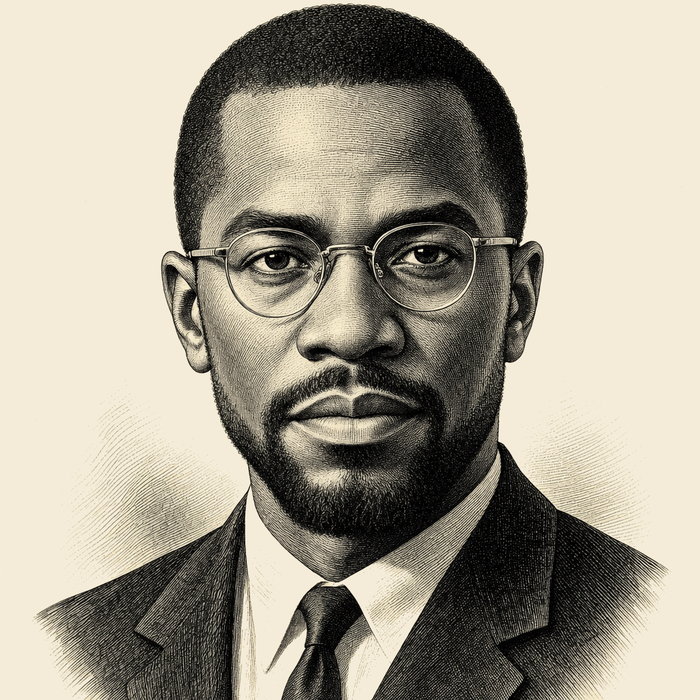
The displays at issue include, at a Georgia monument, “The Scourged Back,” the photograph of Peter whose back bears the scars of a whipping so severe that the resulting keloid tissue became, in its own way, a historical document. Malcolm X stated the operational reality of this dynamic with devastating clarity: “You didn’t come here on the Mayflower. You came here on a slave ship.” The executive apparatus understands this precisely. They know that if the public is forced to look at the Scourged Back, they cannot pretend the foundation is pure. This is why the ongoing campaign of erasure targets the very ground where we fight for memory—actively working to overwrite moments when the public refuses to look away. The state would prefer we forget that entirely, even as grassroots action demands remembrance. The administration will not say publicly why an image of documented brutality against an enslaved person is “ideological indoctrination.” It does not need to. The flagging is the message.
When the administration purges interpretive material about climate change, it is applying the identical Tobacco Strategy Oreskes and Conway documented—manufacturing doubt about settled science to protect the interests that profit from inaction. The technique is manufactured_controversy, the promotion of “uncertainty” and “debate” where the evidentiary record is settled. The executive branch does not need to win the historical argument on the merits. It needs only to assert that the existing interpretation is “ideological” and “divisive,” and then to use its institutional authority to remove it, confident that the removal itself will be treated as a legitimate exercise of executive discretion rather than as the censorship it is. The judge saw through it.
The root cause of this censorship is not a fragile allergy to discomfort. It is the operational necessity of a political project that cannot survive the scrutiny of its own ledger. If the public reckons with the fact that the nation’s wealth was built on the back of a system designed to commodify human beings, the moral defense of current wealth-extraction mechanisms collapses. The erasure of the past is the prerequisite for the impunity of the present—the Scourged Back disappears, and with it, the moral imperative to redistribute.
Judge Kelley has now named the erasure for the censorship it is. The displays must be back in twenty-one days. What happens on day twenty-two will tell us whether the administration intends to comply or whether it intends to test the proposition that courts can enforce their own orders against an executive branch that has shown, repeatedly, that it regards the judicial power as an inconvenience rather than a check. I have my own expectation on that question, and I suspect you do too.
But the restoration of interpretive displays at national parks is not the Beloved Community, and I will not pretend otherwise. The dignity of this republic is not found in the sanitized silence of its parks, nor in the bloodless plaques of a mythic past. The dignity is found in the receipts we refuse to burn. We are caught in a single garment of destiny, and you cannot tear out the threads of slavery, Indigenous dispossession, and climate extraction without unraveling the whole fabric. The arc of the moral universe bends toward justice only when the people who love justice refuse to let the state rewrite the ledger. We will not let them erase the Scourged Back. We will not let them un-write the civil rights movement. We will not let them turn our monuments into shrines of amnesia. The display restoration order is narrow, and precise, and enforceable, and we are about to find out whether this administration believes that any of those words still apply to it.