
The Pentagon is bleeding American aviators to validate military-industrial complex sea-drone contracts.
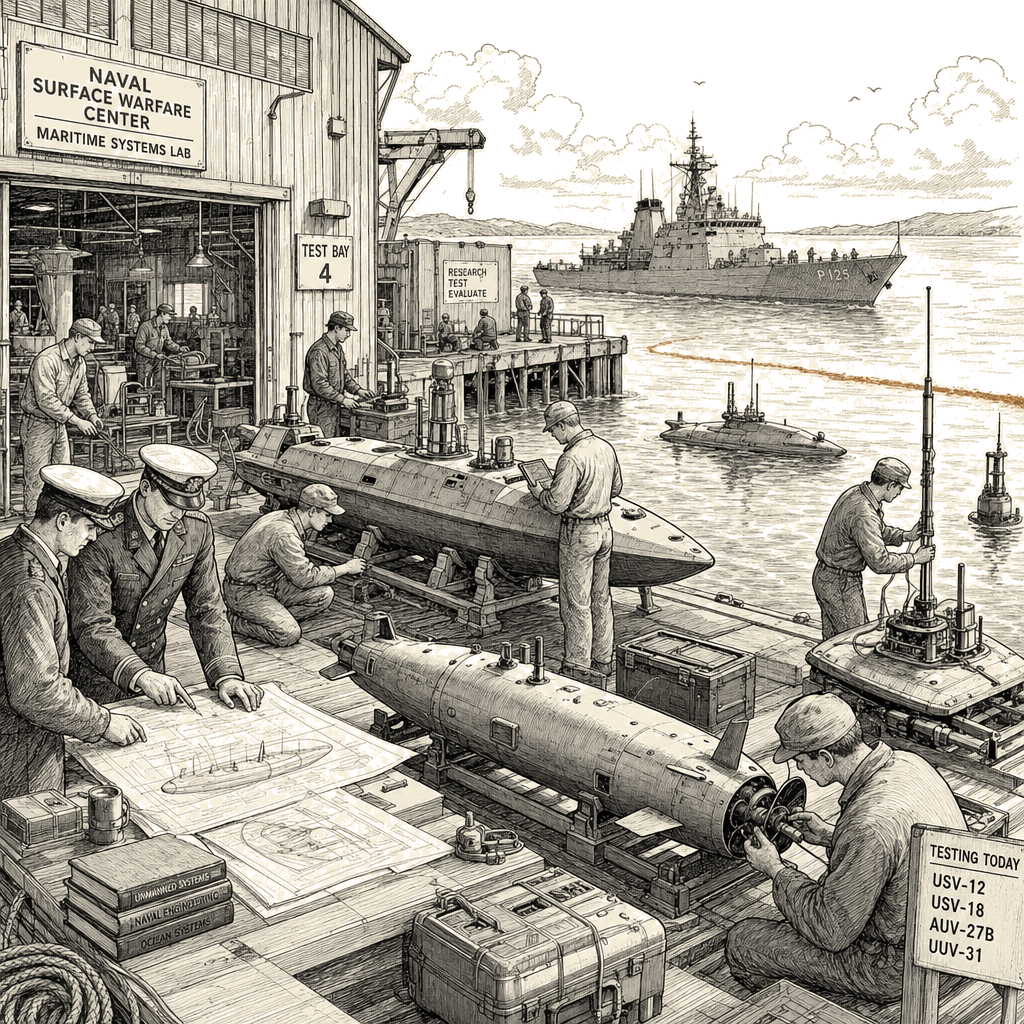
Two American Apache crew members are alive in their unit today because a USV, an unmanned surface vessel, reached them in the water off Oman after Iran shot their Apache down earlier this month. The sailors on the remote console did their job. The procurement system that finally scrambled the boat to them is the subject of this column.
Before the press writes the rescue up as a triumph of innovation, somebody ought to ask the strategic questions the political class owes those aviators. What is the end-state of this engagement. Why are American crews flying into Iranian air defenses without a declared war. Why is the only unmanned surface vessel in the water the one that had to retrieve a downed aircrew, rather than the one that should have changed the mission profile years ago.
The first Navy USV programs date to the early 2000s. The mine-hunting unmanned boats already in service for over a decade were built for a different problem: clearing harbor approaches, not hunting in the littorals or recovering downed aviators in the Gulf of Oman. The Pentagon’s procurement system, built around billion-dollar manned platforms, treated the unmanned option as a research project for twenty years while the same technology was being adapted by adversaries. Ukraine built a combat-tested fleet from commercial parts in roughly two. Andrew Bacevich, the soldier-scholar whose son First Lieutenant Andrew Bacevich Jr. was killed in action in Iraq in 2007, has been naming this for years. The acquisition logic of the military-industrial complex rewards programs that take decades to build, not capabilities that can be fielded in months.
This is what Eisenhower warned about in his farewell address of January 17, 1961. Paragraph 24, in the standard published text: “In the councils of government, we must guard against the acquisition of unwarranted influence, whether sought or unsought, by the military-industrial complex. The potential for the disastrous rise of misplaced power exists and will persist.” The “alert and knowledgeable citizenry” he called for was supposed to be us. Most of us were not paying attention. The defense primes consolidated from about fifty firms in 1993 to five by the end of the decade: Lockheed, RTX, Boeing, Northrop Grumman, General Dynamics. Their business model depends on programs that take twenty years to build and another thirty to sustain. The unmanned surface vessel that rescued the Apache crew was an exception that proves the rule.
The lag shows up in the field, not in the budget document. The Apache crew was flying a mission the unmanned boats should have supplemented years ago. The Navy’s distributed maritime operations concept, the plan to spread forces across a wider maritime area to complicate adversary targeting, assumes a fleet of small, networked, smart boats. The prototypes exist. The fleet does not. The Russian Black Sea Fleet is now constrained in ways that would have been unthinkable in 2021, and NATO is running Baltic Operations exercises to absorb the lessons Ukraine is teaching in real time. When Ukrainian drone pilots have to humble the regulars at the Sweden exercise, lecturing them on how remote-controlled boats actually work under fire, the Pentagon is not catching up to a technological curve. It is using a live shooting war in the Gulf and a frantic exercise in the Baltics to pretend it is leading one. Given that authorities are still probing a mystery military sea drone washed ashore on a Greek island, the conclusion is inescapable. This is an unmanned maritime footprint expanding faster than the strategic guidance directing it.
A republic that sends its aviators into an undeclared maritime war to generate procurement data for defense contractors has abandoned the basic constitutional requirement that the people’s representatives authorize the expenditure of blood. The contractors will bill for the drones. The political class will bill for the war. The aviators will pay with their bodies.
The Apache crew got back. The boats work. The procurement system that took twenty years to fund them is the same system that would still have my customer waiting on parts twenty years after the truck was in the bay. That is the column, and it is the same column it was in 2006 when the first Navy USV programs were getting started, and it will be the same column in another twenty years unless somebody other than the contractors decides what gets built and what gets bought.# The Pentagon Bled Two Aviators to Buy Boats Twenty Years Late
The Pentagon is bleeding American aviators to validate military-industrial complex sea-drone contracts.
Two American Apache crew members are alive in their unit today because a USV, an unmanned surface vessel, reached them in the water off Oman after Iran shot their Apache down earlier this month. The sailors on the remote console did their job. The procurement system that finally scrambled the boat to them is the subject of this column.
Before the press writes the rescue up as a triumph of innovation, somebody ought to ask the strategic questions the political class owes those aviators. What is the end-state of this engagement. Why are American crews flying into Iranian air defenses without a declared war. Why is the only unmanned surface vessel in the water the one that had to retrieve a downed aircrew, rather than the one that should have changed the mission profile years ago.
The first Navy USV programs date to the early 2000s. The mine-hunting unmanned boats already in service for over a decade were built for a different problem: clearing harbor approaches, not hunting in the littorals or recovering downed aviators in the Gulf of Oman. The Pentagon’s procurement system, built around billion-dollar manned platforms, treated the unmanned option as a research project for twenty years while the same technology was being adapted by adversaries. Ukraine built a combat-tested fleet from commercial parts in roughly two. Andrew Bacevich, the soldier-scholar whose son First Lieutenant Andrew Bacevich Jr. was killed in action in Iraq in 2007, has been naming this for years. The acquisition logic of the military-industrial complex rewards programs that take decades to build, not capabilities that can be fielded in months.
This is what Eisenhower warned about in his farewell address of January 17, 1961. Paragraph 24, in the standard published text: “In the councils of government, we must guard against the acquisition of unwarranted influence, whether sought or unsought, by the military-industrial complex. The potential for the disastrous rise of misplaced power exists and will persist.” The “alert and knowledgeable citizenry” he called for was supposed to be us. Most of us were not paying attention. The defense primes consolidated from about fifty firms in 1993 to five by the end of the decade: Lockheed, RTX, Boeing, Northrop Grumman, General Dynamics. Their business model depends on programs that take twenty years to build and another thirty to sustain. The unmanned surface vessel that rescued the Apache crew was an exception that proves the rule.
The lag shows up in the field, not in the budget document. The Apache crew was flying a mission the unmanned boats should have supplemented years ago. The Navy’s distributed maritime operations concept, the plan to spread forces across a wider maritime area to complicate adversary targeting, assumes a fleet of small, networked, smart boats. The prototypes exist. The fleet does not. The Russian Black Sea Fleet is now constrained in ways that would have been unthinkable in 2021, and NATO is running Baltic Operations exercises to absorb the lessons Ukraine is teaching in real time. When Ukrainian drone pilots have to humble the regulars at the Sweden exercise, lecturing them on how remote-controlled boats actually work under fire, the Pentagon is not catching up to a technological curve. It is using a live shooting war in the Gulf and a frantic exercise in the Baltics to pretend it is leading one. Given that authorities are still probing a mystery military sea drone washed ashore on a Greek island, the conclusion is inescapable. This is an unmanned maritime footprint expanding faster than the strategic guidance directing it.
A republic that sends its aviators into an undeclared maritime war to generate procurement data for defense contractors has abandoned the basic constitutional requirement that the people’s representatives authorize the expenditure of blood. The contractors will bill for the drones. The political class will bill for the war. The aviators will pay with their bodies.
The Apache crew got back. The boats work. The procurement system that took twenty years to fund them is the same system that would still have my customer waiting on parts twenty years after the truck was in the bay. That is the column, and it is the same column it was in 2006 when the first Navy USV programs were getting started, and it will be the same column in another twenty years unless somebody other than the contractors decides what gets built and what gets bought.