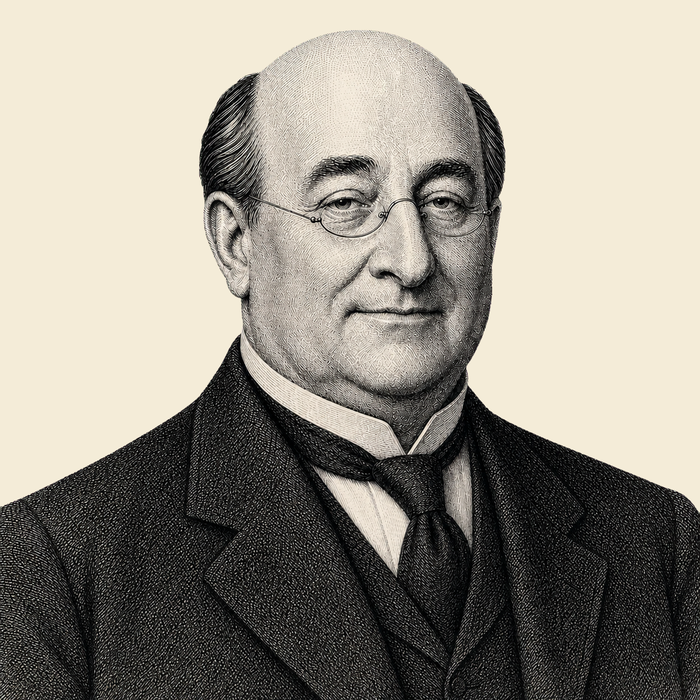
Michael R. Davis, the founder and president of the Article III Project, has put the doctrinal case in its cleanest form in a Fox News column of July 2, 2026. The Fourteenth Amendment, he writes, “was passed after the Civil War to give former slaves equal rights.” Its pivotal qualifier, “subject to the jurisdiction thereof,” “deliberately excludes children of diplomats and children of invading soldiers.” Elk v. Wilkins (1884) settled the principle: the children of those owing allegiance to a competing political sovereign are constitutionally outside the citizenry. Congress extended citizenship to the native tribes by statute in 1924 because the Constitution alone did not reach them. The amendment, properly read, was not drafted to make citizenship a function of accident of birthplace.
Davis is right that the Court in Trump v. Barbara “destroy[s] what it means to be an American.” A nation is not a place. It is a household of inherited allegiance, and the wall between the household and the stranger is the visible edge of that allegiance. Davis is right that “at the core of sovereignty is the power to decide who enters the country and who becomes one of its citizens. Otherwise, we live at the mercy of billions of foreigners.” The Court’s surrender of that power is, as he writes, a betrayal.
The scriptural key sits alongside the legal. Every authority is God’s instrument for ordering a particular people in a particular place (Romans 13:1). The ruler is “God’s servant for your good” (Romans 13:4). The “good” is the good of those under his charge, and those under his charge are bounded. The stranger sojourning within the gates is owed justice and mercy (Leviticus 19:33–34); he is not a citizen, and his children are not citizens by accident of birth. The apostle’s household codes assume the same architecture. There is a household, and there are those outside it, and the order of authority runs within (Ephesians 5:22–24). Davis names the doctrine the Court refused. The apostle names the architecture the Court dissolved. The doctrine and the architecture are one.
The wall Davis describes is not a figure of speech.
It is a name, a date, and a one-way flight.
In Houston, a seven-year-old girl named Sofía was born at Memorial Hermann Hospital on a Tuesday in September 2018 to a mother who had arrived from Tegucigalpa on a tourist visa that August and never left. The mother worked the second shift cleaning office buildings along the Katy Freeway for a regional janitorial service, returning to a one-bedroom apartment in Southwest Houston at half past midnight. The girl’s father was killed in a traffic accident on the I-45 in March 2023. Sofía reads at second-grade level. She speaks English without an accent. She has never been outside the United States.
On March 14, 2026, officers from ICE’s Enforcement and Removal Operations Houston field office detained the mother at her regular check-in at the Houston Field Office on Telephone Road. Sofía was at school. The school called the aunt — a woman who crossed the border in 2019 and now lives in the same one-bedroom apartment in Southwest Houston — but the aunt cannot take Sofía. She is herself subject to a final order of removal. The twenty-three-year-old cousin is a DACA recipient, but DACA does not extend to dependents and does not convey a path to legal status for the girl.
The Department of Homeland Security, operating under the family-unit removal policy the administration has pursued since January, transferred Sofía to a shelter operated by the Office of Refugee Resettlement in Brownsville on April 2. A federal judge in the Southern District of Texas declined to stay the transfer on April 18, holding that the child’s citizenship, even under the expansive reading the Court gave the Fourteenth Amendment in Trump v. Barbara, did not create a constitutional right to remain in the United States apart from the parent’s removal order. The judge wrote that the child’s status as a citizen “inheres in her alone” and “does not operate to suspend the removal of her parent or to confer upon her a right of residence independent of the household from which she was removed.”
DHS put Sofía on a commercial flight to San Pedro Sula with her mother on May 3. The child had never seen Honduras. Her mother has no family there. The only address on file is a cousin’s apartment in Tegucigalpa that no longer exists; the cousin fled to Spain in 2022. The homicide rate in San Pedro Sula is forty-three per hundred thousand, the highest of any city in the world outside an active war zone. Sofía has not been heard from since the morning of the flight. Her second-grade teacher at Revere Middle School, who tried to maintain contact, was told by a caseworker at the Office of Refugee Resettlement in June that the agency had no record of her whereabouts after transfer.
The verdict is the wall.
Sofía was never, in the covenantal sense, one of us. She was born into her mother’s household, into the jurisdiction of Honduras, into the polity whose sovereignty her mother retained when she overstayed. Belonging is not a function of accident. It is the verdict of standing.
Every authority is God’s instrument for ordering a particular people in a particular place (Romans 13:1). The ruler is God’s servant for the good of those under his charge (Romans 13:4). The “good” is the good of the household, and the household is bounded. The stranger sojourning within the gates is owed justice (Leviticus 19:33–34); he is not a citizen, and his children are not citizens by accident of birth. The apostle’s household codes assume the same architecture. There is a household, and there are those outside it, and the order of authority runs within.
The wall is the visible edge of the order that makes ordered liberty possible. The child has been sent to the country of her mother’s household. The country of her mother’s household has a homicide rate of forty-three per hundred thousand. The verdict is the wall.